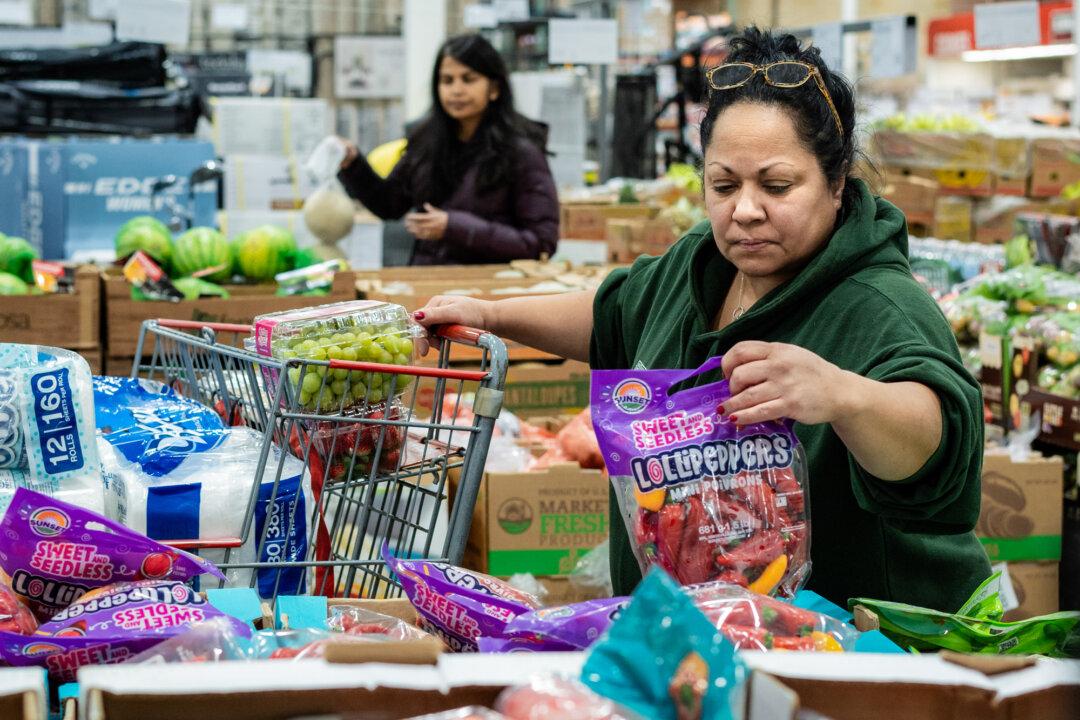
As I was leaving Costco the other day, I noticed the line for returns snaking around the corner. But these weren’t people bringing back a pair of pants that didn’t fit or a blender that broke after one use. It was the end of summer, and the line was full of people returning above-ground pools, vacuum cleaners that had clearly seen months of use, and even mattresses.
The sight stopped me. I wasn’t judging anyone. I’ve made plenty of questionable purchases myself. But there was something about it that felt symbolic. Not because Costco can’t afford it, but because it looked like a snapshot of something deeper in our culture, a society where nothing really has to stick.
Curiosity got the better of me. I walked up to the counter and asked the young man handling returns, “What percentage of these are honest, things that broke or didn’t fit, and how many are just people who changed their minds?”
He didn’t hesitate.
“Maybe 5 or 10 percent are honest,” he said. “Ninety percent, they just don’t want it anymore, or they used it and want their money back.”

My husband, who thinks I talk to strangers too much, nudged me and said, “Mollie, this is none of your business.”
I smiled and whispered, “I think I want to write an article about this.”
He sighed.
“That might be a good idea. Just stop bothering this poor guy,” he said.
I couldn’t stop thinking about it. So when I got home, I started to do a little research. What I found was that the National Retail Federation reported that in 2024, Americans returned nearly 17 percent of all retail purchases—roughly $890 billion worth of goods. For online shopping, the number is even higher, hovering between 20 percent and 30 percent.
But the real story isn’t in the returns themselves. It’s in what those policies are designed to do. Big box stores and online retailers have learned that generous return policies actually encourage more spending. When shoppers know they can return something, they buy more freely. One retail analytics study found that flexible return policies can increase total sales by as much as 20 percent, even though only a fraction of buyers ever send things back. The illusion of reversibility is part of the business model.
And that illusion does something to us. It makes us play faster and looser with our decisions, not only with what we buy but also with how we live. When the cost of a mistake disappears, the act of choosing becomes shallow. We are no longer required to pause, to think, to commit.
As a farmer, I can’t help but compare it to nature. On the land, there are no refunds. If you plant seeds too late, they may emerge but not have time to finish, so there will be no harvest. Every choice carries weight, and that weight is what makes us wiser, more humble, and more connected. Life without consequence is like soil without life. It might look rich from the surface, but nothing real can grow in it.
People love to talk about “sustainability” and “climate change,” but how often do we connect those ideas to personal responsibility?
Each year, nearly 9.5 billion pounds of returned goods in the United States end up in landfills. Perfectly good products, clothes, electronics, and furniture are trashed because it’s cheaper for companies to dispose of them than to inspect and resell them. The problem isn’t just waste. It’s the mindset that waste is someone else’s problem.
I have a neighbor who makes his living buying shipping containers full of Amazon returns and reselling what he can on Facebook Marketplace and Craigslist. The interesting thing is that he never knows exactly what’s in the container he’s buying. He might have a general idea whether it’s electronics, outdoor goods, or tools, but it’s always a gamble.
His property looks like a warehouse, with rows of boxes filled with things someone once wanted badly enough to buy, only to send back weeks later. He sells a lot of it, but not all of it. Many items he can’t resell—such as used mattresses, broken electronics, and opened cosmetics—end up in the dumpster. And he’s just one of thousands of people doing this across the country. The scale of the waste is staggering.
The more I thought about it, the more I realized this isn’t just about shopping. It’s about how we relate to commitment itself. I’ve been married twice. The first time, after five years, I called it quits. Like many Americans, I believed that if something stopped working, you changed it. And sometimes, yes, divorce is necessary and healthy. But culturally, we’ve absorbed a deeper lesson, that changing our minds should erase the cost of the original choice.
I’ve changed my mind about many things—politics, diet, even my career—and I believe growth requires that kind of openness. But there’s a difference between changing your mind and pretending the original decision carried no weight. Should we be free to change our minds? Of course. Should we always get our money back? That’s another question.
Returning a pool you used all summer might not ruin the world. Still, it participates in a mindset that’s slowly hollowing out our sense of consequence, the same mindset that makes us quick to discard commitments, marriages, friendships, and beliefs when they become inconvenient.
This isn’t about shaming anyone. I’ve been on both sides of that counter. I’ve changed, evolved, and reversed course more times than I can count. But I’m starting to see that our culture confuses grace with erasure. Grace doesn’t mean pretending that there’s no cost. It means facing the cost honestly and moving forward wiser.
Costco’s return line might seem like a small thing, but I think it reveals something essential about the modern soul. We crave freedom from consequence. We want grace without growth, forgiveness without formation. But as every farmer knows, you can’t reap what you didn’t sow.
I walked out of Costco that day with my mind spinning. The carts clattered, receipts waved in the air, and the hum of commerce went on, but I couldn’t shake the feeling that what we’re really returning isn’t merchandise; it’s meaning. We’ve built a world where almost nothing is final, and yet we feel more restless than ever. Maybe it’s because permanence gives life texture. Commitment gives life depth. And consequence gives life truth.
Nature doesn’t offer refunds. God doesn’t either. There are only lessons, cycles, and grace, and those things, unlike pools and mattresses, are worth keeping.