Several times per day, my phone lights up with a random number. The software notifies me—a useful innovation—that it is likely spam. It goes to voicemail, which I never check. Obviously, it’s some racketeer trying to get me to cough up a password or grant some access to my email or something along those lines.
One wonders how many people get caught up in this. Must be many, or else the calls would not keep happening.
I’m rarely tempted, but there have been some close calls. A year ago, I was resting my eyes on the sofa (that’s what my father called napping), and a call came in from a very well-spoken man who informed me that my passwords had been leaked. I kept listening (with some doubts, but not enough) until he sent a notification on my phone that I was supposed to click. I finally came to my senses and narrowly avoided disaster.
The email scams are far worse. Some 18 months ago, I received an invitation to appear on The Joe Rogan Experience, and I was excited. It took me a few hours to get suspicious. The clue was in the sending address. It was a Gmail address rather than the show URL. That was the first of dozens of this racket. They come daily now.
What happens if you follow through on this? You schedule a date. You test your camera and assure the person that you have the right microphone. At the last minute, they request that you pay several hundred dollars for promotion and marketing to assure the broadest reach. If you pay, you have been robbed because the interview never happens.
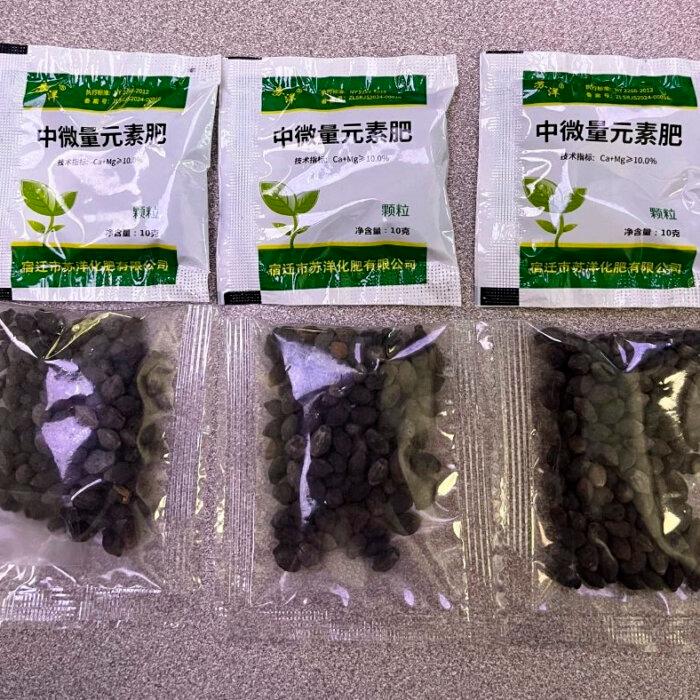
After enough of this stuff, one begins to believe that he has the whole thing figured out. I won’t be scammed by anyone, no way. That’s for others. I’m too smart, profoundly aware of the ways of the world.
Well, I can tell you, this is a dangerous presumption. Sure enough, last week, I got robbed by an online company. I’m not entirely sure where I saw the first video, but it was some influencer talking up the glories of linen sheets. Now this is a product that I love, and I’m always open to new brands. My enthusiasm for the messaging swamped my incredulity.
I clicked and found myself on a wonderful site advertising European-grade flax-linen sheets, complete with a list of the health benefits and details on production. There were thousands of product reviews. Plus, the sheets were on sale, normally $350 but now $150. This was irresistible. It tapped into all my beliefs. Nothing about the site triggered any doubt about the company.
A week went by, and I recalled this order. I dug through my history and found the confirmation email. Checking the delivery status, I saw that they were being shipped from China. Already, I had a sense that something was wrong. I had not ordered sheets from China.
Another week went by, and a package showed up. It was my linen sheets. Taking them out of the bag, I knew for sure that something was deeply wrong. They felt like plastic bag liners and were very cheaply made.
I had been scammed! It happens. I’m still angry about it. But there is nothing to be done. It is what it is.
Not enough is said about the Better Business Bureau (BBB). What a thrilling thing it is. It is a nonprofit organization that accepts donations and rates millions of companies on their honesty and their product. It was founded in 1912 in Minneapolis by the National Vigilance Committee and became national soon after. It has operated as an entirely private organization ever since.
Isn’t that so interesting? We have 400-plus government agencies purporting to regulate and protect us. When it comes right down to it, the most credible organization out there is a private nonprofit organization that has been around for 113 years. It’s still the go-to place for quality.
Both the Better Business Bureau and Underwriters Laboratory work without using force or government power. They are remarkable tributes to the capacity of private actors and social processes to guarantee quality and safety. They are not perfect, as my case shows, but that is my fault. I should have checked to see if this sketchy company had already been rated by the BBB. Had I checked, I could have saved myself some money and embarrassment.
Scams have always been a dark side to enterprise. We tolerate their existence in exchange for which we have the freedom to choose, with the principle that the buyer should beware. These days, we cannot be wary enough. But we have product reviews, credible distribution sources, and institutions like BBB and UL to help us make better decisions.
Even with all that, we can still get caught. A compelling pitch, a sob story, a pretty website, or a flattering interlocutor is all that is needed. Once our emotions kick in with the attitude of “I want this,” all bets are off. Even the most sophisticated person can find himself a victim. It happens daily and hourly, now more than ever.
Let’s say that 3 percent of the population is involved in scams as a path to make money. Maybe that’s an underestimate, or maybe it is not that many. Regardless, it’s enough that you will confront them in your daily life. There’s probably no sense in attempting to shame such people, for they will just re-emerge in a different form. Also, being shameless is part of the job description. I don’t know how this is possible, but there it is.
What did I do with the fake sheets? They went straight to the trash. Sad. But it’s a lesson for the future. Be more careful. Maintain your doubts. Don’t allow yourself to be bamboozled by compelling pitches and pretty advertisements. You might be being set up. I certainly was and got taken in.
For me, it’s back to the old reliable sources for my linen sheets, and everything else too. I’m also going to be making more use of BBB in the future.