Commentary
When you marry someone from another culture, certain conversations are hard—not because of fear or discomfort but because of context. To explain one simple thing often requires layers of history, language, and cultural background. Early in our marriage, when my husband spoke no English and I spoke no Spanish, our shared context was almost nonexistent. We spent hours watching animal shows, images and sounds that required no translation.Years later, after he had learned enough English to engage with U.S. media, the first U.S. public figure—and maybe the only one still today—to appear in my husband’s social media feed was Charlie Kirk. His feed is otherwise almost entirely in Spanish and connected to Mexican culture.
One day in 2020, he asked me, “Do you know the smart man who argues in short sentences, so I can understand him?”
I did not know who he was talking about based on that description. But once he showed me a video, I thought, “Oh, Charlie Kirk.” After that day, when it was his turn to choose what we watched after the kids were asleep, we often spent evenings watching Kirk debate students on college campuses.
At the time, I was still in transition, politically and personally. My Los Angeles restaurants were being buried by the bureaucracy of COVID-19 pandemic regulations, while my life in the farming community was introducing me to a different worldview. I was caught between two cultures. Through the lens I had inherited from my education and my upbringing, I saw Kirk as controversial, even “dangerous.”
So I said to my husband: “Many people think Charlie Kirk is racist, especially about immigration. Don’t you feel that?”

He looked at me matter-of-factly and said: “No. He’s fighting for his country. I came here fighting for my survival, but he is right to fight for his country.”
That moment struck me. Here was a man who had crossed the border as an undocumented teenager, who knew firsthand the desperation that drives migration, yet he didn’t hear racism. He heard conviction. He saw a man speaking with courage and clarity, qualities that resonated with him.
To my husband, unburdened by U.S. cultural and academic framing, Kirk’s arguments weren’t coded with hidden meanings or ideological traps. They were logical, fact-based, and clear. He even enjoyed the debates, in which two people argued head-on, almost like a sporting event. For him, for whom English is a second language, Kirk’s short sentences were not only accessible but also powerful.
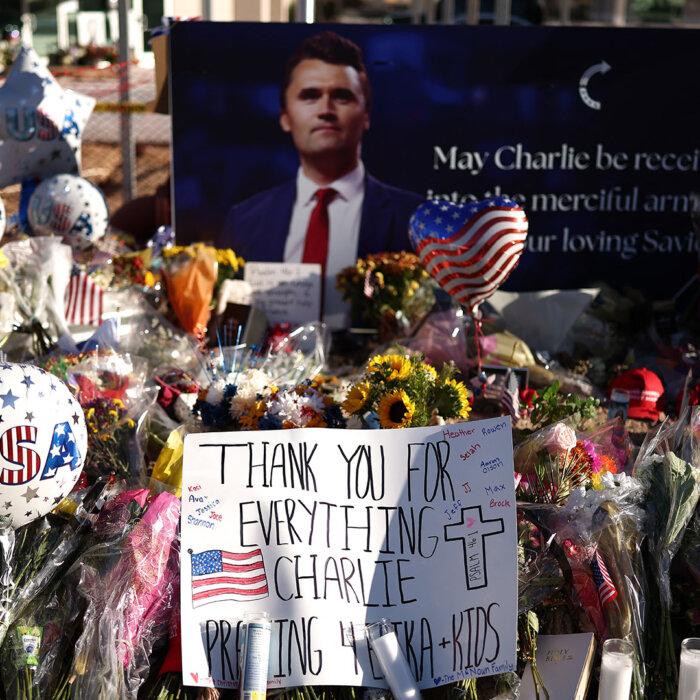
The day Kirk was shot, I went to find my husband on the farm and tell him what had happened. At first, he couldn’t put a name with the face in his mind. But when I showed him a video, his eyes filled with tears.
“I know that man,” he said.
That was his English as a second language. He didn’t mean that he knew Kirk personally. He meant that he knew him in his public persona and that that persona had affected him deeply.
He went on to say: “Even I, a Mexican immigrant, know him and listen to him. His voice was important.”
Meanwhile, several friends from Los Angeles were appalled that I spoke publicly in support of Kirk’s wife or about the importance of free speech in that moment. To them, Kirk was hateful, racist, and indefensible.
But that’s the point. My friends claimed that my immigrant husband was the sort of person that should be offended by Kirk, yet Kirk was one of the only Americans in my husband’s social media feed. Not because he felt degraded by him but because he believed that he could learn from him how to be a better American.
What does that say about the gap between elite narratives and lived reality? Maybe it reminds us that the people we assume are most harmed by someone’s words don’t always feel that way at all. Sometimes they hear something different—something true, simple, and resonant.
For my husband, Kirk was not a threat. He was an example. He was a teacher in the art of loving and defending one’s country. And maybe that is the real lesson: When we are willing to see someone through another person’s eyes, especially the eyes of an outsider, we can discover a perspective that challenges our assumptions and expands our understanding.