One of the great weaknesses of progressive politics is its devotion to consequentialist thinking. The morality of our actions, most people think, depends on the outcome. For example, it was said that mandatory COVID-19 vaccines and lockdown laws justified the suspension of civil liberties because they would save lives and prevent healthcare collapse.
Furthermore, its appeals to the greater good first require the good to be defined. Is there such a thing as the good? Is it the opposite of evil, or are both just social constructs?
Consequentialists think that good and evil depend on what the culture ultimately decides.
Homer flatly disagrees.
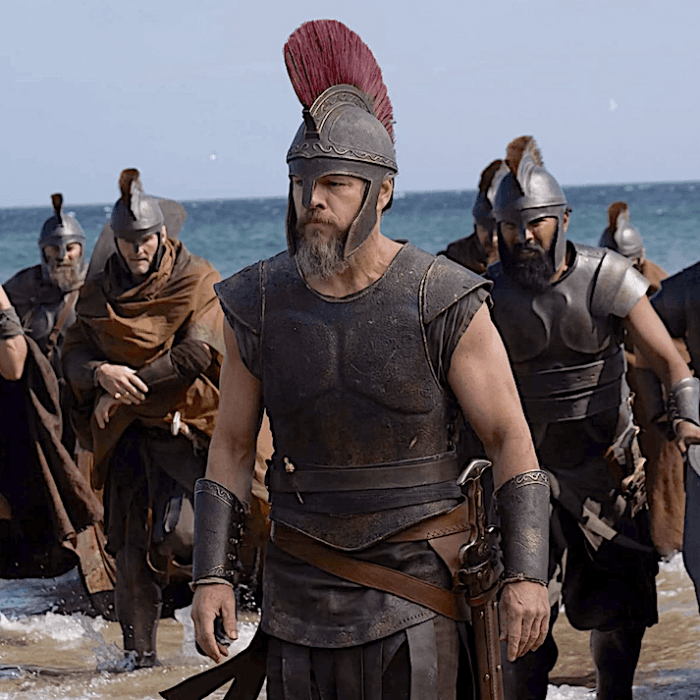
Homer’s Epic Begins with a Moral Judgment
Most readers think they remember The Odyssey beginning with Odysseus stranded on Calypso’s island. That’s where the hero is.It does not begin there. It begins in heaven.
The epic’s first extended speech belongs to Zeus, who does not even mention Odysseus. He recalls the murder of Agamemnon by Aegisthus, despite explicit divine warning. Zeus expresses his disgust at his wife Clytemnestra’s infidelity and praises his son Orestes’ just act of vengeance.
Homer’s opening immediately establishes the epic’s moral framework. The central issue is not fate but responsibility. Zeus rejects the claim that human suffering is simply the work of the gods. Men bring many evils upon themselves through their own choices.
The first human story introduced into the poem is one of broken marriage, violated hospitality, usurpation, and murder.
Athena, a master of pattern recognition, seizes upon the moment to turn her father’s thoughts to the plight of Odysseus. Will Odysseus return? Will Penelope remain faithful? Will Telemachus avenge his father’s honor? Will Ithaca become another Mycenae?
If so, will men ever be wise or reverent towards the gods again, as Odysseus is?
The Epic Ends With Another Judgment
Book 24 mirrors Book 1. Yet whereas the epic began in heaven, the final book begins in the Underworld, among the shades of the dead. Agamemnon himself speaks from Hades. Marriage and honor are his themes. But the verdict is reversed.Instead of condemning Clytemnestra’s betrayal, Agamemnon praises Penelope’s fidelity, declaring that her fame will never perish and that the gods themselves will preserve her glory in song.
He answers the moral crisis with which Zeus began the poem. From the mouth of the wronged Agamemnon, it establishes an objective moral framework for the Greeks, and with them Western civilization.
Honor Is Public Recognition of Objective Excellence
Modern readers often equate honor with social status or personal pride. For Homer, honor is rooted in moral goodness.Neither is merely an emotion, as modern psychology has proposed in its questioning of the legitimacy of notions of honor and shame. Both are responses to objective realities.
For example, Penelope’s honor consists in steadfast fidelity despite 20 years of social uncertainty. Her reputation reflects her genuine virtue. Similarly, while the swineherd Eumaeus has the social rank of a slave, Homer consistently presents him as honorable because he embodies loyalty, hospitality, and humility.
Honor is therefore neither a social construct nor a matter of rank.
We can see the same thing if we contrast the suitors to Odysseus.
The shame of the suitors is not a consequence of losing the contest of the bow. It arises because they consume another man’s wealth, abuse hospitality, mock strangers, threaten Telemachus, and refuse every opportunity to repent. Homer presents their destruction first as a moral judgment before it becomes the basis of a political restoration. He is no consequentialist.
Odysseus is likewise entirely opposed to consequentialist thinking. He repeatedly refuses immediate gratification for higher goods. He leaves Calypso. He resists the Sirens. He restrains himself in his own palace. His honor grows through disciplined self-command.
Honor Is the Grammar of Moral Reputation
Language has a grammar that functions like its foundational blueprint. Music uses harmony. Justice requires proportion.Likewise, every society possesses a moral grammar governing honor and shame. This grammar answers questions such as these:
Who deserves trust?
Who deserves authority?
Whom should children imitate?
What actions deserve admiration?
What conduct deserves disgrace?
No civilization can function without answering these questions rightly.
Among the examples he collects are: honor your parents; keep promises; protect the weak; reward courage; condemn treachery; punish murder; respect truth; show gratitude; practice justice; honor the dead.
This is why even today we recognize Penelope’s fidelity as admirable and the suitors’ conduct as disgraceful. Homer is appealing to moral intuitions that transcend any one historical culture.
Are Shame and Honor Obsolete?
Many have observed how shameless our culture has become and how arbitrary its honors are. It does not mean that the desire for honor has disappeared, or shame, but that they have become untethered from the moral grammar of the Tao.We remain very much creatures of reputation.
There is perhaps no better current illustration of this than social media. Platforms quantify public recognition through followers, likes, reposts, and verification. Praise and public condemnation can spread globally within hours. Reputation has become measurable in ways that would have astonished previous generations.
Some people are famous for being famous.
The difference then is not that honor has disappeared, but that its standards have become unstable in a world governed by consequentialist thinking.
Online, public recognition is often detached from virtue. Visibility, novelty, outrage, and performative identity now attract the same attention once reserved for excellence. The mechanisms of honor remain, but the objects of honor are frequently contested or transient.
Herein lies Homer’s true relevance.
People will always seek recognition. Homer’s great book directs us to direct that desire toward genuine excellence rather than merely rewarding narcissism or social approval.
That is why, despite its mythology, Homer’s moral universe still feels intelligible. It speaks to what C. S. Lewis called the Tao: the enduring order of reality by which human beings recognize courage, condemn treachery, honor faithfulness, and hope that justice will ultimately prevail.