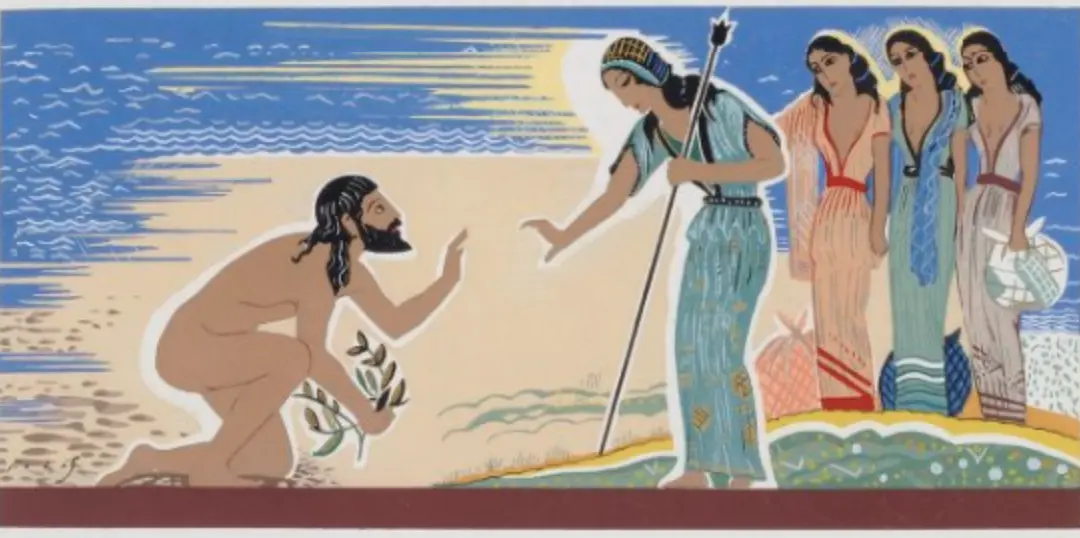
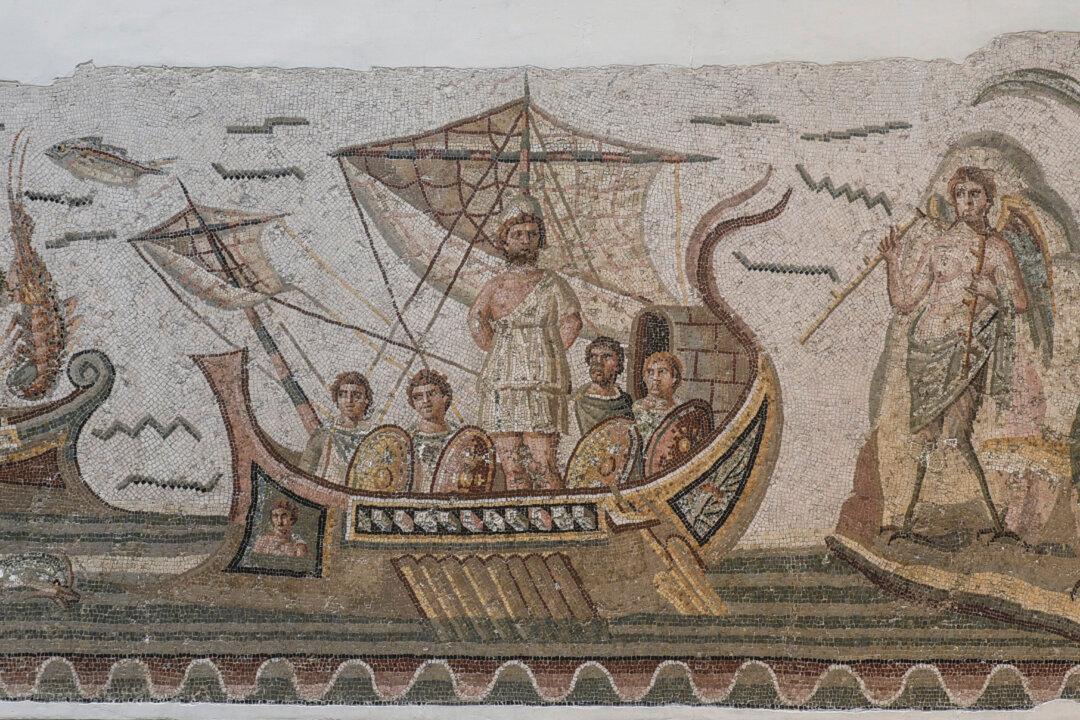
“Sing for our time too,” says Homer to his muse at the outset of his epic poem the “Odyssey.” Almost three millennia after it was written, she still does.
The first word of Homer’s poem is “man.” It is telling because Odysseus, a famous war hero whom Homer describes at the outset as “polytropos” (“a man of many ways”), is not just a man. He is a wise and cunning man.
In one episode, Odysseus confronts a one-eyed monster who boasts that his name is Polyphemus (Greek for “much spoken of”) and then asks him to reveal his identity in return. The famously cagey Odysseus tells him, with no small irony, that his name is Nobody.
We marvel at Odysseus’s foresight shortly thereafter because after he and his men blind Polyphemus to escape being eaten, the monster cries to his neighbors for help, announcing that “Nobody” is attacking him. His neighbors naturally refuse to come to his aid.
The man of many ways defeats the proud, myopic beast with his wise discretion.
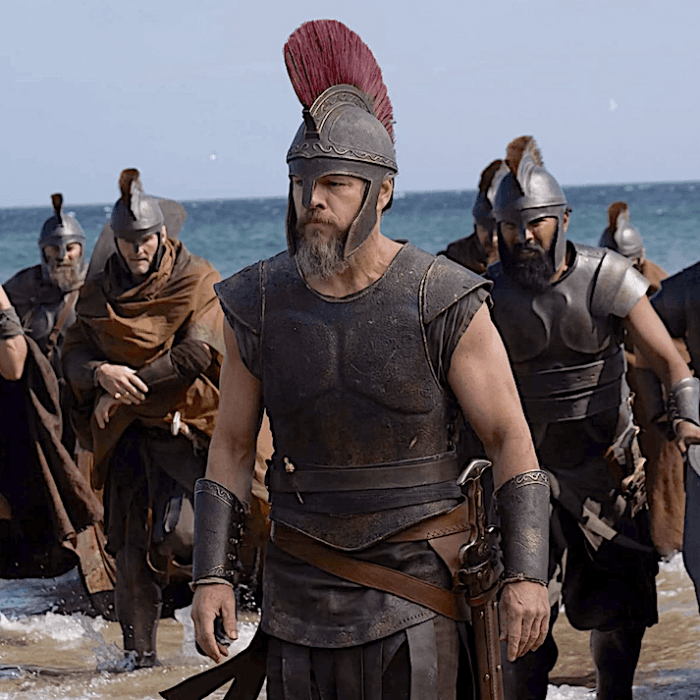
We think we know the “Odyssey” and what it is about. Oscar-winning director Christopher Nolan, whose film “The Odyssey” is now playing in theatres, voices the consensus view when he calls it “the ultimate adventure story.”
But what if we’ve misunderstood the famous poem? What if Homer never intended to tell the ultimate adventure story? What if his aim was not to entertain us?
It is the great philosopher Plato who directs us to a better understanding. In his “Republic,” Socrates notes that his contemporaries call Homer “the educator of Hellas.” Elsewhere, Aristotle calls him “the teacher.” It was the consensus view of the Greeks.
Those statements sound strange to our ears today.
We think education happens through textbooks, in schools, or in universities. Education has become an industry. Stories are there simply for entertainment.
The Greeks, however, thought that education was less the dissemination (or production) of knowledge than a process of training in wisdom and virtue.
Good stories such as Homer’s form character. They model wisdom and virtue.
Children learn to imitate courage by observing Achilles.
They learn wisdom through Mentor.
Prudence and discernment through Odysseus.
Fidelity through Penelope.
Hospitality through Eumaeus.
Long before philosophy analyzed virtue, Homer gave us its personifications. And since, as Aristotle observed, humans are the most imitative of all creatures, learn their earliest lessons through imitation, and inherently take pleasure in viewing imitations, it stands to reason that a great poet such as Homer is the best type of teacher.
We take delight as he teaches.
Regarding Homer as a teacher completely changes how we read the “Odyssey.” It is the reason Homer’s muse still sings. He not only delights us. He teaches us about being human.
If Homer is a teacher, then, and Odysseus is his model of wisdom, we need to see Homer as a teacher of wisdom.
What is Homer teaching, and how does he do it?
Homer Is Educating Desire
Desire is a scarlet thread running throughout Homer’s epics. Paris’s illicit desire for Helen provoked a war that destroyed Troy. Homer is not just warning of the malign influence of Aphrodite, the goddess of love. He is warning of Paris’s preference for lust over wisdom. Men who do not check their appetites are on the same path to destruction. We must learn to love wisdom, as Odysseus does.
The monsters Odysseus confronts are not merely creatures. They represent temptations.
Calypso tempts Odysseus with eternal comfort without duty. The Lotus Eaters tempt men to forget their painful past. Circe offers a thoughtless enslavement to appetite. Scylla and Charybdis tempt us to see life as the choice of the lesser evil. The Sirens offer the hubris of immortal fame, but without the things that make a human life complete—a family, a household, a city, and the inheritance of a name of which to be proud.
Every episode asks the same question: Who or what rules the soul?
To reduce Homer’s “Odyssey” to a mere adventure story is like seeing Nobody as its protagonist. Homer’s “Odyssey” is no mere adventure story.
It is a psychagogy, a “journey of the soul.”
Homer Inspires Plato
“The safest general characterization of the European philosophical tradition is that it consists of a series of footnotes to Plato.” —Alfred North Whitehead
Plato describes the soul (in Greek, “psyche”) as consisting of three parts, each of which has a drive that puts it at odds with the others.
In his “Republic,” Plato constructs an entire city to illustrate his tripartite soul (reason, spirit, appetite), complete with its three representative civic functions (ruler, guardian, consumer). While each part of the soul serves its function and must be given its due, Plato maintains that for an individual to have a well-ordered soul and to live a just and harmonious life, reason must govern the other two parts.
Where did he get that idea? Surely he got it from Homer, “the educator of Greece.”
Odysseus is an extraordinarily calculating man, yet he succeeds only when his reason governs him. His men, on the other hand, perish because their appetites rule them.
If the Western philosophical tradition is a series of footnotes to Plato, its unacknowledged teacher is Homer. The journey of the soul that is at the heart of Plato’s philosophical analysis was first mapped out in Odysseus’s grand adventure.
Why Does the “Odyssey” Still Matter?
It isn’t because of its adventure but because it sings about human nature in a symphony of meaningful images. It encompasses the gods and the underworld.
And human nature has not changed.
The “Odyssey” captivates us today, as it did Homer’s original audience, because we have made no progress from who we are.
We still face Lotus Eaters. Life’s traumas make us want to forget what has happened rather than gain wisdom from it. Many take drugs or develop self-destructive habits to avoid confronting their terrible and terrifying experiences.
We still face Sirens. People (and social media) make us fixate on our public image at the expense of those nearest and dearest to us. A life tied to a mast in the wine-dark sea.
We still face Circe. We devote ourselves to a life of pursuing consumption to exempt us from thinking about whether vice or virtue still matters.
We still face Cyclopes. Many cynical people call us to live a life without the order of civilization, which they say is only bad. Our Cyclopes would have us live without technology, to ignore the reality of good and evil, and to ridicule the gods.
They shout “hey ho, hey ho, Western civ has got to go.” Like John Lennon’s song “Imagine,” they are atheists who “imagine there’s no Heaven,” “no Hell below us,/ above us only sky.”
In that sense, Homer’s world is our world.
Only the names have changed.
Our monsters are a distraction. Consumerism. Pornography. Power. Ideology. Comfort.
Homer’s questions have not ceased to be relevant. In fact, he’s helped us identify our own monsters and given us a model for how to overcome them.
What Kind of Person Are You Becoming?
The “Odyssey” has not been lauded because it tells a spectacular tale of how one extraordinary man came home.
It still sings because it tells us how we can find our way home—as Odysseus did.
Not to Ithaka ... but to a rightly ordered soul.