Most people know of Igor Stravinsky from his famous “The Rite of Spring,” a profoundly captivating but deeply disturbing ballet composed in 1913 by this rising musical star from Russia.
The legend is that people walked out of the symphony hall at its debut. That’s both correct and incorrect. The music wasn’t the offensive part. It was the absurdity of the choreography that caused the protest.
“The Rite of Spring” is one of those pieces you cannot quit even if it is deeply upsetting. It’s so modern sounding that it is hard to believe it was composed more than a century ago. I’ve come to think of it as the soundtrack to a collapsing civilization. Indeed, it appeared a year after the Titanic sank into the ocean, as the first signs of war emerged in Europe, and as dramatic changes to the U.S. Constitution hit in the United States. It was the year in which the world decisively moved from light to dark.
This is one reason I find such great respite in the glorious piece that Stravinsky debuted in Paris three years earlier. It is called “The Firebird Suite.” Based on traditional Russian folklore, it tells the story of a heroic prince who enters an enchanted forest ruled by an evil sorcerer in order to free a bird who gives up a magic feather as gratitude, which then allows him to free a princess, crush the sorcerer, and rule the kingdom.
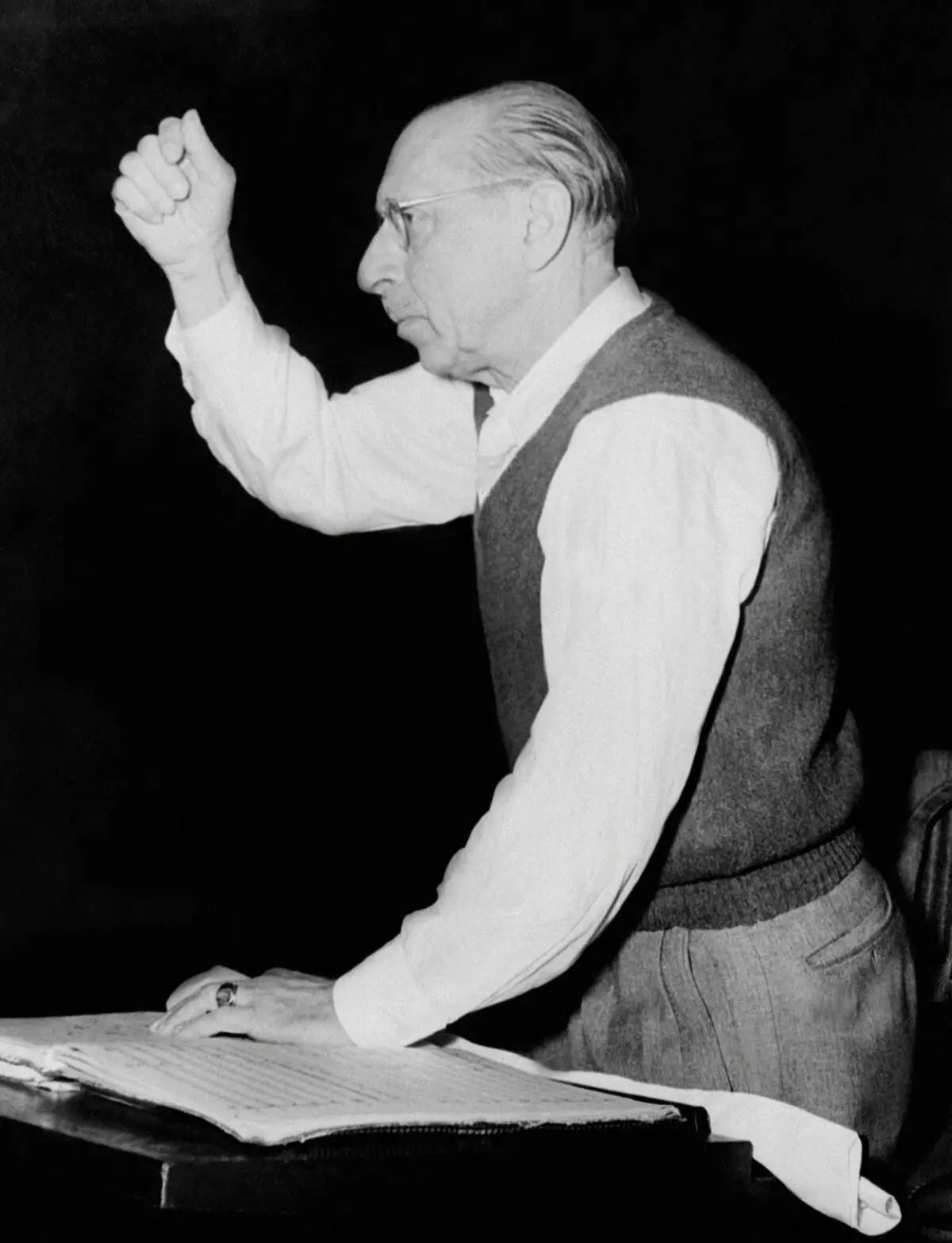
Stravinsky composed the music for the ballet, which is mostly performed these days as a stand-alone orchestral suite, if you are fortunate enough to find a performance.

It earned a huge place in art history from its debut. With the age of Gustav Mahler having closed with his last symphony from 1909, the world wanted to know what was next. This is what was next.
I’ve known this wonderful piece from childhood but only heard it live at the orchestra hall recently, as presented by the Hartford Symphony. Nothing could have prepared me for the impact. I was not the only one. I could feel the entire audience rising in their seats, eyes and ears at peak intensity throughout, energy and excitement spreading everywhere. The moment it ended, people went absolutely wild.
This is how you want classical music presented.
Again, my mind fixates on the year 1910. The Edwardian era had decisively closed with the death of the king. The West had experienced a half-century of astonishing economic growth and technological progress. Cities were rising high in the air, internal combustion was transforming travel, homes and parks were lighting up with electricity, photography and telephony were becoming the norm, and flight was clearly the future.
No one could have foreseen the war that was just around the corner of the historical trajectory. As a result, you still had the wild optimism that came with such a long record of peace and prosperity, and the perception that there was no limit to the very notion of civilizational progress. Every composer, every artist, every writer was competing to capture and embody whatever that new thing would be.
The rich, innovative, and fresh sounds of “The Firebird” are so evocative and interesting—with such remarkable drama from first to last—that it dazzles the mind and heart. I could not help thinking, especially now that artificial intelligence (AI) is everywhere to achieve and master the routines of life, that this is the sound of actual creativity. AI could never replicate it.
With the rise of AI, we’ve all been asking the question: What exactly does the human mind bring to the table? One answer is creativity. AI cannot do that, not really. What does creativity sound like? It sounds like this piece.
I’m particularly drawn to composers who can construct a great melody. This is because, even as a lifetime musician trained from the earliest years, not once has a fresh melody occurred to me. I can write prose all day, but the composition of music has always eluded me completely. Something to do with how our brains are constructed. Some people have what is wholly denied to others.
Maybe this is not obvious from “The Rite of Spring,” which can sound like a long series of primal rhythmic motifs, but in “The Firebird,” it is the melodies that stand out. They are bold, inspiring, rhapsodic, even hymn-like. After all, Stravinsky’s teacher was Nikolai Rimsky-Korsakov, composer of “Scheherazade” (1888) and the famous “Flight of the Bumblebee” from “The Tale of Tsar Saltan.”
In those days, and in the half-century before the Bolshevik Revolution, the culture and music of Russia was considered to be part of the Western experience. Even the czar and his family dressed the part of a European monarchy. Russian composers and novelists were all the rage in Europe and America. The world outside Russia had come to expect wild creativity, challenge, and moral drama from Russian artists.
“The Firebird” begins with a surprising groaning from the double basses with an underlying rhythm. You know for sure that you are in for an experience. A slow and lilting melody in a minor key follows with Stravinsky’s paradigmatic use of double reeds. Shortly, the piece bursts into speed and the crazy orchestration that melds glissandos from strings and harps topped by a piccolo.
This does not last as long as you want before the most lovely melody begins with an oboe backed by viola, all in a major key that makes the heart settle back again, before it settles in again with a deeply romantic ethos and long lines.
This is interrupted by a new theme that reminds one of his later work with horns, mutes flying in and out of bells, and a xylophone riffing crazy things as trombone glissandos penetrate through waves of strings and pounding drums. Here is where you get that primal sound, with puzzlingly fresh orchestrations for which Stravinsky was famous. You can hear also the influence of his teacher, almost as an homage.
This section ends and a new sensibility emerges with a bassoon sounding a dream-like diatonic melody in a minor key, all with the feeling of wandering and discovering. The strings answer in soft, shimmering waves, and for a moment, the whole orchestra seems to breathe together. Then comes one of the most famous and beloved sections of the entire work: the Round Dance of the Princesses.
Here the music turns tender and luminous. A simple, folk-like melody floats in the violins, answered by the woodwinds in gentle dialogue. It has the quality of a children’s song elevated to high art. It’s pure, radiant, and heartbreakingly innocent. The melody builds with increasing richness until the entire string section sings it in soaring, long-breathed lines. This is Stravinsky at his most lyrical, showing that even the future revolutionary still carried the full Russian romantic tradition in his blood.
The Infernal Dance of King Koshchei erupts like a thunderclap. This is the section that makes audiences sit bolt upright. Brutal, pounding rhythms, shrieking woodwinds, and brass that sounds like it is tearing the fabric of the sky. The xylophone and percussion go mad while trombones and trumpets blast savage lines.
Here is where the young Stravinsky fully reveals the rhythmic violence and orchestral power he would later unleash in “The Rite of Spring.”
Just when the frenzy seems unbearable, it collapses. A quiet, hypnotic lullaby appears. The bassoon returns, this time even more dreamlike, rocking gently over hushed strings and harp. It is one of the most magically beautiful passages in all of 20th-century music. It is intimate, almost sacred.
Then comes the finale. It begins almost imperceptibly, a single horn call that feels like the first light of dawn after a long, terrifying night. Slowly, the music gathers strength. The famous majestic theme rises—noble, triumphant, hymn-like—first in the horns, then spreading through the whole orchestra in great, glowing waves.
The brass shines like sunlight on gold. The strings soar. By the note, the music has become a vast, ringing affirmation of life and victory. When the last crashing chords land and the final glowing chord hangs in the air, you feel something has been restored.
That is why the Hartford audience exploded in applause the other night. It was born of gratitude all around, for beauty, for order restored, for a reminder that even in dark times the human spirit can still produce something this radiant.
The critical reception of this piece was universally approving. Henri Ghéon called it “the most exquisite marvel of equilibrium that we have ever imagined between sounds, movements, and forms: a danced symphony.” Stravinsky’s reputation as the composer of the time became international.
Keep in mind that he was only 27 when he composed this masterpiece.
Listening to “The Firebird” in 2026, more than a century later, is like receiving a message in a bottle from a lost world. It carries the optimism of 1910—before technology betrayed us, before the trenches, before the revolutions, before the ideologies that would tear Europe apart.
Yet it also contains the seeds of everything that was coming. Stravinsky would soon break music open. Civilization would soon break itself open. But for these 25 or so minutes, we get to live inside a world where evil is defeated by enchantment, where beauty triumphs, and where melody—real, human, unforgettable melody—still rules.
In an age of machines that can mimic almost anything, “The Firebird” reminds us what actual human creation sounds like. It captures the middle realm between time and eternity.