The last movie of Downton Abbey did not disappoint. Just the opposite. It tied up every loose end, gave everyone a happy ending, settled all controversies, and gave us a glimpse of a future that is possibly bright. It is set in 1930, the fulfillment of a long trajectory of this aristocratic family from the sinking of the Titanic through the Great War and through the tumult of the 1920s, ending in a time of solidified change.
And yet, we, the viewers, are profoundly aware of what is coming. If England seemed stable and settled in 1930, it would again find itself in war a decade later, when the young men at the end of the movie were once again dragged into a terrible conflict that would inflict ever more damage to the culture, the economy, and the politics of this great nation.
In some ways, the story arc of Downton reminds me of the Godfather trilogy, another story that begins at the height of glory just before the descent sets in. The rest of the story is observing how a family that once had it all together confronts crises from within and without. We cheer for them at every step, cringe at pointless family arguments, worry about poorly chosen lovers, shudder at financial scams, and thrill at the subtleties of the class-based pecking order.
Above all else, Downton is notorious for its elegance and opulence. It is everywhere. The furnishings are all handed down, the product of centuries. The oil paintings are portraits of family members. The manners are impeccable. The clothing is flawless, and I say that as someone who cares deeply about menswear. All of the collars are detachable. When the men around the table gradually shift from white tie to black, the move is imbued with cultural significance. The gradual downsizing of the house staff provides a kind of metric to measure cultural decline along with it.
The pacing of the show comports with the pacing of life, which is to say much slower. When the first episode begins, there is no such thing as a telephone, but those come later. Same with cars, flight, and electricity in homes. Kitchen gadgetry takes over. At every stage, there is someone to debunk the innovation as not worth the money. The viewer sees the point, and time comes to prove it.
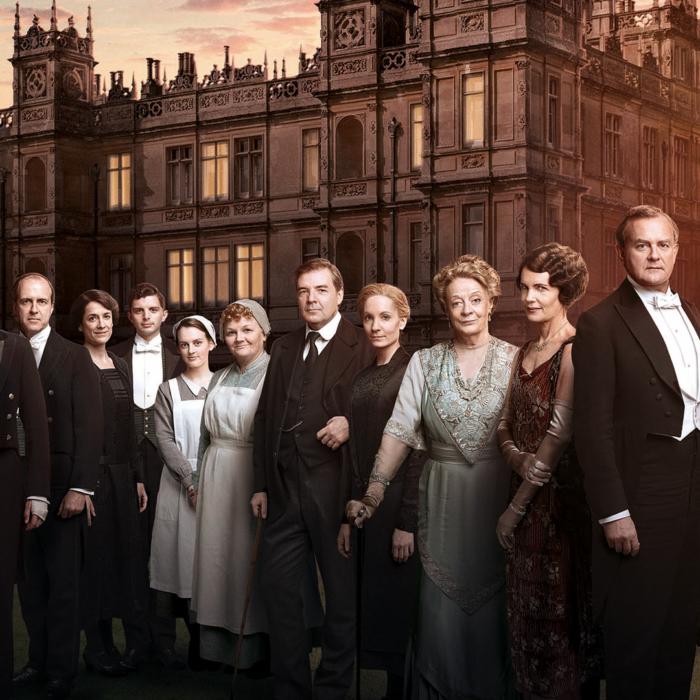

The philosophical bent of the show is always beneath the surface. It is a mixture of regret for the passing of the old world but also with the inevitability of the new world. It’s the adaptation of the aristocracy from one to the other that is the essential drama. But with that, there are very human problems we know too well: loveless marriages, wayward children, misfortune in financial markets, premature death, and terrifying private struggles well-masked by a brave public face.
Only once in the seemingly endless series is there an attempt to explain and defend the class system that the family inhabits. The Dowager Countess, Lady Grantham, is protesting the municipalization of the local hospital.
“For years I’ve watched governments take control of our lives,” she said, “and their argument is always the same: fewer costs and greater efficiency. But the result is the same, too: less control by the people and more controlled by the state, until the individual’s own wishes count for nothing. That is what I consider my duty to resist. See, the point of a so-called great family is to protect our freedoms. That is why the barons made King John sign the Magna Carta.”
Precisely. In those words, we find the wisdom of the ages, a core point largely lost on Americans because we do not have this history, but which the English forget at their peril. And actually, we see how everyone in the film is swept along with modernity to forget, to find their salvation in products, consumption, and engineered systems rather than tradition, manners, and decorum.
Somehow through it all, and only with dedication to the earlier ideals, the tradition survives. The tradition, of course, is instantiated in the mighty castle that is the Abbey itself, a structure completely unsuited to the modern age. Sustaining it, maintaining it, and staffing it grows increasingly unviable, and yet no one wants to pull the plug on the great mansion, fearing that its loss means the destruction of a legacy.
The question is on everyone’s mind from first to last: What precisely is the point? Is the family just hanging on out of pure nostalgia with an increasingly forlorn hope of some kind of resurrection that is ever less viable? There is no question as to where the viewer stands. We want the old days back. We want the family to fight for its ways, and we all vaguely perceive that if this building falls, so falls civilization itself.
This masterful show, from first to last, finds itself in a strange position in the midst of the biggest revival of nostalgia since the Counter-Reformation. It is the soundtrack and template, the full mural of a world gone by that has been fully brought back to life before our eyes. Watching it tempts us all to believe that it is possible. What was undone can be redone and restored, like what happened with the Waldorf-Astoria in New York City and the Hotel Washington in the District of Columbia or like what is happening with old-time Budapest.
Indeed, with brutalist forms and modern art wholly discredited and wrecked in popularity, with the esoterica of postmodern scholarship and music no longer respected, we are living through a tremendous scramble to find what’s true: about our nations, our religions, our families, our cultural rituals, and even down to the decor in our houses and the clothes we wear.
We seemed to have reached the endpoint of deconstruction and have set out on a new journey toward reconstruction.
We have in this series fully 60 hours of cinema to excite the imagination of what is possible in everything from home furnishing to dress to food to household and community decorum. It’s the basis of a new form of romanticism that seeks to recreate the past in the present. My own intuition is that this is the only way forward, considering that every experiment since World War I in modernity has led to a cul-de-sac of chaos and a ditch of nihilism.
Where else to turn? Whatever the answer, we will surely find it by looking back.
Crucially, this film offers an outstanding historical reconstruction of what precisely happened to unravel the old world. It was dismantled through careless disregard. The state took over from society. Experts trampled on tradition. Technology blasted away settled ways. Hubris took over from wisdom, urbanity from family, and experts from experience. The disregard and disaster is foreshadowed in the sinking of the Titanic in the first episode, but that becomes paradigmatic of the sinking of everything.
The series ends with long-simmering feuds ending, new families coming together, the house preserved, and allocations of wealth rearranged in new ways that offer some hope for the future, all on a smaller scale. The grandeur is gone, but the integrity remains. This is the best possible ending for the series and viewers alike. It ends on a note of what’s possible, a hope that there can be a future despite the brutality and exigencies of human nature. It ends with a clean statement in favor of the permanent things and against the fripperies of the moment.