Food, which generally originates with a farmer, gardener, or orchardist, is fast losing its hands-on persona and increasingly gaining a mechanical, chemical platform.
The American business landscape is largely anti-people. The current rush to artificial intelligence reflects how eagerly most businesses seek to eliminate people. The farming sector illustrates this trend better than most.
Farming is out of sight and out of mind for most people. Food appears on grocery store shelves. It’s treated as a pit stop between life’s more important activities. Fortunately, the Make America Healthy Again movement is beginning to shine a spotlight on food, including through revised and more truthful dietary guidelines.
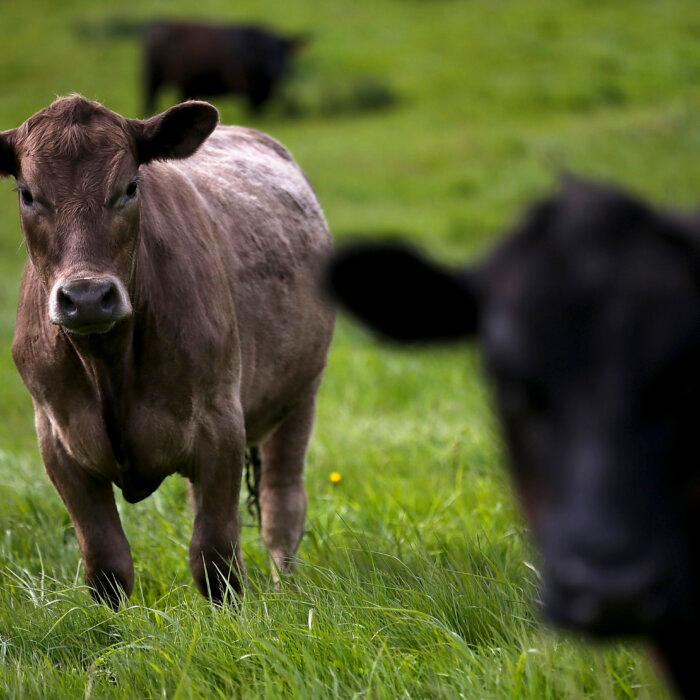
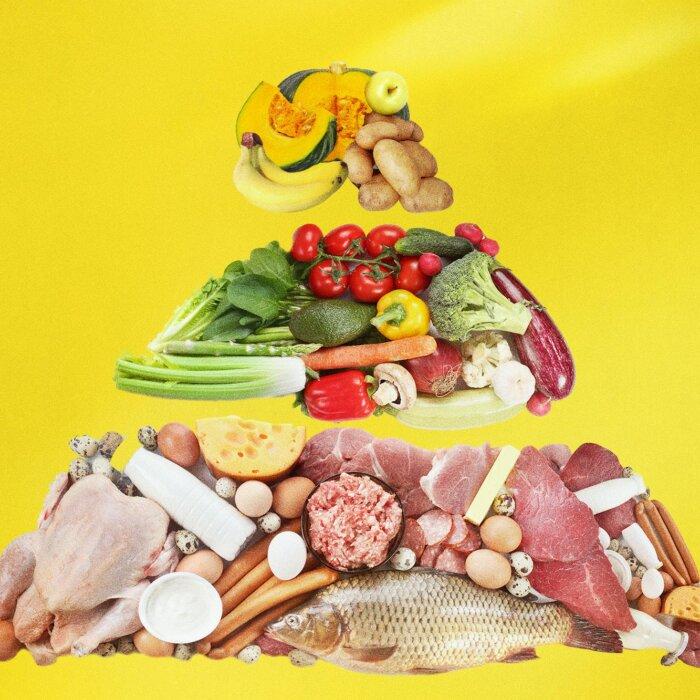
For decades, U.S. agriculture policy and practice have replaced farm labor with machines, chemicals, and pharmaceuticals. This raises the question: Is food a living thing, or simply an inanimate pile of protoplasmic matter to be manipulated like wheel bearings or bottle caps?
As technological sophistication pulls our culture away from its biologically vibrant roots, it jeopardizes our functional microbiomes. Yes, that’s a packed sentence. You might need to reread it—slowly. The point is, our internal systems are more aligned with the ancient world than with “Star Trek.” Do we really want machines, chemicals, and drugs to be the medium with which our food is grown?
Wes Jackson, cofounder of The Land Institute in Salina, Kansas, has long advocated for a healthy “eyes-to-acres” ratio. He has suggested that when fewer people interact with the land and the growing of food, both land stewardship and food integrity suffer.
Per-person agricultural output—the number of people one farmer feeds—has increased dramatically over the past century. Cyrus McCormick’s invention of the reaper in the 1830s launched the agricultural industrial revolution, enabling farmers to produce far more than ever before. Replacing the scythe with the reaper was revolutionary.
Although technology brought many agricultural efficiencies, without ecological ethics, it may have gone too far. The introduction of subtherapeutic antibiotics in chicken waterers enabled the rise of concentrated animal feeding operations. With feed augers, water pumps, and massive barns, individual farmer output soared. And along came super bugs, C. diff, MRSA, avian influenza, polluted water, and fecal-stench air in surrounding neighborhoods.
At our farm, we’ve chosen to replace energy, capital, equipment, chemicals, and pharmaceuticals with people. Our equity lies in skill, knowledge, and community, all embodied in people. Instead of 100,000 laying hens packed into three-tier cages and rarely seen by humans, we pasture our chickens and gather eggs by hand. That means a lot of human–chicken interaction.
This intentional substitution of people for machines and chemicals makes sense from health, ecological, and nutritional standpoints. The problem? It doesn’t make food cheaper. People are complicated.
Faced with all this regulation, many businesses develop a distaste for people and a preference for machines. Recently, our whole crew descended on a rented field overrun with multiflora rose, a noxious invasive bramble introduced decades ago by a government program. Most farmers spray herbicide. We chop it out with mattocks—by hand.
Herbicide would be cheaper, but we love the land and water too much to pour poison on it. We process chickens by hand instead of with machines, which can rupture intestines and spread manure on the carcasses—something big processors rinse off with chlorine. Our method is clean enough that antimicrobials aren’t necessary. These trade-offs are common across industries.
Who wants to call an airline or cellphone company and get a robot that doesn’t offer the option you need? Why do businesses use this customer-irritating approach? Because government regulation and liability concerns push businesses to be anti-people.
As clever as our culture is, we don’t measure gains and losses in the commons, or shared resources. If I pollute the river, it’s a net gain on gross domestic product (GDP) because it creates jobs and uses fuel and machinery to remediate. Prisons are a positive for GDP; they should be a negative for GDP. As a society, we do not capture these kinds of assets and liabilities on a national balance sheet.
In food, we don’t even measure nutritional quality. A pound of beef raised on corn and chemicals is considered the same as a pound of beef that improved soil and boosted earthworm populations. A society that fails to measure health instead of sickness will ultimately deplete its resource base. Unless we start viewing soil and worm destruction as a negative to our GDP, we’ll continue depleting aquifers, eroding soil, and leading the world in chronic disease.
Population health begins with a food system that honors biological integrity at every link. Food isn’t just calories, fat, and protein—just as soil isn’t just nitrogen, phosphorus, and potassium. Real caretaking requires human effort. Machines or artificial intelligence microchips can’t do it alone.
Agrarian icon Wendell Berry wisely said that care requires love, and love requires intimate knowledge. You can only know land, animals, and plants by walking among them—by engaging with them. Food isn’t like a car factory, and our microbiome isn’t a motor. It’s a teeming universe of microbes awaiting connection with their outdoor cousins through the gateway of our mouths.
The most revolutionary step our nation could take—for its farmland and its health—would be to increase the number of farmer-caretakers. We need more people growing our food, not fewer. A better “eyes-to-plate” ratio would restore fidelity to our food and health.