Commentary
In general, conservatives have favored genetically modified organisms (GMOs) as technological progress. Liberals are the ones who question DDT, glyphosate, dead zones, and soil erosion.
The historical divide between conservatives, viewed as exploiters, and liberals, viewed as nurturers, is what prompted me years ago to adopt the moniker “Christian libertarian environmentalist capitalist lunatic farmer.” The juxtaposition of those various boxes enabled me to bridge stereotypical political assumptions.
As GMOs came into being, with Monsanto and Roundup Ready soybeans (glyphosate herbicide immunity) at the head of the class, the political boxes were—and generally have remained—clear. Liberals question GMOs and tend to want to outlaw them. Conservatives view them as a great accomplishment of human ingenuity.
My take on GMOs is faith-based as much as anything.
The Creation record in biblical Genesis offers two rules about biology: “The earth brought forth grass, and herb yielding seed after his kind, and the tree yielding fruit, whose seed was in itself, after his kind.”
The two rules are seed and likeness. GMOs violate both: They are not an ordered kind (that’s the whole point—making another kind that nature would never allow), and they are either sterile or don’t offer consistent seed.
The only cross-speciation historically was a donkey and a horse, which made a mule, which is sterile. It’s as if God said, “I’ll allow this, but no further.” GMOs override every genetic boundary against order, moving biology toward chaos. But such a position irritates my conservative friends, who scream “anti-science,” “anti-innovation,” and “government intrusion in business opportunities.”
Meanwhile, my liberal friends want to outlaw GMOs, even though President Barack Obama put Michael Taylor, Monsanto’s legal counsel who shepherded GMO development, in charge of overseeing the Food Safety Modernization Act. Go figure.
From a political policy standpoint, does a middle ground exist on this issue? I think it does, in the broad issue of property rights. How do conservatives promote innovation without jeopardizing the environment? Or, asked another way, do liberals have a remedy to GMO proliferation that doesn’t involve additional governmental regulation? Yes, I think so.
The old adage “Your freedom ends when your fist hits my nose” can be applied here. Realize that GMOs by definition are promiscuous. Pollination is a promiscuous process. In the early battles over GMO development, industry scientists said pollination was inherently local and that cross-contamination would not be an issue. We now know pollination can get into the jet stream and cross continents. Yes, GMOs are that promiscuous.
Developers sought and received patent protection for their GMO plants, primarily corn and soybeans. This meant Monsanto, for example, owned these plants. Farmers had to buy seed from the owner each year. Quickly, cross-contamination occurred. Organic farmers (organic certification does not allow GMOs) found GMOs in their crops.
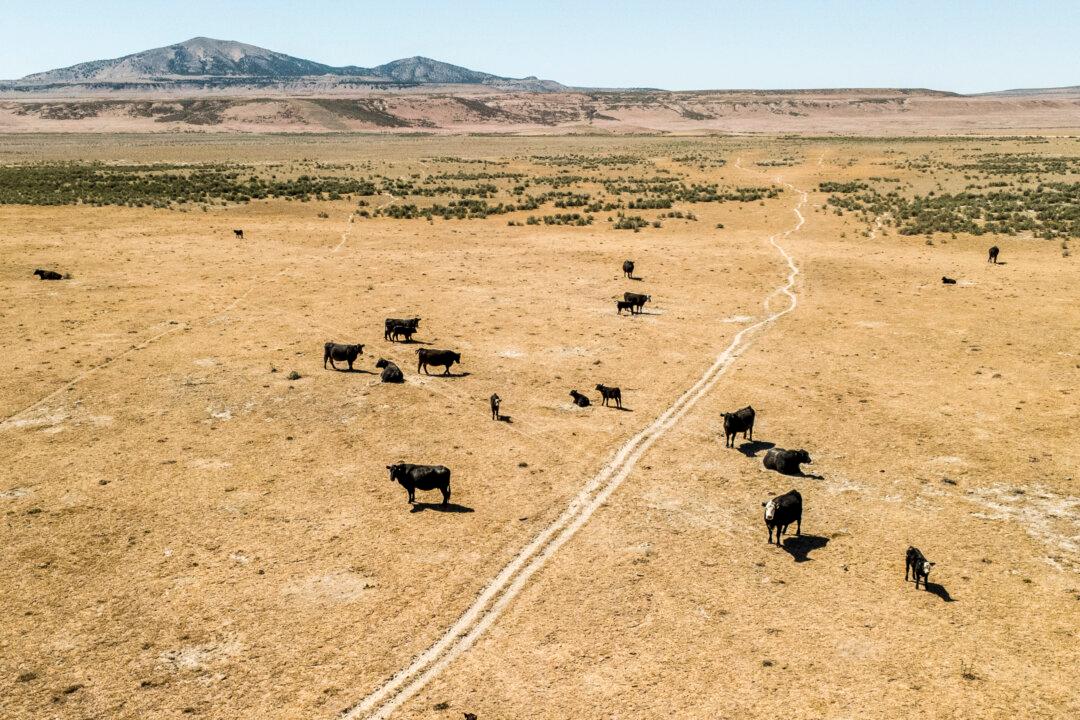
In normal trespass litigation, if you have a bull and he comes onto my property and stomps on my award-winning rose bushes, I can go to the magistrate and haul you into court for trespass. The court will award damages to me caused by your bull.
GMO cross-contamination is a similar situation. Pollen does not respect fences very well, and many farmers do not want GMOs in their fields or their crops. But courts in both Canada and the United States, wrestling with GMO trespass, ruled that farmers found with GMO contamination were liable for intellectual property theft from GMO owners. These cases pitted individual farmers against the most powerful agribusiness corporations in the world. It was David and Goliath—but David had no slingshot. Farmers lost.
In other words, when a company’s GMO bull came across and gave a farmer alien life forms he did not want (stomped his rose bushes), not only was the GMO owner not liable for damages, but the farmer had to pay the GMO owners compensation for having unauthorized GMOs in his fields. In other words, the rose bush owner had to pay the bull owner for the privilege of having his rose bushes stomped.
In typical “my box, your box” policy fashion, conservatives focused entirely on innovation and technological development, while liberals focused entirely on ecological damage. If conservatives had looked beyond technology to appreciate the real issue—property rights and trespass—they could have argued from the higher moral ground of “Your freedom ends when your fist hits my nose.” Likewise, if liberals had embraced private property rights, they could have elevated their fight beyond simply asking for more regulation.
Many issues are this way—where each side digs in on its myopic view and can’t imagine a higher moral position. Both the environmental and technological issues could be balanced with a proper appreciation of historic property rights and trespass law.
By adopting this position, I’m able, as a conservative or libertarian, to support innovation and experimentation but remain consistent with “Keep your hands off my stuff.” As an environmentalist, the property rights position frees me from having to ask for yet another intrusive government regulation on private business.
If this had been the position of both liberals and conservatives during the early days of the GMO fights, experimentation could have proceeded—but with the boundary that these alien life forms must be kept on the properties that wanted them. Would GMOs exist under these circumstances? Maybe; maybe not. Such a public policy would have definitely slowed down their development. Liberals would have been spared the time and money lobbying for regulation, while conservatives would have been spared another example of their conquistador mentality.
With both liberals and conservatives missing the issue on one hand and the government—including the courts—conceding free rein to the corporations on the other, GMOs are now ubiquitous, and glyphosate is an Environmental Protection Agency (EPA) darling. What other product besides glyphosate has already paid out $10 billion in liability lawsuits (non-Hodgkin lymphoma), faces thousands of unsettled cases, and is still on the market?
When a society abandons the “Your freedom ends when your fist hits my nose” concept, all sorts of strange and convoluted reasoning follows. The next step? Chemical companies are mounting a full-court press to absolve pesticides and herbicides from product liability as long as the EPA agrees they aren’t harmful. This is almost identical to the liability protection granted to vaccine companies by the conservative President Ronald Reagan and the liberal Sen. Ted Kennedy (D-Mass.) in 1986 with the National Childhood Vaccine Injury Act.
It took more than 30 years to finally link DDT to three-legged salamanders, infertile frogs, and eagle eggs that wouldn’t hatch. In biological systems, the cause of my bloody nose is often not clear immediately. Sometimes, years of research and connecting dots are required to finally discover the fist. Many times, we don’t know. That’s why it’s more important to stick with what we do know.
What do we know? Your bull stomping my roses is never acceptable. That’s what we know. Life is full of unknowns, and that’s OK. But abandoning the known prematurely or unnecessarily is foolish. That’s how we covered our landscape with glyphosate.