A donor name appears in a disclosure. A campus publication connects it to a Chinese political network. Hoover fires back and says the wrong person has been identified. Within hours, the story is no longer only about a gift. It is about trust.
That is the danger.
The question around Chinese-source money and the Hoover Institution needs discipline. It does not prove Beijing bought Hoover’s conclusions. It does not prove Hoover softened its China work. It does not prove the Chinese Communist Party created the controversy. But it does create the kind of opening Beijing has learned to use well: an incomplete public record, a disputed claim, and enough uncertainty to make people suspicious of everyone involved.
Beijing does not need to prove Hoover is compromised. It only needs Americans to hesitate before believing one of Beijing’s sharpest critics.
The Fissure Already Exists
The first model is simple: find a split already present and press on it.
Solomon Islands offers the clearest example. The country’s 2019 switch in diplomatic recognition from Taiwan to Beijing did not create all of its internal tension. The pressure points were already there: provincial grievances, corruption concerns, ethnic divisions, resentment over Chinese commercial influence, and distrust of political elites.
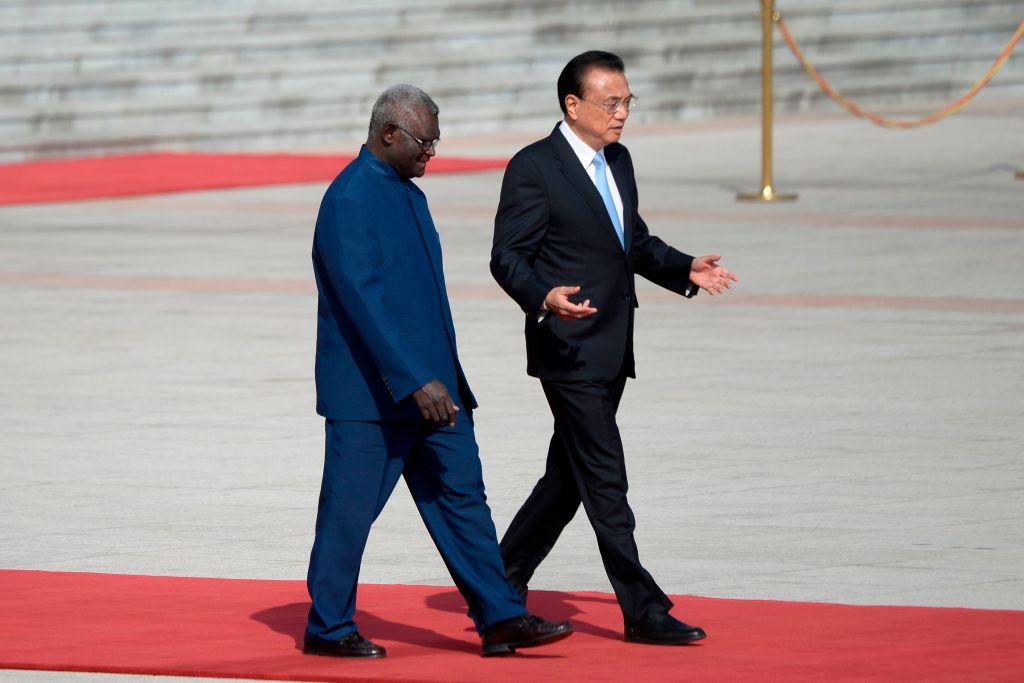
That is how exploitation works. The crack comes first. The information campaign supplies the pressure.
When Beijing Widens the Crack
A second model is more aggressive. In this version, the fissure may be real, but the “public voice” around it is manufactured.
The objective is not always persuasion in the traditional sense. It is atmosphere. Make the argument louder. Make the room feel angrier. Make Americans believe the most corrosive version of the debate is coming from their neighbors.
Which brings the issue back to Palo Alto.
The Hoover Question Is the Opening
The Hoover controversy may have begun as a legitimate transparency question. It may involve a disputed identification. It may require more documentation before anyone can draw firm conclusions. Yet once the controversy exists, it has information value for Beijing.
A funding question can become a credibility question. From there, it can become a talking point against one of the institutions that has spent years explaining how CCP influence works.
This is the part open societies handle poorly. The same fact pattern can support legitimate accountability and still be useful to a hostile power. Suppressing the question would be a mistake. Leaving it unresolved would be a gift. The better answer is disclosure clear enough that Beijing has less ambiguity to exploit.
That burden falls on elite institutions, not on the public. Universities and policy centers that study authoritarian influence cannot afford vague foreign-funding disclosures, especially when money is restricted or tied to directed research. The public does not need every private donor conversation. It does need enough detail to know whether foreign-source money is funding topics, centers, scholars, programs, or research streams that touch national security.

For Hoover, the danger is larger than whether a donor shaped a conclusion. Incomplete disclosure gives Beijing, or anyone echoing Beijing’s preferred narrative, room to turn a transparency question into a reputational weapon.
The Counterpoint Matters
There is a necessary caution here. Critics should not overstate what is known. Hoover has disputed the most damaging donor-identification claim. Its public China work isn’t aligned with Beijing-friendly messaging. A single reported restricted gift on its own does not prove intellectual capture.
The problem is sloppy accusation can produce the same effect as hostile amplification. If every funding question becomes a charge of betrayal, serious oversight gets buried under noise. Beijing benefits from the static noise. The CCP’s information strategy thrives in the space between secrecy and accusation. When institutions disclose too little, critics fill the gap. When critics reach beyond the evidence, Beijing gains another chance to portray the debate as political theater.
The standard for professional journalism should be higher.
A responsible response holds two facts together: foreign-source funding deserves scrutiny, and disputed allegations should not be treated as settled. That discipline is how open societies defeat gray-zone influence without becoming part of the campaign.
Clarity Is the Defense
The Hoover matter should be treated as a stress test. Can an American institution that studies Chinese influence meet a transparency standard high enough to deny Beijing an easy information weapon? Can critics raise legitimate questions without drifting into unsupported accusation? Can the public recognize that a foreign-linked controversy may be both an accountability issue and a tool of foreign influence?
Beijing does not have to win the argument. It only has to make the argument feel unwinnable. It wants Americans to believe every institution is compromised, every warning is self-serving, and every source of expertise is just another player in the game.
That is why transparency is both an offensive and defensive measure. It protects the institution. It protects the debate. In this case, it protects the credibility of those willing to tell the truth about CCP influence operations.
Silence would only make the hole bigger. Hoover and every major policy institution should disclose foreign-source funding with enough specificity that Beijing cannot weaponize the unknown. The target is not only one institution’s reputation. It is the public’s ability to believe.