Commentary
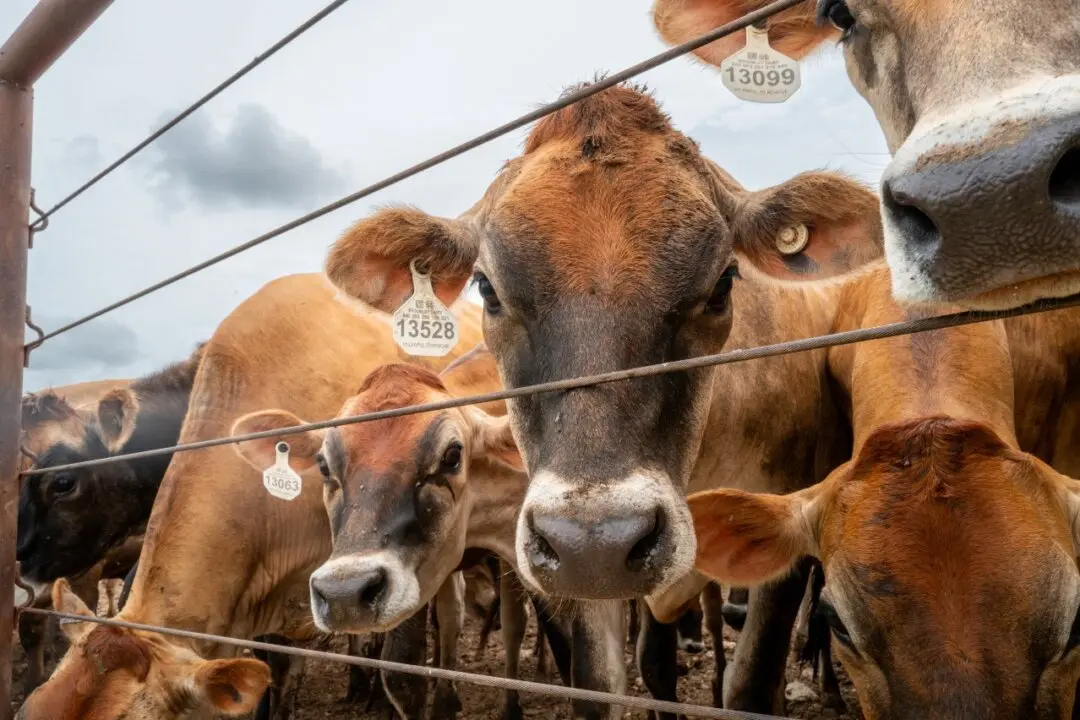
Earlier this week, a Harvest Hosts guest came into the restaurant and told us a cow was trapped out on the land.That kind of sentence changes the entire rhythm of a place. My husband called me on the radio, and within minutes, it was all of us—guests, farmhands, my brother, my children—moving toward the problem. A cow had gone down into a hole. We do not know how long she had been there. The last time she was seen standing was at about 1 p.m., and it was 6 p.m. by the time we got to her. She had been struggling for hours.
It took a Bobcat and a backhoe to get her out. We moved large tree stumps, cleared debris, and widened the opening. The hole looked impossibly small, like a cow could never have fit into it. It was an illusion, a trick of perspective that did not make sense until you were standing over it, looking down at where she had been.
Once we freed her, we moved her into the creek bed and then used equipment to lift her back onto solid ground. We brought her to the barn, got her settled, and began doing everything we knew how to do. We gave her anti-inflammatories and steroids. We lifted her once per day, massaged her legs with CBD oil, used red light therapy, and tried homeopathy. She was eating and drinking. For a moment, it felt like she might come back.
If you have ever had a down cow, you know how dangerous that kind of hope can be.
Over the years, I have had more down cows than I can count. The truth, as hard as it is to admit, is that most die no matter what we do and no matter how much time, equipment, or care we put into them. I still try, because sometimes they stand, and those moments are enough to carry you into the next one.
Late at night, three days later, friends of ours arrived at the ranch with cattle. Joel Hollingsworth from Smoke River Ranch and his wife, Erin Martin, from Oklahoma, pulled in well after dark. My husband and I got out of bed to meet them. I was in Christmas pajamas with a cowboy hat and flip-flops, and he was half asleep pulling on his boots as we walked.
We set up the chute and moved their cattle into the middle pen. When that was done, I walked over to check on Rosa.
Rosa is one of my cows from California. I bought her in 2019 with my foster son, Osmar, for $1,000. I do not think that you can buy a bred cow for that anymore. She is one of the last pieces of that former life that still lives here with me.
When I got to her, she was on her side, seizing and struggling to breathe. In moments like that, everything becomes very clear very quickly. My husband went to get a gun. Erin and I turned away at the same time, covering our ears and turning our backs. I said a prayer and felt a deep gratitude for masculinity and for men who are willing to do the hard things.
When we turned back around, my husband and Joel both had their hands on her as the life left her body. It was not rushed, and it was not detached. They were simply present with her, as if to say that she was not alone.
It brought tears to my eyes.
There are no easy answers in animal husbandry. Every decision carries weight, and every path invites questions. When I intervene with pharmaceuticals, I question it. When I choose to put an animal down instead of letting it die on its own, I question that. When I step back and let nature take its course, I question that, too.
There is no clean formula, only responsibility.
The truth about down cows is that most of them do not get back up. Not because you did not try hard enough and not because you did not know enough, but because something inside their body has already crossed a threshold you cannot reverse. The hardest part is that you do not always know where that line is until you are already on the other side of it.
So you keep showing up. You lift, you treat, you wait, and you hope. And sometimes you are the one who has to decide when to stop.
That decision is heavy, and it should be.
I have come to recognize that I am not the one who pulls the trigger, and I am grateful for that. Not because I am incapable, but because there is something deeply ordered in the way that men and women carry different burdens. My husband carries that one, not casually and not easily, but willingly. He lives with that moment in a way that is different from how I do, just as I carry other things he does not.
This is not about who is stronger. It is about who is willing.
In a world that often tries to soften men or strip away their edge in the name of equality, I find myself more and more grateful for the kind of masculinity that does not look away. The kind that steps forward when something has to be done and is willing to stand in the presence of death without turning away.
I still question every decision, and I probably always will. I also know that Rosa was not alone, and she did not suffer longer than she had to. When the moment came, there were hands on her and people willing to do what needed to be done.
I still try.