As Iran nears a historic turning point, the question before policymakers and analysts is no longer whether the Islamic Republic can sustain its ideological project, but what comes next. Will Iran evolve into a regional democracy like South Korea, or will it sink into isolation and totalitarianism like North Korea?
The regime in Tehran is increasingly signaling its desire to emulate North Korea’s path—ideological rigidity, nuclear brinkmanship, militarized control, and rejection of the West. In contrast, the Iranian people have made clear, through repeated uprisings and acts of civil defiance, that they want a future akin to South Korea: democratic, modern, economically open, and integrated with the global community.
A Tale of Two Models
After World War II, the Korean peninsula split into two drastically different political and economic models. North Korea, under Kim Il-sung and his successors, embraced a militant, isolationist ideology of self-reliance (Juche), enforced by a dynastic totalitarian regime. It poured resources into its nuclear weapons program while its people starved and remained cut off from the world. South Korea, though initially authoritarian, gradually opened up. It began liberalizing its economy in the 1960s and implemented democratic reforms in the 1980s. Today, it is a thriving democracy, one of the world’s top economies, and a technological innovator closely aligned with the West. The contrast is stark: prosperity versus poverty, openness versus repression.Iran at a Fork in the Road
Iran, under the Islamic Republic, has long portrayed itself as a unique “third way”—neither capitalist nor communist—but in practice, it is increasingly resembling North Korea. The regime’s ideology, rooted in Velayat-e Faqih (rule of the Islamic jurist), demands absolute obedience to a supreme religious authority. Its militarization of politics through the Islamic Revolutionary Guard Corps (IRGC), and its reliance on proxy wars, have made Iran a regional spoiler rather than a stabilizer. Iran’s nuclear program serves not only as a security tool but also as a symbolic anchor of its ideological resistance. As of May 2025, the regime continues to negotiate for the right to enrich uranium at 3.75 percent, a level below weapons-grade but rich with symbolic and strategic value. This insistence reveals the regime’s intent: to preserve its revolutionary posture at all costs, even as it strangles Iran’s economy and isolates its people.The People Want South Korea
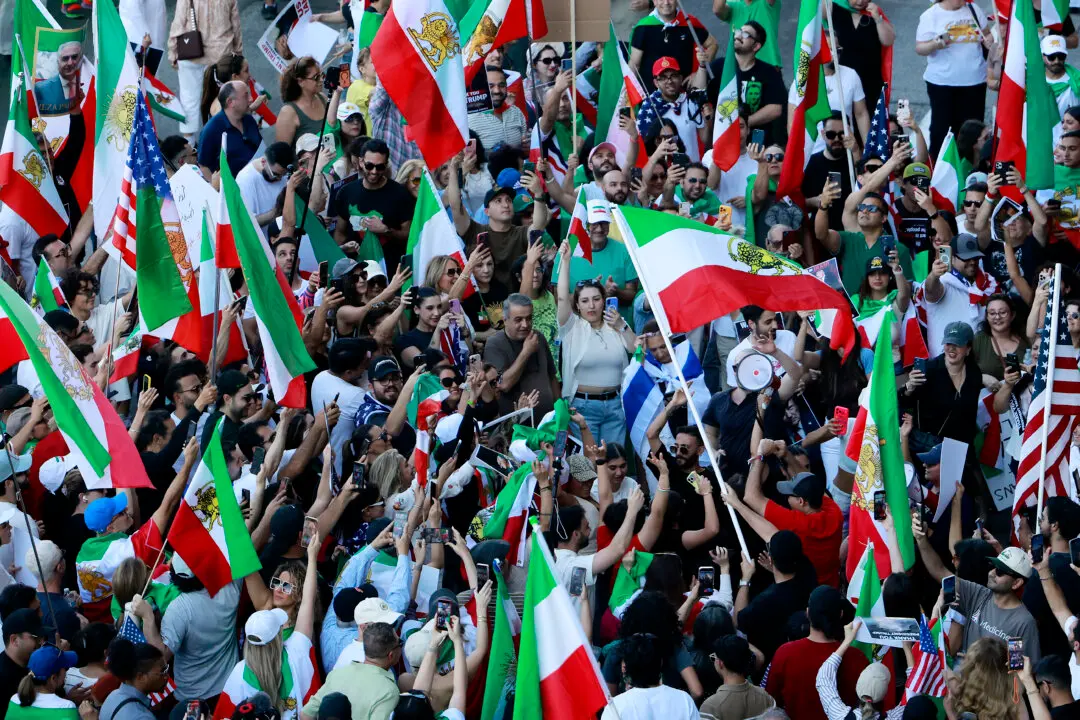
But while the regime pushes Iran toward the North Korea model, the people have chosen otherwise. The 2009 Green Movement, the 2017 and 2019 economic protests, and the 2022–2023 “Women, Life, Freedom” uprising all revealed a society deeply disenchanted with clerical rule and ideological dogma. Iranians—especially women, youth, and the educated middle class—want dignity, freedom, and opportunity. They are not seeking reform within the existing system. They are demanding its replacement toward a secular democracy. Iran’s civil society, though battered, remains vibrant. Underground cultural networks, digital activism, and diaspora engagement continue to resist the regime’s repression. Unlike North Koreans, Iranians have access to outside information, communicate globally, and maintain a sense of national identity distinct from the state’s ideology. These differences matter—and they make a South Korean trajectory possible, if the political system allows it.The Decline of Political Islam
Once the flagship of political Islam, the Islamic Republic is now its most visible failure. The ideology that claimed to liberate Muslims from Western imperialism has become a tool of domestic oppression and regional chaos. Iran’s efforts to export this ideology—via Hezbollah in Lebanon, militias in Iraq and Syria, and Hamas in Gaza—have bred bloodshed, not solidarity. The Oct. 7, 2023, Hamas-led attack on Israel, widely believed to have had the backing of the IRGC, triggered devastating consequences and further alienated Iran from Arab populations and governments alike. Across the region, political Islam is in retreat. Sunni-majority Arab states are normalizing ties with Israel, prioritizing economic growth, and distancing themselves from Tehran’s revolutionary agenda. Inside Iran, mosques are emptying. Clerical authority is no longer revered. Political Islam is seen not as a sacred duty but as the regime’s excuse to cling to power.Nuclear Brinkmanship: A Strategic Dead-End
For the regime, enriched uranium is more than a fuel—it is a symbol of defiance. Yet this symbolism carries a high cost. Nuclear brinkmanship ensures continued sanctions, blocks foreign investment, and stokes regional tensions. The regime’s military adventurism has failed to deliver tangible gains, and its axis of resistance is fragmenting under pressure. This path may sustain the regime in the short term, but in the long term, it leads only to collapse or permanent isolation—a North Korea outcome. The irony is that North Korea survives by exporting weapons to Russia and China. Iran, with vastly more potential, is choosing the same bleak model despite having access to better options.A South Korean Model for Iran: What It Requires
If Iran is to emulate South Korea, several strategic shifts are essential:
Strategic Implications for the West
The United States and its allies must recognize the internal struggle in Iran—not just between factions, but also between two future models. Sanctions and deterrence remain essential to constrain the regime’s malign behavior. But they must be paired with support for Iranian civil society, secure digital access, educational exchanges, and human rights advocacy. The West should prepare not only for containment but also for post-Islamic Republic reconstruction. This includes support for constitutional reform, institutional development, and economic recovery in a democratic Iran.The Islamic regime in Iran today looks more like North Korea than ever before; it may want isolation, militarization, and ideological purity. But the people want freedom, prosperity, and peace. The Islamic Republic is trying to lock Iran into a North Korea future. But history has not closed the door on the South Korea alternative. The Iranian people are still fighting for it. The world should stand with them.