The United States and China are pursuing markedly different approaches to the military application of artificial intelligence (AI). The United States emphasizes human-machine collaboration and regards human judgment as irreplaceable, while the Chinese Communist Party (CCP) seeks to gain an advantage through technology theft and a growing dependence on autonomous systems.
China’s AI Development Path and Technology Acquisition
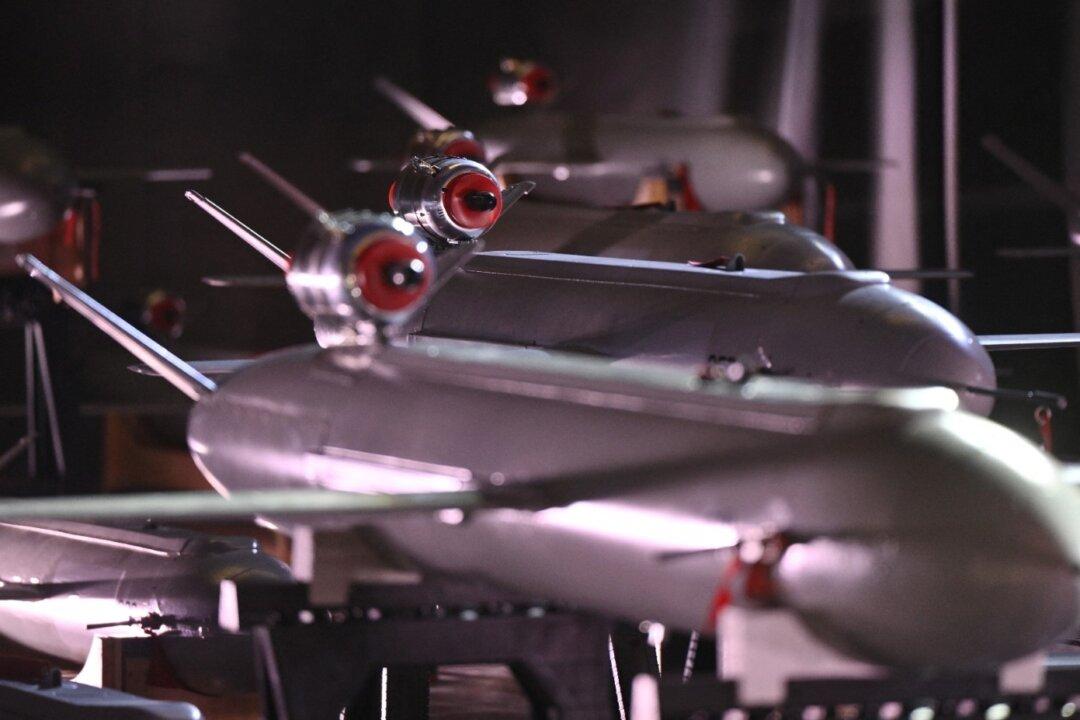
A key concern among U.S. policymakers is not only the pace of China’s military AI development but also the means by which advanced technologies are acquired.Concerns about technology transfer have intensified because of the military applications of advanced AI systems. During the Middle East conflict of April 2026, Iranian forces employed drones equipped with Chinese AI technologies in attacks against U.S. military facilities. Defense analysts and AI experts have noted that the core algorithms used in those systems drew upon foundational research originally developed in the United States.
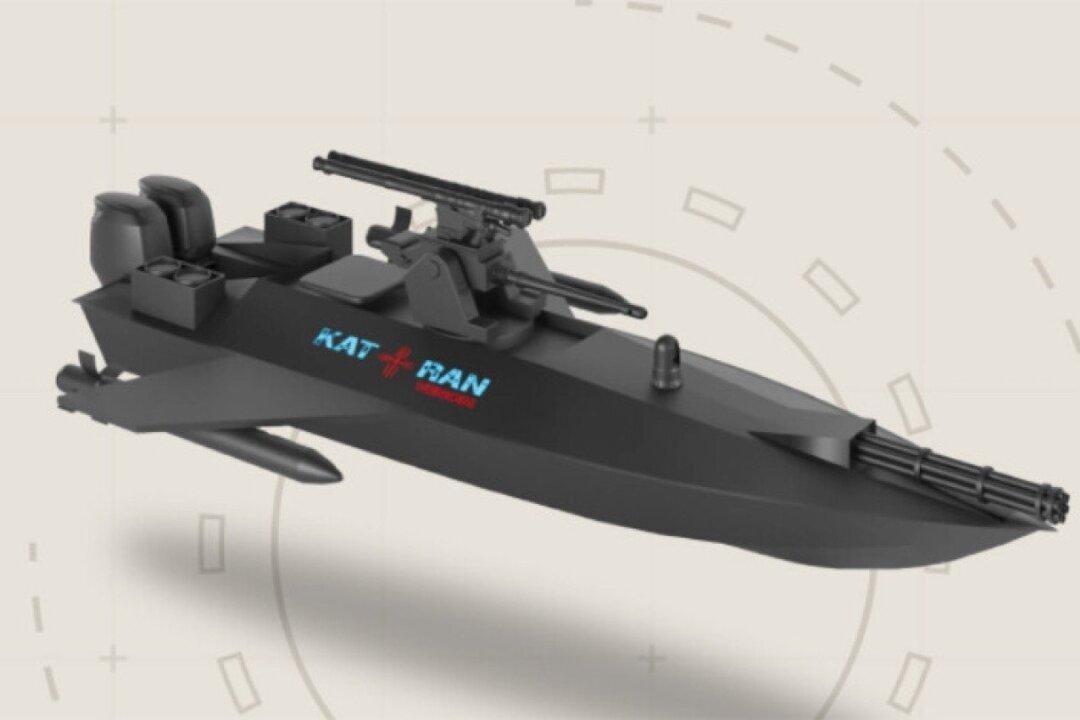
The U.S. Army Training and Doctrine Command (TRADOC) pointed out that China is investing heavily in coordinated unmanned surface vessel software, deep-sea autonomous warfare technologies, and AI-enabled joint command-and-control systems. Faced with persistent constraints in advanced semiconductor manufacturing and talent development, the CCP has frequently sought to accelerate progress through technology acquisition rather than indigenous innovation.
In November 2025, Anthropic disclosed a state-backed cyber espionage campaign in which Chinese hackers employed AI agents to automate cyber operations against more than 30 technology firms, financial institutions, and government agencies worldwide.
In February, OpenAI, Google, and Anthropic jointly stated that Chinese entities were conducting industrial-scale model distillation attacks designed to replicate capabilities developed by leading American AI firms. By obtaining technologies developed through massive American investment, Chinese companies were able to release comparable models within a significantly shorter period of time.
Behind this reliance on technology theft lies a broader lack of original foundational scientific research within the CCP’s system.
Diverging Philosophies of Military AI
Beyond concerns about technology theft and appropriation, the CCP’s decades of violent history raises a far more troubling concern: a total disregard for morality and human life.The CCP’s emphasis on “Party spirit” places political loyalty above all other moral and ethical considerations. In the field of artificial intelligence development and application in particular, this approach increasingly reveals what many view as potentially dangerous anti-human implications.
International discussions on lethal autonomous weapons have consistently emphasized the importance of maintaining meaningful human control over the use of force. Documents produced by the U.N. Office for Disarmament Affairs have repeatedly highlighted human oversight as a foundational requirement for compliance with international humanitarian law.
In contrast, research reports published by China’s Academy of Military Sciences have openly identified fully autonomous “unmanned warfare” and unilateral “zero casualties” as core objectives of future military development. In this context, “zero casualties” refers to casualties among Chinese forces themselves, rather than the lives of civilians or other personnel.
Human Judgment Versus Algorithmic Reliance
The U.S. military has traditionally viewed warfare as an art, regarding soldiers as its greatest advantage on the battlefield and believing that intuition, adaptability, and flexibility are key to victory. Although AI algorithms continue to advance rapidly and play an increasingly important role in military systems, human consciousness cannot simply be replicated by computers.
Pentagon officials maintain that human judgment must remain central to decisions involving lethal force. No matter how far artificial intelligence surpasses human sensory capabilities, how comprehensive its battlefield awareness may be, or how powerful its speed, precision, and execution abilities are, AI-driven algorithms cannot replicate higher-order human attributes such as intuition, emotion, and morality. The most effective military applications of AI, therefore, combine the unique strengths of machines with the irreplaceable strengths of human judgment.
In sharp contrast to the U.S. approach, the CCP leadership is often more concerned about ideological reliability within the military—particularly among lower-ranking personnel—than about human life itself.
Rather than granting battlefield personnel greater authority to adapt to changing conditions or make tactical decisions, the CCP’s military planners increasingly rely on autonomous weapons systems to shape battlefield developments. They may even authorize AI-enabled systems to issue operational directives rather than delegate authority to lower-level personnel. The underlying assumption is that machines are more reliable than people.
The U.S. Army notes that China’s military modernization reflects an intense faith in artificial intelligence, autonomous weapons, and computational power. The objective is to transform the uncertainty of warfare into a problem that can be precisely calculated, optimized, and controlled.
Under the governing principle that “the Party commands the gun,” senior Chinese leaders maintain an inherent distrust of lower-level military personnel. What the Chinese Communist Party seeks is absolute control over the military and absolute obedience from the military. Artificial intelligence, therefore, serves as a key instrument through which the central leadership maintains command and control throughout the force.
A More Cautious US Approach to Military AI
The Pentagon’s approach to artificial intelligence, together with the concept of keeping humans in the loop for lethal weapons systems, remains rooted in traditional philosophical principles.Regardless of how advanced autonomous weapons systems become in the future and regardless of their technical performance, machines should not be permitted to determine on their own which human beings should be killed in order to preserve the lives of others in matters involving life and death.
Fundamentally, humanity cannot surrender the power over life and death entirely to machines. Human beings cannot guarantee that computers will never misjudge a situation, generate false conclusions, be manipulated, or be deceived in ways that cause them to deviate from human intent.
For this reason, the Pentagon has consistently promoted the concept of Zero Trust within military development organizations and among defense industry partners.
In military applications, Zero Trust extends beyond cybersecurity. It includes cross-validation among sensors, confirmation from multiple sources, human review, and resilience against deception. Neither networks nor algorithms are trusted automatically. Any information capable of influencing operational decisions must be continuously verified.
This stands in complete contrast to the CCP’s conception of distrust. Whereas the Pentagon’s Zero Trust framework is built on skepticism toward systems and algorithms, the CCP fundamentally distrusts people rather than machines. Even when faced with the possibility of unintended consequences or technological blowback, Chinese leaders appear willing to accept those risks in pursuit of centralized control.