The devastation is incomprehensible. Twisted RVs stacked like scrap metal. Whole homes lifted off their foundations and dropped into fields. Cars and trailers mangled beyond recognition. Massive logs wedged into second-story balconies. All sorts of household items—things that clearly don’t belong in trees—hanging high above the ground. Cypress branches stripped 30 feet above our heads. Just imagine the power of water that high. Sewage clings to the wreckage. The smell of rot and death lingers on the wind.
A cadaver dog signaled in the brush just a few yards away from where I stood. Nearby, women walked through the wreckage handing out photos of their missing loved ones, hoping someone had seen something. People sifted through what used to be their homes—bent over in silence, pausing to identify objects that once meant something.
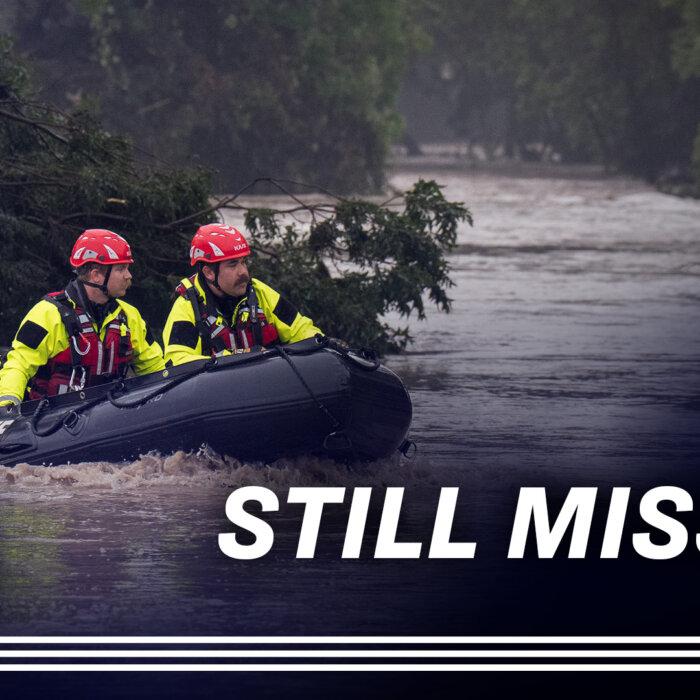
And alongside them: pastors, good Samaritans, fire and rescue teams, emergency medical technicians, and heavy machinery operators digging through the wreckage with nothing but grit and heart.
There is no camera angle that can capture the magnitude of this disaster. Not fully. News crews can broadcast fragments, but to stand in it—to smell it, see it, carry hot food into the heart of it—you understand the scale in a way that breaks your brain and opens your heart wide.

And yet, even here, there is light.
I watched people who had lost everything—truck, trailer, home—receive a simple burrito and be deeply moved. Not because they were hungry, but because it meant someone cared enough to show up and feed them. Multiple people asked to pray with us. Police officers, rescue workers, backhoe operators, and flood victims stood together in prayer—strong and grateful. Calloused hands, sweat-streaked brows, tear-filled silence—and a deep sense of shared humanity.
Some of them had been working without rest for days, wading through mud and sewage in search of bodies. Others were locals who had nothing left but still chose to help someone else. No one was keeping score. No one was asking for credit.
And I was reminded of something sacred: Tragedy doesn’t just break us—it reveals us.
We often say “the worst of humanity” shows up in moments like this. And it’s true: The destruction left behind feels almost biblical in scale. But what also shows up is the best of humanity. People risk their lives to find strangers. Neighbors who’ve never spoken before become brothers. Churches open their doors. Volunteers cook for 300 at midnight.
In a moment where everyone would be justified in focusing on their own survival, people give. Selflessly. Wholeheartedly. Tirelessly.
But why does it take a flood to bring that out?
Why do we wait for tragedy to become the best version of ourselves?
This is the question I carried home with me as I peeled off my muddy boots and kissed my children goodnight. This is the reminder I needed. That we don’t need disaster to bring us to our knees—or to make us rise to our highest calling. We can give with that same generosity every day. We can serve each other without waiting for headlines or heartbreak. We can choose to be moved by love, not just by loss.
But that choice takes effort. It takes intention. And it takes remembering.
Because long after the cameras leave and the hashtags fade, the families here will still be picking up the pieces. The recovery will not be quick. It will not be tidy. There will be no clean break between “before” and “after.” Grief will be slow. Homes will take months or years to rebuild. And many will never be the same.
My hope is that we, as a country, don’t forget. That we continue to show up even when it’s not front-page news. That we keep cooking meals, offering prayer, and building back—not just the buildings, but the spirit.
I live here now. Central Texas is my home. And I feel, more than ever, that God led me to this part of the country to serve. I will continue to provide the most nutrient-dense, locally sourced meals possible to fuel those doing this work. I will continue to walk alongside those in pain. Because the calling is not just to help during disaster—it’s to be a consistent source of nourishment and love in its aftermath.
This flood has taken so much. Lives. Livelihoods. Homes. But it has also uncovered something indestructible. It has reminded us that, at our core, we are built to care for one another. We are wired for compassion. And we are capable of rising—not just in the wake of tragedy, but in everyday life—if we choose to.
Let’s not wait for the next disaster to be the version of ourselves we’re proud of. Let’s live that way now.
Let’s feed people. Let’s pray with strangers. Let’s show up when no one is watching.
Let’s remember the people of Central Texas—and everyone like them—long after the floodwaters recede.