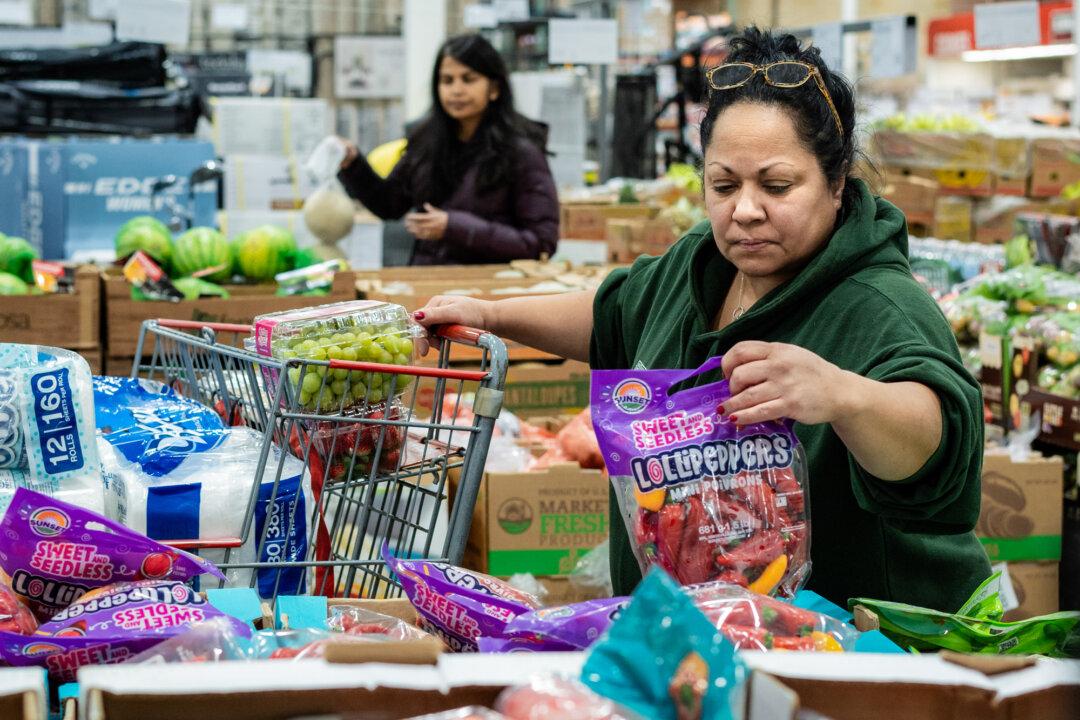
I stopped at a few stores this week to run last-minute Christmas errands, and consumption was in full throttle.
People pushed multiple carts overflowing with boxes and bags. One woman stood at the register, holding up the line while purchasing nearly $2,000 worth of gift cards. Children screamed for what they wanted. Parents screamed back. Towering displays of cheap, brightly colored junk filled the aisles—plastic trinkets manufactured overseas, destined to break or bore within weeks, and inevitably to become trash.
Christmas, it seems, has become a celebration of consumption.
The scene reminded me of something my stepmother has always said when people talk about Corpus Christi, Texas: “There’s a lot of corpus,” she says, “and not much Christi.”
That line kept echoing in my mind as I stood there watching the frenzy. There is a lot of Christmas, but not much Christ.


If we remember what actually happened on Christmas, the contrast is striking. God did not arrive as spectacle or abundance. He did not descend in power, luxury, or excess. He entered the world contained within a womb. He was born through a human mother. He needed to be nursed, kept warm, and loved. He came into flesh—into limitation, vulnerability, and dependence.
The miracle of Christmas is not that God gave us more, but that He chose less.
Today, Christmas has become an exercise in logistics. Did everyone get enough gifts? Did we spend a fair amount on each person? Did we get everything wrapped on time? The sacredness of the moment is crowded out by lists and receipts. Reflection gives way to efficiency.
But when I look back on my own Christmases, I can barely remember the presents.
There are a few special ones, sure. But mostly, what I remember is time.
I remember making cookies with my grandmother. I remember my grandfather’s famous baked eggs with potatoes and bacon filling the house every Christmas morning. I was a vegetarian and didn’t even eat them, but I remember the smell. It lingered through the halls—warm and familiar—signaling that the day had begun.
I remember gingerbread houses and sneaking candy off them. Charades games. Political arguments. Laughter spilling out of the living room. Friends dropping by unannounced. Cheese and crackers spread across the counter. Endless snacks. Sugary treats. Long conversations.
I remember going to fellowship or to Mass, depending on which grandparent’s house we were at that year. On Christmas Eve, my grandfather often spoke at his Unitarian fellowship. I couldn’t wait to hear his sermon—the stories he would tell, the way he wove meaning into memory and reflection into tradition.
These are what I remember.
The gifts don’t stick. The communion does.
I wonder if, in our hyper-consumer culture—one addicted to speed, novelty, and instant gratification—we have turned something sacred into something hollow. Christmas has become full of things but void of meaning. Full of consumption but empty of reflection.
The Incarnation tells a different story. It tells us that God values presence over production, relationship over accumulation, and embodiment over abstraction. He did not save humanity through excess, but through intimacy—by entering fully into the messiness of human life.
Perhaps Christmas was never meant to be loud or lavish. Perhaps it was meant to be quiet enough to notice a baby. Slow enough to gather. Humble enough to receive rather than acquire.
In remembering that God came to us with empty hands, maybe we can loosen our grip on all the things we insist on holding. And in doing so, we might finally recover what Christmas was always meant to be.