The FBI opens a new counterintelligence case involving the Chinese Communist Party (CCP) approximately every 10 hours. This extraordinary pace is driving more than 700 active cases each year, underscoring what U.S. authorities describe as the largest and most persistent foreign intelligence challenge in modern American history.
But it’s not just an American problem. Since 2020, the United States and its Five Eyes (FVEY) allies—Canada, the UK, Australia, and New Zealand—have documented an unprecedented increase in Chinese industrial espionage. Often directed by or linked to the Chinese state, these cases involve cyberattacks, insider recruitment, front organizations, and illicit technology transfers.
Cyber Frontlines: APT10 and Volt Typhoon
Over the past five years, U.S. intelligence has repeatedly highlighted the role of state-sponsored cyber units and talent extraction programs. The Chinese Strategic Support Force (SSF) is at the forefront of Beijing’s cyberwarfare operations, targeting the military assets and critical infrastructure of the United States and its partners.Prominent among SSF resources is APT10, a cyber-espionage group affiliated with the Chinese Ministry of State Security (MSS), which conducted a decade-long campaign to infiltrate third-party firms that manage corporate IT systems, known as managed service providers. This operation, dubbed “Cloud Hopper,” allowed Chinese hackers to silently siphon proprietary data from defense contractors, pharmaceuticals, and advanced manufacturers in numerous countries on four continents.
Volt Typhoon, also linked to the MSS, was exposed in 2023 by Microsoft and the U.S. Cybersecurity and Infrastructure Security Agency. It is reported to have compromised the IT environments of multiple critical infrastructure organizations—primarily in communications, energy, transportation systems, and water and wastewater systems sectors—in the continental and noncontinental United States.
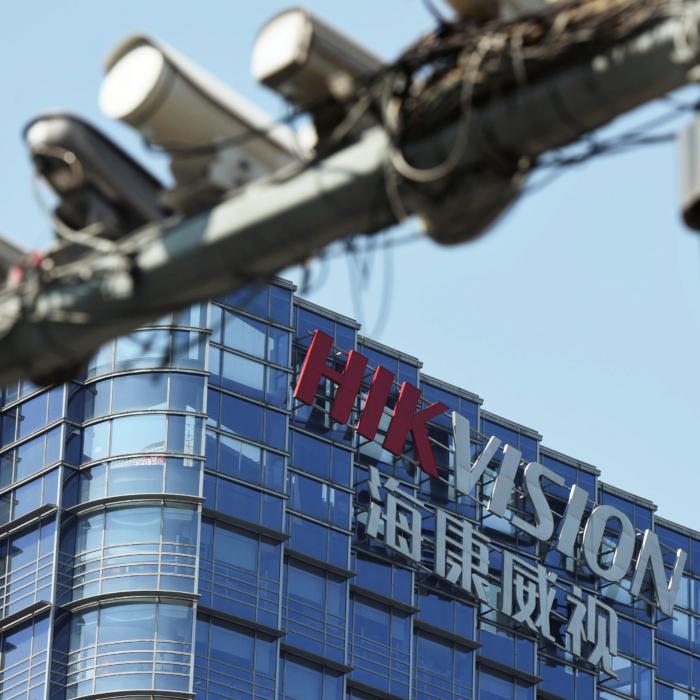

Academic and Corporate Penetration
China’s state-sponsored talent programs are deeply embedded in Western educational institutions. Chief among them is the Thousand Talents Program, an initiative designed to recruit top scientists and engineers from abroad with lucrative grants and institutional support.Espionage Without Borders: The Five Eyes’ Alarms
Across the Five Eyes alliance, evidence continues to support the existence of a coordinated Chinese espionage apparatus exploiting a porous and flexible democratic openness to acquiring cutting-edge research and proprietary technologies.In Canada, the Canadian Security Intelligence Service (CSIS) and the Communications Security Establishment have warned of Chinese attempts to infiltrate AI and quantum computing labs—particularly in university settings and advanced research hubs.
In the UK, MI5 and Government Communications Headquarters have provided some of the most detailed and forceful characterizations of China’s espionage doctrine. In a joint summit in 2022, agency heads warned that the CCP is executing a “whole-of-state” strategy—coordinating intelligence, industrial, and diplomatic assets in pursuit of strategic advantage.
CCP operations are systematic and economic in nature, targeting vulnerabilities at every stage of the technological supply chain. MI5 has identified professional recruitment campaigns aimed at British researchers, often operating through LinkedIn-style platforms that simulate legitimate research collaborations. Both the UK and the U.S. intelligence communities have warned of Chinese spies using fake online personas to approach and lure civil servants, scientists, and security clearance holders with promises of grants, jobs, and speaking engagements.
Australia has also issued stark warnings. In 2023, Australian Security Intelligence Organization Director General Mike Burgess publicly censured the Chinese government for conducting “the most sustained, sophisticated and scaled theft of intellectual property and expertise in human history.”
The Australian Department of Foreign Affairs and Trade joined international condemnation of China’s role in the APT10 campaign and has expelled visiting scholars who attempted to smuggle research.
Strategic Targets: Innovation at Risk
The consistency observed in China’s targets suggests a coordinated campaign focused on dual-use and emerging technologies—those with both civilian and military applications. This follows a similar pattern to Beijing’s investments in global shipping ports, looking to expand civilian capabilities while enhancing military options.Sectors such as semiconductors, quantum computing, artificial intelligence, and aerospace repeatedly appear across all five intelligence services’ warnings. University labs, startup incubators, and private-sector innovators with incomplete security postures become prime targets. This is not espionage in support of operations; it is directed toward immediate and long-term strategic leverage.
Conclusion
China is unwilling to rely on a domestic innovation trajectory, which is often constrained by market inefficiencies and is now facing tariff obstacles. Espionage offers an expedient alternative.Absorbing decades of Western research and development without incurring the financial or temporal costs of replication will enable CCP leader Xi Jinping to advance China as the global innovator, providing the ability to dictate global standards, command key supply nodes, and force regulatory and technological dependence.
China integrates espionage into its national policy as a fundamental instrument—on par with diplomacy, industrial subsidies, or military modernization. Intellectual property theft and cyber operations targeting Western infrastructure are institutionalized, resourced, and guided at the highest levels.