Commentary
As someone who is actively working to bring people back to the land, rebuild local food systems, and restore a sense of responsibility for what we eat, I find myself increasingly at odds with the direction of federal farm policy.We say we want healthy food. We say we want strong communities. We say we want resilient systems.
But when you follow the money, we are overwhelmingly funding something else.
Recent Farm Bill proposals and program expansions continue a clear trend. Through conservation programs administered by the United States Department of Agriculture, farmers can receive very high cost-share support, in some cases up to 90 percent, for adopting precision agriculture technologies. These include artificial intelligence (AI)-driven decision tools, drones, GPS systems, smart tractors, and digital monitoring platforms.
This is not a small or incidental shift. It is one of the highest levels of support offered anywhere in the agricultural system.
At the same time, there is no comparable program that pays farmers at that level to improve the nutrient density of their food. There is no 90 percent cost-share for meaningfully reducing chemical inputs. There is no consistent, scaled incentive to build soil in ways that directly translate to better human health.
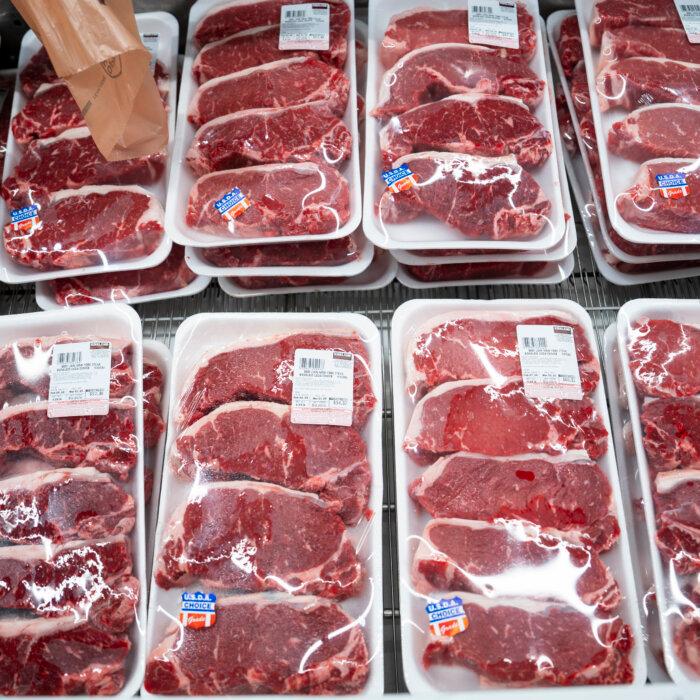
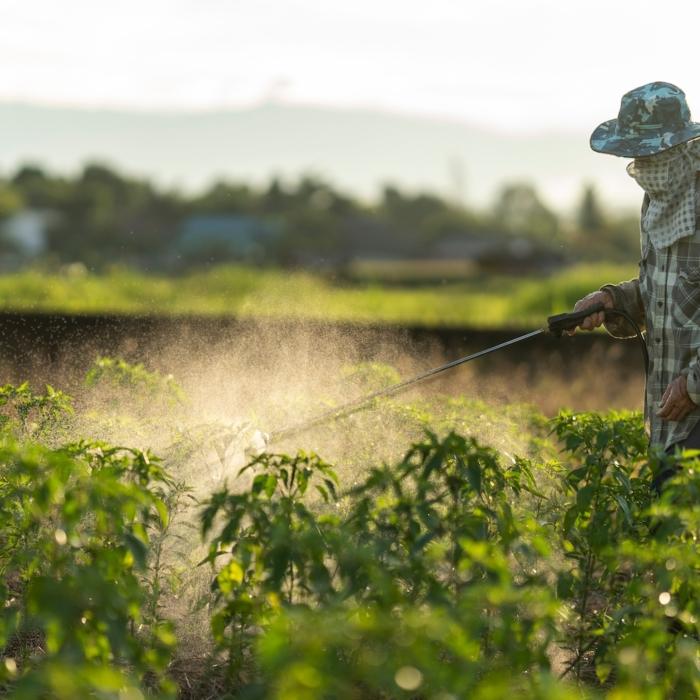
We are willing to subsidize efforts to make nature more efficient. We are not willing to subsidize making food more nourishing.
That is the disconnect.
The justification for these programs is that precision agriculture reduces inputs and increases efficiency. On paper, that sounds reasonable. Less fertilizer waste, less water use, better targeting of resources.
But efficiency is not the same thing as resilience.
Our agricultural system is becoming incredibly efficient, but we are also becoming incredibly fragile. We know this because even as yields rise and technology advances, farms continue to disappear, particularly over the past decade.
Consolidation is accelerating. Small and mid-sized farms are being squeezed out. If efficiency created resilience, we would be seeing more farmers thrive, not fewer. What we are building is a system that can produce commodity crops at scale, but cannot sustain the people responsible for producing them.
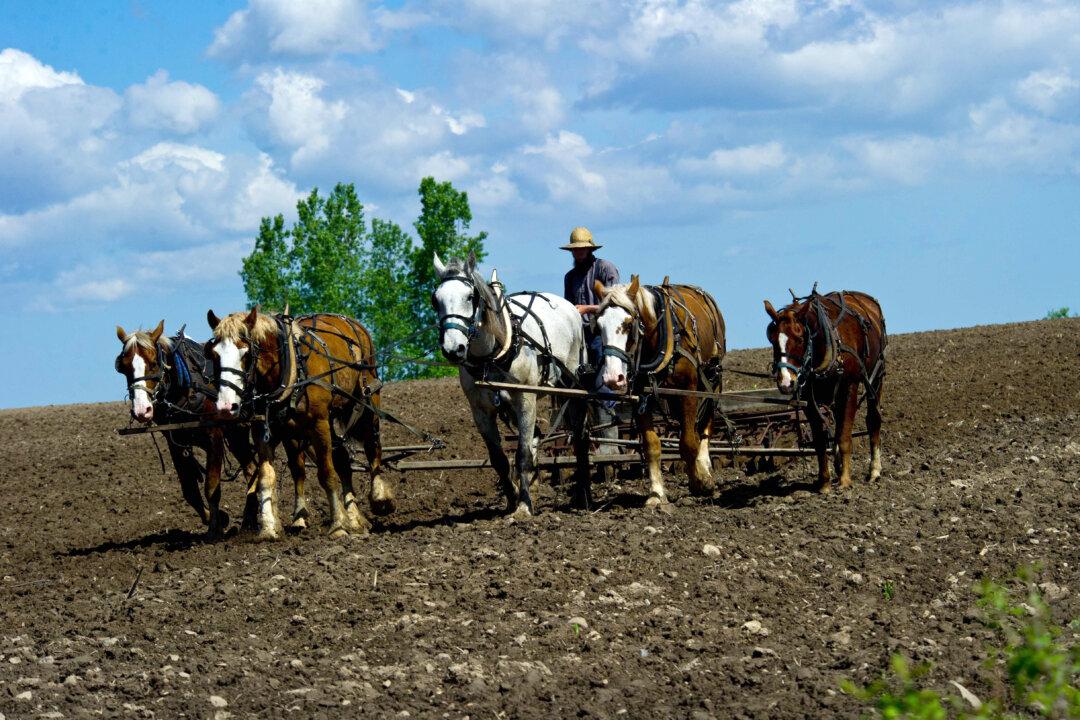
On the ground, resilience looks very different. It looks like diversity instead of uniformity. It looks like redundancy instead of optimization. It looks like soil that can hold water through drought, animals that can adapt, and farmers who are not dependent on a fragile chain of inputs and systems.
Efficiency narrows the margin for error. Resilience expands it.
And this is where the conversation becomes more uncomfortable.
The technologies being subsidized are not neutral. They come with a digital layer that tracks, measures, and integrates farms into larger systems. They generate data. They require compliance. They create dependencies on software, infrastructure, and connectivity that did not exist a generation ago.
This does not require a conspiracy to be concerning. It simply requires us to ask a basic question.
Are we helping farmers become more independent, or more integrated into systems they do not control?
Because those are not the same thing.
At the same time, the outcomes that actually matter to families and communities are largely ignored by policy.
We do not measure nutrient density at scale. We do not reward farmers for producing healthier food. We do not meaningfully incentivize reducing chemical load in the food supply.
Instead, we continue to subsidize the crops and systems most compatible with industrial processing, while also subsidizing the technologies that further optimize those systems.
We are funding efficiency on top of efficiency, without asking what that efficiency is ultimately producing.
I often feel like I was born into a narrow window of time that allows me to see both sides of this clearly. Those of us born in the late 1970s and early 1980s remember a world that was still physical, still local, and still grounded in the land in ways that are difficult to describe to someone who has never experienced it.
At the same time, we understand the digital systems that now shape nearly every aspect of modern life.
We are a bridge. And bridges have a responsibility to communicate in both directions.
To those who remember the old way of life, I can say we are losing something important.
But to younger generations, that is not the message that resonates, because they never had that experience to begin with.
What many of them are feeling instead is disconnection, a lack of purpose, a body that has never been fully used, and a life increasingly lived through screens.
Farming is not just about food. It is one of the last remaining ways to live fully in the physical world. It requires problem-solving, strength, patience, observation, and a relationship with something real.
In a world that is becoming more digital by the day, those are not outdated skills. They are becoming rare and valuable.
And yet, through policy, we are actively incentivizing a version of agriculture that moves further away from that reality.
We are asking farmers to adopt systems that make them more efficient, more measurable, and more connected to digital infrastructure. We are not asking whether those same systems make them more resilient, more independent, or more capable of feeding their communities in a meaningful way.
If we are going to continue subsidizing agriculture, and it is clear that we will, then we need to have an honest conversation about what we are choosing to support.
Do we want a system that produces more data, or a system that produces more life?
Do we want farmers who are operators of technology, or stewards of land?
Do we want food that is optimized for yield and efficiency, or food that is optimized for human health?
Right now, our policies are answering those questions, even if we are not saying it out loud.
We are choosing efficiency.
But a system can be incredibly efficient yet incredibly fragile.
And if we continue down this path without rebalancing our priorities, we may find that, in our pursuit of optimization, we have quietly traded away the very resilience we depend on.