“How to I love thee? Let me count the ways. I love thee to the depth and breadth and height my soul can reach.” ~ Elizabeth Barrett Browning
Why did the Trojan War begin?
The usual answer is this: Paris abducted Helen, and the Greeks sailed to Troy to recover her. But Homer’s account invites us to look deeper. Behind the human conflict lies an earlier act of judgment that determined the course of history. Before Helen, there was the Judgment of Paris. Homer refers to this little episode in the Iliad, 24: 22-30.
Asked to decide which of three goddesses, Hera, Athena, or Aphrodite was the fairest, Paris was offered three competing visions of the good life as a bribe. Hera promised him political power. Athena offered wisdom and victory in battle. Aphrodite promised him the most beautiful woman in the world. Paris chose Aphrodite’s gift, preferring illicit desire. His decision was not merely a romantic mistake; it was a moral failure. The catastrophe of Troy began not just because of love, but because a man loved the wrong thing.
In this sense, the cause of “The Iliad” was a disordered act of love.
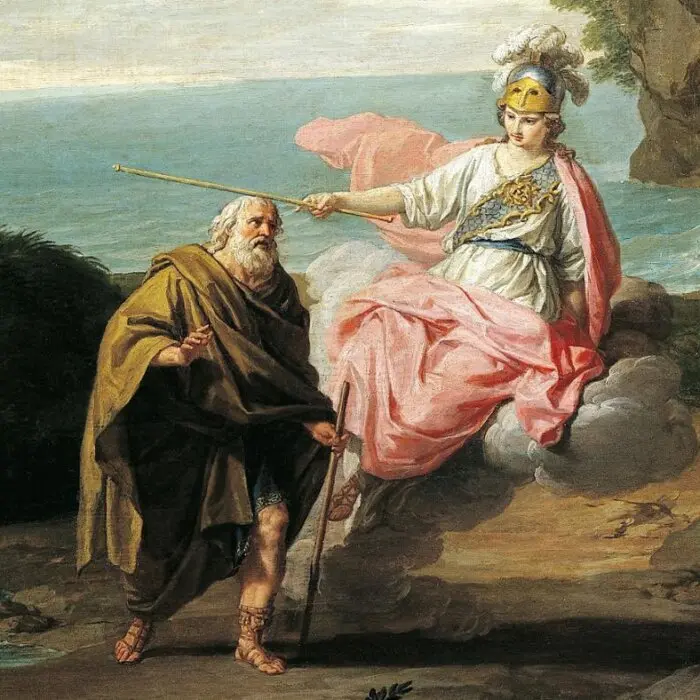
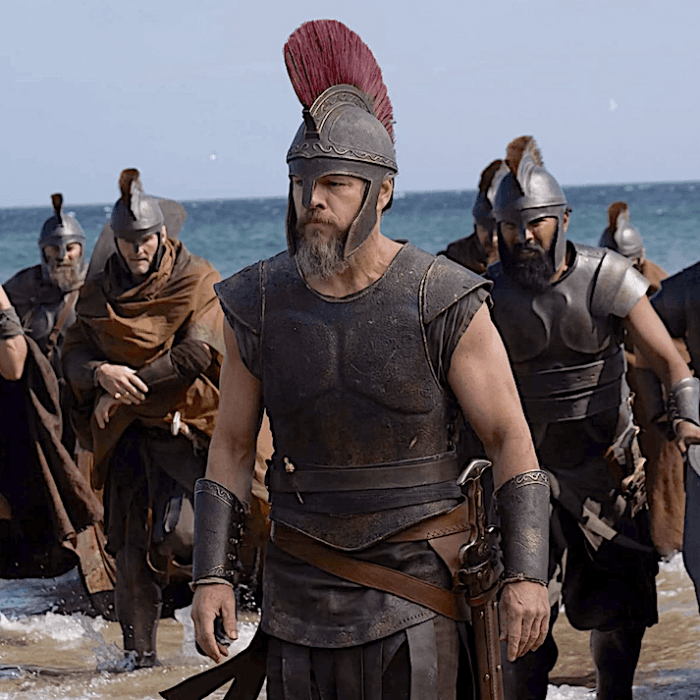
“The Odyssey,” by contrast, tells the story of a man who learns to order his loves rightly. If “The Iliad” shows the ruin that follows from choosing carnal desire over wisdom, “The Odyssey” shows the long, difficult education by which desire itself is transformed. Odysseus repeatedly chooses the guidance of Athena—the goddess of wisdom—over the many seductive alternatives that confront him. His greatest achievement is not that he reaches Ithaca, but that he comes to desire home, marriage, justice, and responsibility more than pleasure, glory, or ease.
This is why “The Odyssey” is ultimately a poem about education. Odysseus is our moral example. Homer asks a question that remains as urgent today as it was nearly three thousand years ago:
What Should We Love?
The Sirens promise a life devoted to knowledge and everlasting fame. They claim to know all that happened at Troy and all that occurs upon the earth. Their song appeals not to sensuality but to the intellect and to the longing for distinction. However, to remain with them would be to become a perpetual spectator, captivated by endless contemplation but incapable of continuing the journey home.
Odysseus listens to the Sirens but he does not stay. Homer suggests that even noble goods become destructive when detached from the obligations of ordinary life. Wisdom exists not to replace home but to guide us toward it.
The encounter with Scylla presents a different lesson. Faced with an impossible choice, Odysseus must sacrifice a few of his companions or risk losing everyone by attempting to fight the monster Charybdis. His natural desire is to resist heroically, but Circe has already instructed him that courage here consists in accepting painful limits rather than pursuing impossible triumphs.
The episode teaches that the desire for perfection can itself become a temptation. Human beings are finite. Some losses cannot be avoided. True leadership sometimes requires choosing the least harmful course rather than chasing an unattainable perfection. Odysseus learns that wisdom often demands restraint instead of conquest.
The episode of Helios’s cattle shifts the focus from leaders to followers. While Odysseus sleeps, his starving companions slaughter the sacred cattle despite repeated warnings. Their justification is familiar: immediate necessity outweighs distant consequences. Hunger becomes an excuse for violating what they know to be right. Like Esau, they sold their inheritance for a bowl of pottage.
Their destruction instructs us that desire becomes dangerous when it refuses moral limits. Appetite is not evil in itself; hunger is natural. The tragedy lies in allowing immediate satisfaction to eclipse reverence, gratitude, and obedience. Homer is instructing his readers that civilization depends upon the willingness to deny ourselves certain pleasures for the sake of higher goods. Freedom is not the absence of restraint but ordered liberty. It begins with self-government, but on a political scale requires checks and balances.
The suitors embody the culmination of disordered desire. They consume another man’s wealth, exploit his household, dishonor his son, and relentlessly pressure Penelope while pretending to seek honorable marriage. They desire comfort without labor, authority without legitimacy, pleasure without fidelity, and abundance without gratitude. They are loathsome to the gods.
Their downfall is therefore not simply an act of revenge, as we witness in Christopher Nolan’s film. It involves the restoration of moral order. Throughout the poem, Homer has shown what happens when appetite refuses to recognize justice. The suitors do not merely break social conventions. That is the mistaken view of the Enlightenment, which theorizes that what we call moral laws are just social contracts; Homer’s suitors reject the very principles that sustain household, community, and civilization. Their destruction demonstrates that a society cannot endure when desire becomes its highest law. Contemporary politics is teaching us the same, though without the wise moral guidance of Homer.
Against these false loves stands Penelope.
Unlike the enchantments of Circe or Calypso, Penelope’s love offers nothing spectacular. She promises neither immortality nor effortless pleasure nor endless fascination. She represents something quieter but infinitely more demanding: faithful marriage, enduring responsibility, shared memory, and the ordinary work of building a household. Odysseus does not choose to return because Ithaca is richer or more beautiful than the alternatives, but because it is the place where love can assume its proper form.
Centuries later, Augustine of Hippo would express this insight with remarkable simplicity. Human flourishing depends upon the “ordo amoris”—the right ordering of our loves. We are not transformed merely by believing true ideas but by learning to love the right things in the right measure. In the opening prayer to his work “Confessions,” Augustine writes to God:
Thou movest us to delight in praising Thee; for Thou hast formed us for Thyself, and our hearts are restless till they find rest in Thee.
Homer dramatizes this truth long before it receives philosophical or theological formulation. Every island, every monster, and every temptation asks the same enduring question: What deserves our deepest loyalty?
Freedom Depends Less on Getting What We Want Than on Learning to Want What Is Truly Good
This could be the deepest lesson of the “The Odyssey.” Our culture simply assumes that happiness consists of satisfying our desires. Homer suggests something far more demanding and, ultimately, more hopeful. Desire itself must be educated. We do not become free when every wish is fulfilled, but when wisdom teaches us to distinguish passing attractions from lasting goods. It is the great failure of modern education that it has lost sight of this key aim.
The road from Troy to Ithaca is more than a voyage across the Mediterranean. It is the education of a soul. Odysseus returns home because, through every trial and every temptation, he has learned to love home more than illusion, fidelity more than pleasure, and wisdom more than desire.
That is why his journey still offers guidance to our own.