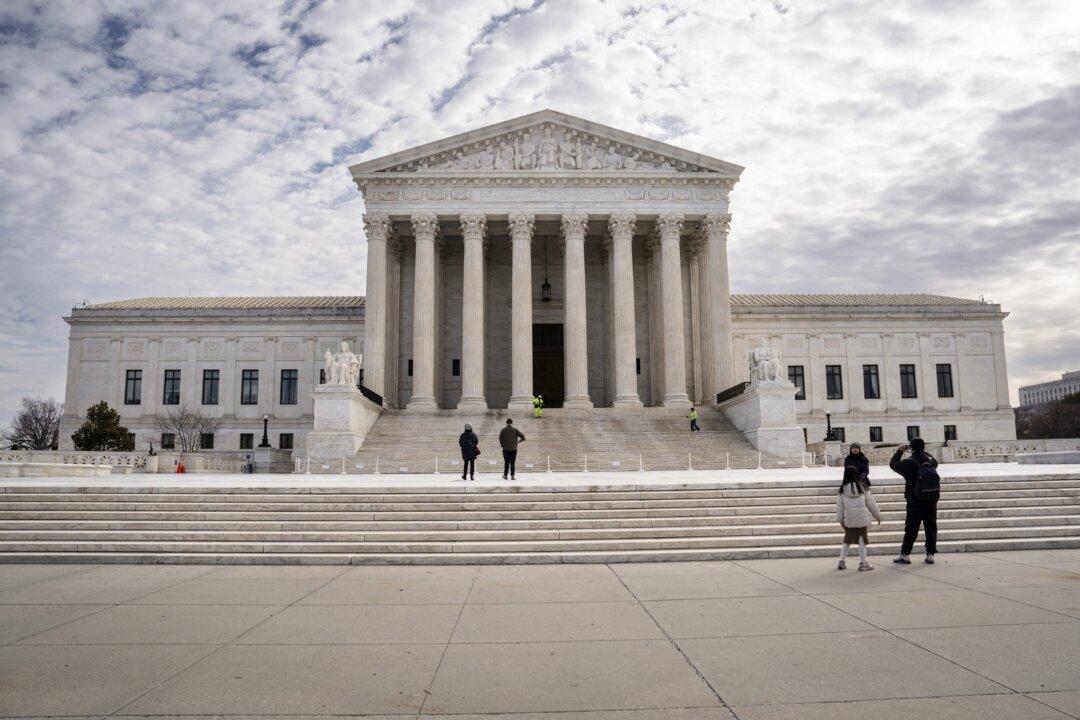
The Supreme Court has now decided Cisco Systems v. Doe. The result is painful but important to understand accurately.
The court did not decide that the Falun Gong plaintiffs failed to allege grave abuses, nor did it decide that Cisco’s alleged conduct would be insufficient, if proved, to show complicity in serious violations of international law. Instead, the majority held that the two statutes invoked by the plaintiffs do not permit federal courts to hear that kind of aiding-and-abetting claim.
That distinction matters. A court can close a case on legal grounds without resolving the underlying facts. Here, the majority did just that. It held that federal courts may no longer create new causes of action under the Alien Tort Statute for violations of international law. It also held that the Torture Victim Protection Act does not authorize civil aiding-and-abetting liability because Congress did not expressly provide for it.
What the Court Did—and Did Not—Decide
The majority, in an opinion by Justice Amy Coney Barrett, emphasized separation of powers. It concluded that creating new remedies for international law violations is Congress’s job, not the judiciary’s.In the court’s view, the Alien Tort Statute is jurisdictional and cannot support additional judicially created causes of action. The majority therefore dismissed the plaintiffs’ Alien Tort Statute claims and rejected aiding-and-abetting liability under the Torture Victim Protection Act as well.
The court acknowledged that cases under these statutes often involve “heinous and inhumane acts.” It nevertheless said that political branches or international actors, rather than U.S. courts, may provide redress. That is the majority’s institutional judgment: not that the alleged wrongs are minor, but that Congress has not authorized this particular civil remedy.
Yet this legal framing leaves an unavoidable moral question: What happens when the political branches do not provide an effective remedy, while the alleged corporate conduct occurred substantially in the United States?
Sotomayor’s Dissent
Justice Sonia Sotomayor’s dissent, joined by Justices Elena Kagan and Ketanji Brown Jackson on its Alien Tort Statute analysis, explains why this result is more than a technical statutory loss. She wrote that, if the allegations are proved true, Cisco would have violated universally recognized norms of international law.Her dissent argued that the court abandoned the framework established in Sosa v. Alvarez-Machain without adequately confronting the doctrine of stare decisis. Under that 2004 decision, courts were instructed to consider carefully whether a proposed international law claim was sufficiently definite and whether prudential concerns counseled against allowing it. Sotomayor argued that the court replaced that case-by-case inquiry with a categorical closure of the courthouse door.
Her sharpest formulation deserves attention: The majority, she wrote, “slams the door in the faces of victims of horrific mistreatment” without giving a reason to think Congress would have wanted that result.
In her view, the court treated the possibility of foreign-policy consequences as a reason to reject virtually all future Alien Tort Statute claims, even where the suit is against a U.S. company and centers on conduct in the United States.
The Narrower Lesson for Technology Companies
The majority’s ruling should not be read as a license for technology companies to ignore human-rights risks. It does not declare that companies have no responsibility when their systems are used for persecution. It says only that these two statutes, as interpreted by the present court, do not provide this specific civil claim for aiding and abetting.That legal limit leaves a policy gap. Modern repression often depends on commercial technologies: surveillance networks, databases, facial recognition, communications monitoring, and data integration. Governments may order the persecution, but private companies can supply the systems that make it efficient, national in scale, and difficult to escape.
The lesson is therefore not that accountability is unnecessary. It is that Congress must act if it wants American law to provide a clear remedy against those who knowingly and substantially assist torture or other grave international law violations. Congress could define the required mental state; limit liability to substantial and purposeful or knowing assistance; protect ordinary commerce; and make clear that generic products or inadvertent misuse are not enough. A carefully drawn statute could distinguish ordinary business activity from deliberate participation in a program of persecution.
For the Falun Gong plaintiffs, this ruling is a profound disappointment. They were not given a trial. Their allegations were not tested through discovery. Their day in court ended because the majority concluded that Congress, rather than the courts, must authorize the remedy.
That is not the same as exoneration. The legal door has been closed. The factual and moral questions remain.