This copy is for your personal, non-commercial use only. Distribution and use of this material are governed by our Subscriber Agreement and by copyright law. For non-personal use or to order multiple copies, please contact The Epoch Times Reprints.
Security personnel stand guard outside the Wuhan Institute of Virology as members of the World Health Organization team investigate the origins of COVID-19, in Wuhan, Hubei Province, China, on Feb. 3, 2021. Hector Retamal/AFP via Getty Images
As the United States defends its sovereignty by rejecting the expanded WHO agreement, communist China sees an opportunity to extend its influence through global health governance.
This month, the United States has formally rejected the World Health Organization’s 2024 pandemic response amendments, citing concerns over national sovereignty. U.S. officials argued that the changes would grant the WHO excessive authority during public health emergencies and undermine national decision-making.
In response, an expert from the Chinese Academy of Social Sciences sharply criticized Washington’s refusal, portraying it as a reckless move that could harm global health governance.
However, the Chinese Communist Party (CCP) stands to gain strategically, politically, and economically from widespread international adoption of the WHO amendments, and it is already using U.S. noncompliance as a propaganda tool to undermine American leadership on the global stage.
During the COVID-19 pandemic, the CCP aggressively promoted its zero-COVID policy as a global model, claiming that its strict lockdowns, mass surveillance, and social control measures had succeeded where democracies had failed. Through carefully manipulated data and propaganda, Beijing portrayed its authoritarian approach as more effective than the seemingly chaotic responses of freer societies.
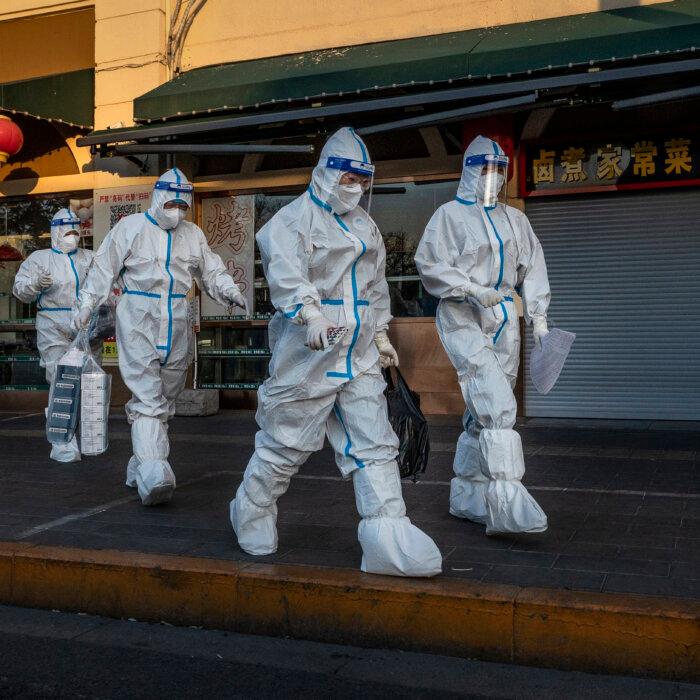
This narrative helped legitimize the CCP’s political system and shaped the kind of global health governance it now pushes through the WHO pandemic treaty. However, the China model was incredibly destructive. During the Omicron wave, Chinese cities such as Shanghai endured draconian lockdowns that left residents without food or medical care, separated children from their parents, and even had household pets killed by authorities.
The same totalitarian framework that enabled such cruelty at home now forms the basis for the WHO pandemic treaty the CCP is championing abroad. By embedding this approach into a multilateral agreement, Beijing seeks to expand its model of medical tyranny beyond its borders, under the guise of global cooperation.
CCP’s Strategic Vision
U.S. officials rejected the treaty in part because it failed to address China’s role in the early spread of COVID-19 and lacked enforcement mechanisms for transparency or accountability. But more broadly, the rejection reflects a refusal to legitimize a system that threatens to erode national sovereignty and replicate the CCP’s dictatorial pandemic model on a global scale.
U.S. participation in the WHO pandemic treaty would lend legitimacy to a multilateral framework that aligns with Beijing’s strategic vision for global governance. While Beijing claims to represent the voice of the Global South, its true objective is to build a bloc and establish a new international order with the Chinese regime at the center.
Chinese leader Xi Jinping has repeatedly called for China to “lead the reform of the global governance system” in the name of fairness and justice, language that signals a shift toward what Beijing describes as a multipolar world but in reality represents a CCP-led international order with diminished U.S. influence. This vision is backed by concrete projects, including the Belt and Road Initiative, the Digital Silk Road, the Global Development Initiative, the Global Security Initiative, and the Health Silk Road.
Beijing’s approach has shifted from a regional focus to global expansion, aiming to dominate international institutions, fracture Western alliances, and replace liberal norms with authoritarian ones. U.S. endorsement of the WHO treaty would validate this CCP-led multilateral model and elevate China’s geopolitical position without the need for direct confrontation, allowing it to displace American leadership through institutions rather than war.
The treaty also creates binding international obligations for pandemic response, which would constrain the United States’ ability to act unilaterally during health crises and force it to operate within frameworks increasingly shaped by Chinese influence.
The CCP’s negotiating position on the WHO pandemic treaty was strategically designed to maximize benefits while minimizing accountability, as evidenced by its systematic push for differentiated obligations that would grant it access to technology transfer and financing as a developing country despite that it is the world’s second-largest economy, its insistence on nonbinding global cooperation on flexible terms rather than enforcement mechanisms, and its demand that compliance measures respect national sovereignty while allowing countries to make reservations and requiring consent for WHO investigations.
Not only does China benefit politically, but also, it stands to benefit materially from the treaty, which supports pathogen and data sharing under the so-called equitable benefit sharing principles, effectively creating a framework through which China could access global health resources and proprietary technology developed by other nations.
This would enable Beijing to profit from costly foreign research for its own pharmaceutical development, potentially allowing it to produce similar products that could be sold for profit or used as diplomatic tools through so-called donations as part of its health diplomacy and bloc-building strategy.
Although the United States has made the right decision by refusing to sign, most of the world’s countries are expected to go along, giving the CCP a growing foundation from which to build its anti-U.S. bloc.
Views expressed in this article are opinions of the author and do not necessarily reflect the views of The Epoch Times.
Antonio Graceffo, Ph.D., is a China economy analyst who has spent more than 20 years in Asia. Graceffo is a graduate of the Shanghai University of Sport, holds an MBA from Shanghai Jiaotong University, and studied national security at American Military University.