Commentary
Iran is proving hard to defeat. After nearly all of the most obvious targets have been destroyed, including the country’s top leadership, navy, air force, and ballistic missile launchers, the elite Islamic Revolutionary Guard Corps (IRGC) has dispersed and gone underground.
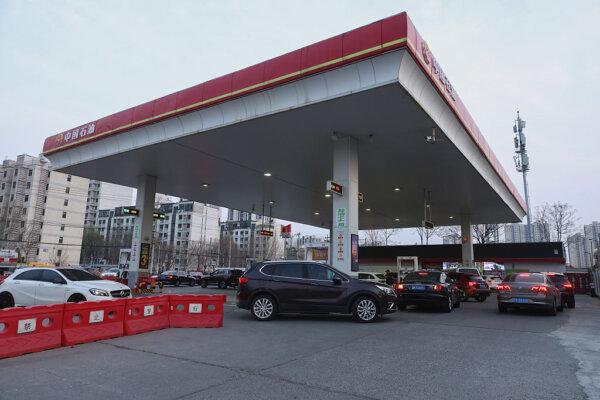
Iranian military personnel, of which the IRGC-designated terrorists are the most important element, briefly emerge to harass shipping through the Strait of Hormuz and launch weapons at Israel and Arab oil facilities. They hide as quickly as they emerge. This pop-up strategy is sufficient to freeze the strait’s shipping and push average gas prices in the United States north of $4 per gallon.
Iran’s top mediators claimed on April 7 that Iran still has 45,000 drones and 15,000 ballistic missiles with which to continue the approach indefinitely. While likely an exaggeration, Iran still has plenty of munitions to hold the world’s oil hostage.
Iran appears more and more like a failed state in which terrorists are running wild. As U.S. President Donald Trump has observed, it is hard to negotiate with a country that has no leaders remaining. This does not mean that a war against Iran’s people or civilization is necessary. The latter approach could mobilize world public opinion against the United States.
There are better options available. Iran can be broken into pieces to weaken the regime. The Kurds could get their own state. Hezbollah-controlled southern Lebanon is already shrinking under Israel’s need for a buffer against Iranian rockets, supplied by Iran. The Houthis, which have joined the fight in joint operations with Iran and Hezbollah, could be targeted. Iranian oil exports can be taxed to the point of little profit through the tolls that Trump proposed on April 6.
Control over Iran’s oil, perhaps through the U.S. seizure of Kharg Island, will provide the United States with bargaining leverage over China, which has kept Iran financially afloat through sanctions evasion and oil purchases. China uses small refineries known as teapots, small banks, and front companies in Hong Kong and elsewhere to import 80 percent of Iran’s oil exports and convert Iran’s yuan, which it receives in initial payment, to any currency it likes.
China and Russia are responsible for the war due to their support and encouragement of the Iranian regime over the years. This continues today. They vetoed a United Nations Security Council resolution on April 7 to open the Strait of Hormuz. The resolution called on Iran to stop attacking shipping and threatening its neighbors. The resolution was sponsored by Bahrain, which argued that the closure risks destabilizing the global economy and worsening food insecurity. Not only oil, but fertilizer traverses the strait.
The United States supported Bahrain’s resolution and denounced Russia and China for tolerating that Iran is holding “the global economy at gunpoint.”
U.S. Ambassador to the United Nations Mike Waltz noted that “Chinese entities have exported significant quantities of components intended for attack drones and technologies that could be used in ballistic missiles” to Iran. This is sometimes done through not only Chinese, but also Iranian, Malaysian, and Hong Kong front companies. China has provided Iran with anti-ship cruise missiles and surface-to-air missiles. In early April, Iran shot down two U.S. warplanes: an F-15E and an A-10.
The Chinese Communist Party (CCP) continues to support Iran’s military during the war with missile fuel precursors, artificial intelligence (AI)-powered intelligence, and technical assistance in reconstituting its ballistic missile systems. The precursors include sodium perchlorate shipped from China on up to four Iranian-flagged vessels. China expert Gordon Chang has recommended that the United States seize such ships, telling Fox News that “it is a question of America’s will to impose costs on China.”
China’s AI-powered military intelligence, which analyzes satellite imagery, shipping data, and flight trackers, is critical for Iran to accurately target over-the-horizon U.S. and allied military assets. Private Chinese companies linked to China’s military allegedly provide the conduit through which the targeting intelligence flows to Iran. The intelligence provides locational intelligence on U.S. aircraft carriers and other U.S. concentrations of air power.
While the Chinese companies are technically private, they are under the control of the CCP, as are most companies that depend on their operations in China. They could never provide this intelligence to Iran without the consent and likely direction of top CCP officials, most likely including Xi Jinping himself.
China also provides revenues and dual-use military technologies to Iran, used to produce its ballistic missiles and armed drones. Despite China’s reliance on oil and gas from the Middle East, it appears willing to keep the war going by continuing to import Iranian energy. Beijing likely cares less about higher hydrocarbon prices due to China’s dominance of renewable energy technologies. Since the war started, China’s solar panels and electric vehicle sectors have soared.
Until the CCP is defeated, the U.S. adversaries that the CCP supports, including the Iranian military, will continue to be a threat to the United States. Defeating the CCP requires sanctions on entire Chinese economic sectors, including the banking and energy sectors, rather than whack-a-mole strategies of sanctions on individual Chinese officials and small companies used for sanctions evasion.
The center of the global network of rogue nations and terrorism is in Beijing, as demonstrated most recently by China’s support for Iran. Defeat an enemy state, and war continues elsewhere. Defeat the network’s paymaster and materiel supplier, and war itself could end.