It is easy to get caught up in the celebrity drama, the political drama, and the constant pressure to take sides in the world around us. It is easy to become tribal, to gather with those who already think like we do, and spend our days reacting to the latest outrage. But what if much of it is a distraction? What if everything is competing for our attention because, when we are fully alive, awake, alert, and present to our lives and to our relationship with God, we are far more powerful than we realize?
People who are grounded and focused on what is real would be much harder to manipulate and far harder to govern through fear. So what if the endless stream of news, politics, and social media conflict is not accidental? What if it is doing exactly what it is designed to do: keep us mentally scattered, emotionally reactive, and spiritually depleted?
Now that system has been refined through algorithms and artificial intelligence. Our feeds are no longer generic. Each of us is handed a personalized stream of information, entertainment, outrage, and fear designed to capture our attention. The machine learns what hooks us and gives us more of it. The details vary from person to person, but the outcome is the same. We are pulled away from the life right in front of us.
I have come to believe that our attention is one of the most valuable things we possess. In a very real sense, our attention is worship. Where we put our attention is what we serve. It shapes our thoughts, our emotions, and ultimately our actions.
It is alluring to follow the latest political feud or public scandal. I feel that pull too. I can hear myself saying, “We need to know what is going on.” But do we really need to know as much as we think we do, or have we confused constant updates with meaningful awareness?
My husband is excellent at living his life without tracking every global development. That does not mean he is immune to distraction. His feeds still pull him in with humor, farming clips, and whatever else the algorithm has learned about him. None of us is outside of it. The point is that nearly all of it can quietly consume the attention that should belong to our actual lives.
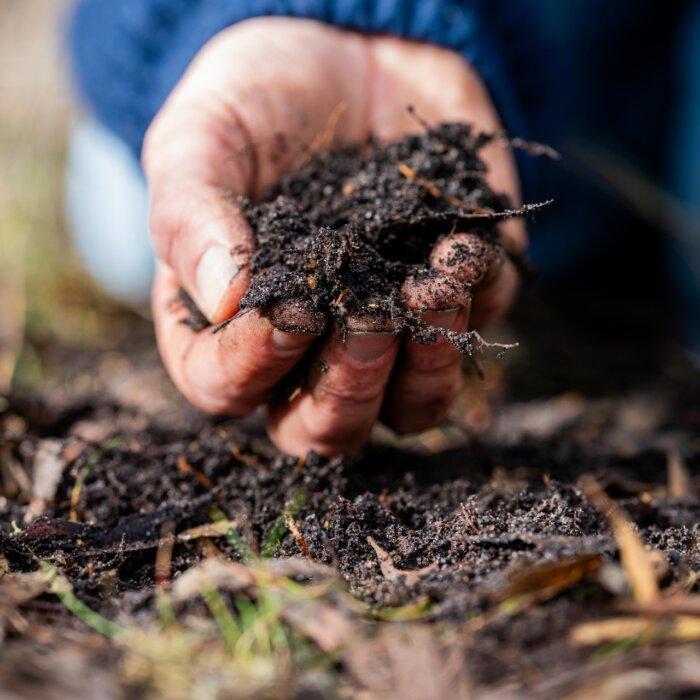
I see this in myself. I can spend time watching videos about water scarcity in Texas and spiral into worry about the aquifer, population growth, and what is coming next. Or I can put my attention on what is possible. I can focus on building water recharge through regenerative practices on my land, educating others, and supporting solutions that replenish what has been depleted.
Those are two very different uses of attention. One leads to anxiety. The other leads to purpose.
That is what so many of us are up against: a never-ending, personalized fear loop. Maybe yours is disease. Maybe it is immigration. Maybe it is economic collapse, cultural decline, or your own body image. Each version is slightly different, but they all do similar work. They keep us reactive, divided, and distracted from what we can actually build.
Often, after I scroll the internet, I can feel it. A little bit of my peace is gone. My body is slightly elevated from whatever the latest outrage was. Then I step back into real life, into my home, my land, my family, and I can sense that something has shifted. There is a thin layer between me and the present moment that was not there before.
And it is not just happening within us. It is happening between us.
There is a new way we talk about people. We qualify them before we simply allow them to be human. “This is my sister. She is very nice, but she is a little liberal.” “This is my uncle. He is a good guy, but he is far right.” “She is wonderful, but she has a trans kid.” “They are from California, but they are good people.”
We cannot just say “This is my sister.” We feel the need to explain her, to place her within a framework that has been built for us somewhere else.
As a Californian deep in the Texas Hill Country, I feel this personally. I experience the hospitality, but also the subtle hesitancy. I can tell that, for some, the version of “Californian” they have absorbed online is being layered on top of me before they know me. And so I find myself qualifying who I am. I joke that I am escaping, that I am a refugee, and I laugh to signal that I understand and that I belong. It is lighthearted, but it reveals something deeper. We are no longer meeting each other as individuals first. We are meeting each other through narratives that were shaped somewhere else.
That framework is not coming from lived experience. It is coming from our feeds.
We are layering the internet’s version of reality onto real people. We are importing fears and labels into relationships that could otherwise be simple and human. It does not just distract us from real life. It reshapes it.
It makes it harder to build trust, harder to work together, harder to form real community. Division does not always look like conflict. Sometimes it looks like quiet distance, polite separation, and a reluctance to fully engage with the people right in front of us.
If we are going to reclaim our attention, we also have to reclaim how we see each other. We have to learn to meet people without immediately filtering them through what we have been fed online. We have to rebuild relationships in real places, through shared work and shared responsibility.
That is where real change happens. Not in comment sections or outrage cycles, but in the daily, imperfect work of living alongside one another.
This does not mean we should know nothing. There are things worth paying attention to. But we have to be honest about the difference between discernment and addiction. Many of us are not calmly informed. We are constantly stimulated, mistaking agitation for engagement.
I do not do this perfectly. I still get pulled into the news. I still lose time and peace to things that do not deserve it. But I am trying to live more intentionally. Through my work and my writing, I am trying to reclaim my attention and encourage others to do the same.
Because attention is power. When we give it away carelessly, we are not only losing focus; we are also feeding systems that study us, shape us, and profit from our distraction.
I am not saying we should abandon technology. I am saying we need something bigger than it. We need a mission beyond ourselves, beyond even our immediate families, that we take steps toward every day. We need a vision of the future strong enough to compete with fear.
We the people still have power. But power requires will. It requires discipline. It requires choosing, again and again, where we place our attention.
In an age when everything is competing for our minds, reclaiming that attention may be one of the most important acts of resistance we have left.