We are told that artificial intelligence (AI) lives in “the cloud,” as if it exists somewhere weightless and abstract. But the cloud is not a cloud. It is physical. It is buildings, often many of them, made of concrete and steel, filled with thousands of servers stacked in racks, running hot every second of the day. All that heat has to go somewhere.
That is the part of the AI boom that remains largely invisible to the public. AI is not just a software story. It is a land story, an energy story, and, increasingly, a water story. The servers that power large language models and image generators generate immense heat, and one of the most efficient ways to cool them is with water. That water is used directly in cooling systems or indirectly through the electricity required to run these facilities.
The scale is difficult to grasp. Researchers have estimated that a series of AI queries, something as simple as asking a chatbot a few dozen questions, can consume roughly half a liter of water, depending on where and how the system is run. The exact number will vary, but the underlying reality does not. Every prompt has a physical cost. Every generated image or paragraph pulls on real-world resources.
Now place that reality inside states already wrestling with water constraints.
In Texas, projections from researchers at the Houston Advanced Research Center indicate that data center water use could rise significantly by the end of this decade, potentially accounting for a meaningful share of statewide demand. Texas already has hundreds of data centers, with dozens more under development. At the same time, the state continues to plan for population growth, recurring drought conditions, and long-term water shortages. This is not theoretical. It is a layering of new industrial demand onto an already strained system.
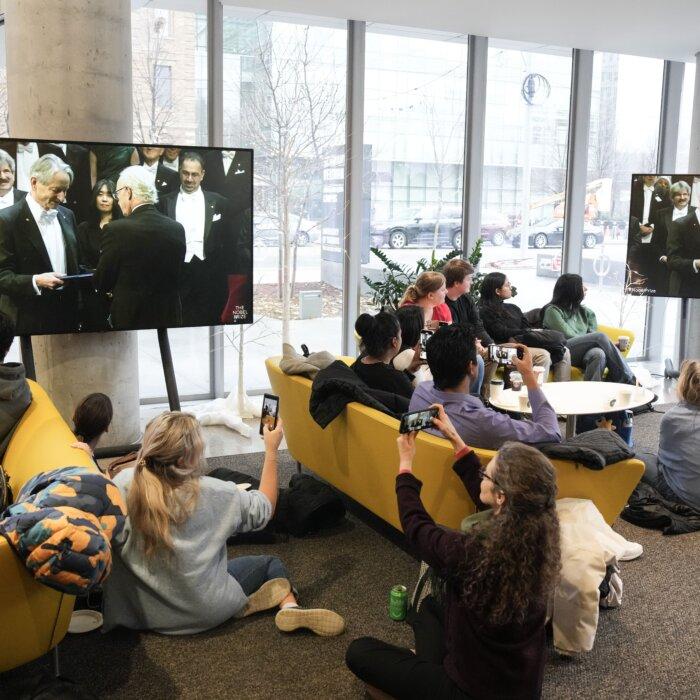

And on the ground, the contrast is becoming harder to ignore.
I am being asked to monitor and limit my water use while growing food for my community. At the same time, I am investing in swales, keyline design, cover crops, and soil building practices that increase water retention and recharge the aquifer. I am working to put water back into the land, yet I am being monitored for how I use it.
This is not passive land. It is active stewardship. It is work that slows runoff, rebuilds soil, and holds water where it falls. It is the kind of work that, over time, strengthens a watershed rather than depletes it. Yet even within that context, the focus remains on restriction at the smallest scale, while much larger demands move forward with far less scrutiny.
Florida is beginning to confront a similar tension. Lawmakers there have started advancing legislation aimed at large-scale data centers, citing concerns over both electricity and water consumption. The state already hosts a substantial number of facilities, and proposals for new developments have sparked local resistance, particularly in regions sensitive to groundwater and spring systems.
California presents another version of the same story. Even after recent rains pulled the state out of official drought status, long-term water security remains uncertain. Yet the expansion of data infrastructure continues, often outpacing both tracking and regulation of water use.
So why are so many of these facilities being built in places where water is already a concern?
Because water is rarely the deciding factor. Developers are chasing access to power, tax incentives, fiber infrastructure, and permitting pathways that allow projects to move quickly. These facilities follow energy and economics first, while water is treated as something to be managed rather than a reason to reconsider. However, for the communities where these projects land, water is not secondary.
What makes this moment different is not just the scale of consumption, but also the speed. The demand driven by AI is accelerating faster than most public planning frameworks can keep up with, and much of it is happening quietly, behind the language of innovation and progress.
At the same time, the infrastructure being built is not neutral. These data centers are not only powering chatbots and image generators. They are forming the backbone of a rapidly expanding digital system that includes financial technology, centralized platforms, and increasingly sophisticated surveillance capabilities. Digital currency systems, real-time data tracking, and AI assisted monitoring all rely on this physical infrastructure, buildings that require land, energy, and water.
We are, in many ways, building the system that will govern us.
There is a deeper irony here. The same communities being asked to conserve water, to limit usage, and to adapt to scarcity are also being asked to host facilities that consume water at an industrial scale. The same electrical grids that strain under summer demand are being expanded to support server farms that operate continuously. The connection between the two is rarely made explicit.
Every time we generate an image, ask a question, or rely on AI to complete a task, it feels frictionless. But those actions are not detached from the physical world. They are tied to a network of buildings that requires constant cooling, constant power, and constant resource input. The race for AI is also a race to secure land, energy, and water before the public fully understands what is being traded away.
And there is a harder truth beneath it. We are not just witnessing the construction of infrastructure; we are participating in it. The systems being built, capable of tracking, managing, and influencing daily life, depend on these data centers. They depend on the very resources being drawn from our communities. In that sense, we are helping to construct the framework of a more controlled, more monitored world, often without fully recognizing it as it takes shape.
Texas, in particular, stands at a crossroads. It is a state built on land, water, and independence, yet it is also a state experiencing rapid growth and increasing pressure on those same resources. The question is not whether data centers will be part of the future. They already are. The question is whether the public fully understands what is being built, what it requires, and who ultimately bears the cost.
Because once the infrastructure is in place, the decisions become much harder to reverse. And by then, the water will already be spoken for.