China’s involvement in Russia’s drone war against Europe surged from May to August. Beijing’s export approval of everything a battle drone needs—from fiber-optic cables to overcome electronic warfare to lithium-ion batteries necessary to keep the drone flying for extended distances—is facilitating Russia’s war not only against Ukraine, but also potentially against NATO countries in northern and eastern Europe.
Apparently, Beijing wants a protracted war to keep the United States from refocusing its defenses against China. The ongoing war and resulting sanctions on Russian energy exports also divert them to China at a discount, giving the Chinese Communist Party (CCP) a financial motive to keep the war going.
Recent drone incursions over European airports, military installations, and other critical infrastructure in Germany, Poland, Denmark, Norway, Estonia, and Romania have led to more critical attention being directed at China’s drone exports and personnel, as well as to the arrests of Chinese nationals operating drones illegally in at least one NATO country.
Chinese attack and surveillance drones are shipped directly to Russia for use against Europe. On Oct. 2, two Chinese nationals were detained in Norway while allegedly operating a drone near a major NATO military base.


On May 27, Ukrainian President Volodymyr Zelenskyy said China was selling Mavic drones to Russia but not to Ukraine or western European countries. What China does provide to Ukraine is minuscule compared with what it sells to Russia. In August, for example, China exported 328,000 miles of fiber-optic cable to Russia but only 72 miles to Ukraine. The latter quantity could be enough for about five or 10 electronic warfare-resistant drones. But it provides the CCP with plausible deniability about whether it bans the cable for export to Ukraine.
Zelenskyy said that drone production lines in Russia sometimes include Chinese representatives. This is helping Russia reach a goal of launching 1,000 drones daily, according to a Ukrainian expert. The Center for European Policy Analysis argued in June that the “China–Russia drone alliance” was booming. People’s Liberation Army (PLA) officers are allegedly touring the frontline in Ukraine. Russian camera footage of the war is sent back to China for analysis and technical development of new and more deadly forms of drone warfare.
The PLA’s involvement with Russia and China’s massive dual-use exports were likely raised with Chinese Foreign Minister Wang Yi at talks in Germany in July. Wang explained that Beijing could not accept a Russian loss in Ukraine, as it would allow the United States to refocus its attention on China. Perhaps thanks to this backing from the CCP, which underlines its “no-limits” partnership with Moscow, Russia risked the expansion of its war with Ukraine to NATO countries in eastern and then northern Europe.
On Sept. 10, NATO jets downed multiple Russian drones over Polish territory, resulting in at least nine crash sites. European officials said the incursions, involving more than 20 Russian battle drones, were deliberate. Russian drone incursions followed in Romanian airspace. Then, Russian fighter jets violated Estonian airspace.
U.S. President Donald Trump responded to the fighter jets by saying that Russian fighters that violate NATO airspace should be shot down.
Yet Russia’s provocations may have continued. On Sept. 22, drone sightings in Norway and Denmark closed major airports overnight, stranding 20,000 travelers in Copenhagen, Denmark, alone. On Sept. 27, Denmark noted new drone sightings over its military installations. Overnight on Oct. 2 and Oct. 3, Germany’s Munich airport was closed because of drone activity. The drones stranded approximately 3,000 people.
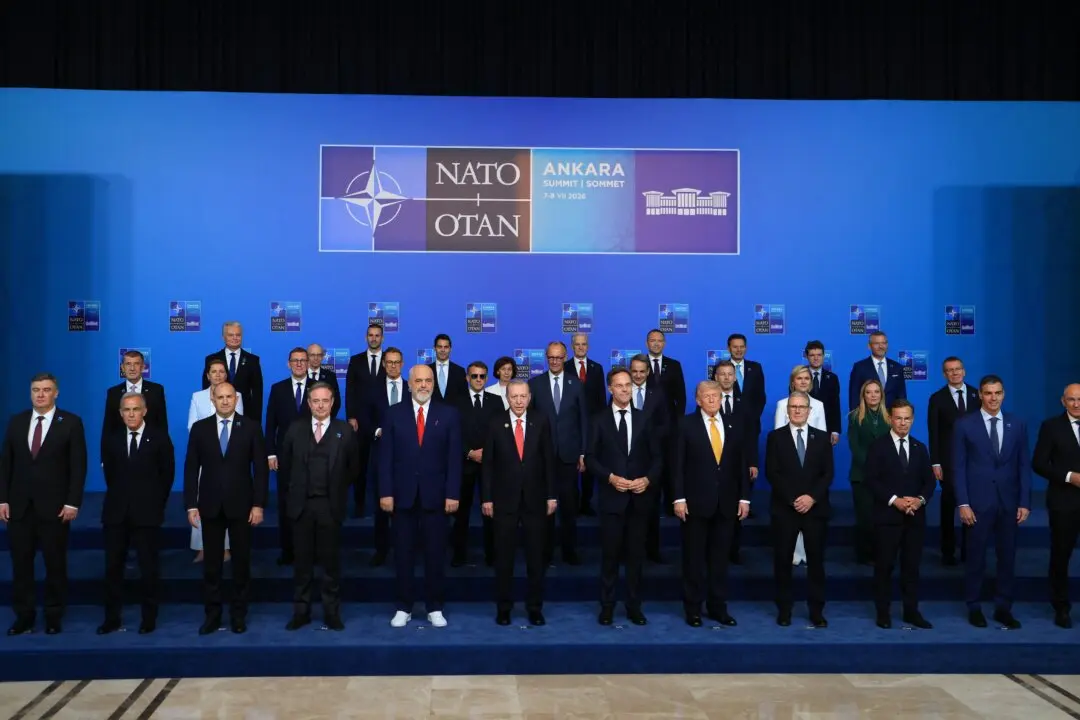
European governments are rightly planning to redirect about 140 billion euros ($163 billion) from frozen Russian assets to Ukraine for its defense, purchase more weapons that will work against drone swarms, and create rapid reaction teams to quickly identify and disable the battle drones. Denmark responded by increasing its military spending on long-range weapons, including 16 F-35 fighter jets from the United States. Sweden will spend $367 million on anti-drone systems, including hunter drones; truck-mounted systems to shoot drones down; and jamming sensors.
The CCP clearly enables Russia in both its technical development of drone warfare and the nearly 80 percent of Chinese electronic inputs in Russian drones. It’s time that Europe, the United States, and anyone interested in world peace support stiffer sanctions against Russia and China. The sanctions should go beyond the Whac-a-Mole approach of a few individuals and corporations to the systemic sanctioning of the entire economies of these two dangerous global threats to democracy.