Commentary
I live and work in a community that talks often about freedom and sovereignty. We explore legal structures, opt out of systems, build businesses, grow food, and create lives that are more independent of centralized control. All of that matters, but I have come to believe that none of it is real if we are not sovereign in our own emotions.
If a fly can ruin your lunch, you are not free. If a bumpy dirt road can determine your mood, you are not sovereign. If a stranger’s bad attitude can derail your day, then no legal document, no lifestyle shift, and no declaration of independence has actually taken root.
This is something I see clearly in my daily life hosting guests at our ranch. People arrive who share similar values, who talk about freedom and self reliance, but often expect a good time to be delivered to them. They expect the environment to create their experience rather than deciding who they will be within it.
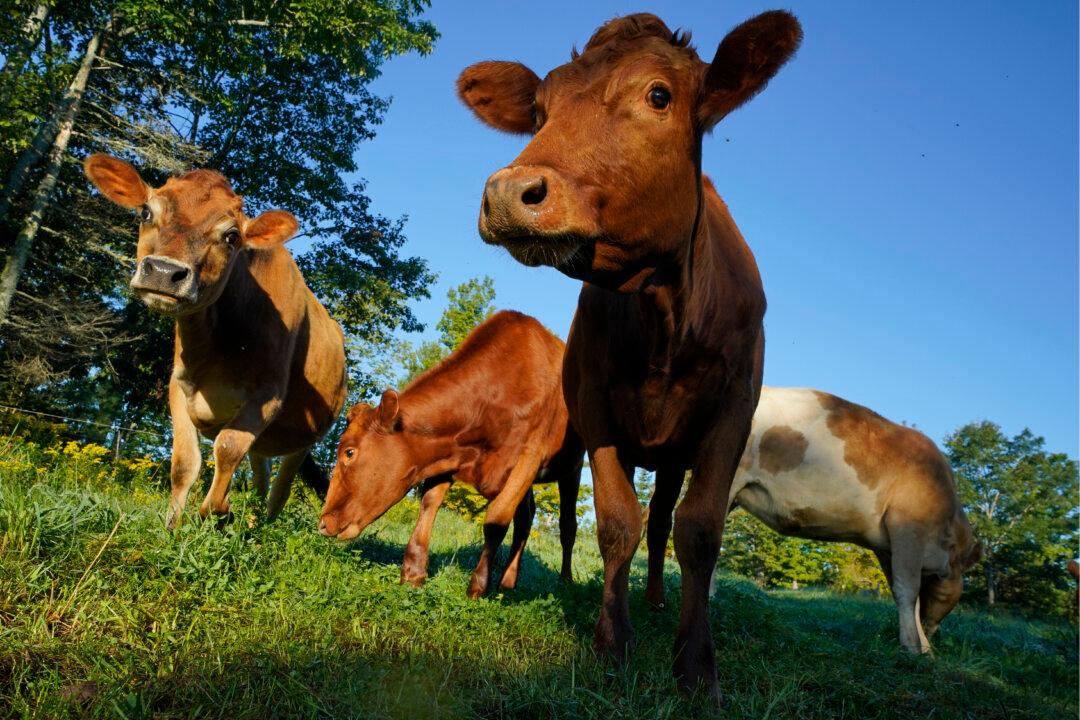
A guest once told me the road to our ranch was the worst they had ever driven. I smiled and told them they must be blessed, because there are far worse roads in the world. Others sit down to eat outside, less than 100 yards from cows, and are surprised by flies. I hand them a fly spinner and remind them that this is a working farm. We will do our best, but this is not a sealed, controlled environment. It is real life, and real life comes with texture.
For most of human history, people lived in constant contact with that texture. Mud, flies, dust, heat, and cold were not inconveniences that determined the quality of a day. They were simply conditions. No one woke up and decided their experience of life based on whether the road was smooth or the air was clean. Life required participation, not evaluation, and joy didn’t depend on the absence of friction.
Somewhere along the way, we shifted from engaging with reality to expecting it to perform for us. We began to believe that if something is uncomfortable, it must be wrong. If there is friction, it must be removed. If an experience is not seamless, it has failed. In that shift, we did not become more refined. We became more fragile.
Friction is not failure. Friction is where resilience is built. When we remove every discomfort, we do not create better humans—we create people who are increasingly dependent on perfectly curated environments in order to feel okay. That is not sovereignty. It is a quieter form of dependence that hides behind comfort.
Two people can walk into the exact same setting and have completely different experiences. One sees beauty, connection, and novelty, while the other sees inconvenience, irritation, and flaws. The difference is not the environment. It is the posture each person brings with them.
Are you arriving somewhere to have a good time, or are you expecting a good time to be given to you? That question reveals more than most people realize. When you are waiting for an experience to make you feel good, you have already handed over control. When you decide, before you even arrive, that you are going to be open, engaged, and present, the conditions lose much of their power.
This is not about denying discomfort or pretending that life does not include hardship. There are real moments of grief, loss, and change that shape us deeply. Most of what derails us day to day, however, is not tragedy. It is inconvenience, and inconvenience should not carry the weight we have given it.
When I was a child, I would tell my mother that I was bored, tired, hungry, or upset. She would look at me and say, “it sounds like an inside job, get to work.” At the time, it felt dismissive. Now I understand it as one of the most empowering lessons I was given. She was reminding me that my internal state was mine to manage.
Somewhere along the way, we stopped teaching that. We began validating every discomfort as something that needed to be solved externally instead of something that could be navigated internally. In doing so, we weakened our ability to remain steady in the face of ordinary life.
Rebuilding that strength does not require anything complicated, but it does require intention. It begins with ownership, with the decision to ask who you are choosing to be in any given environment rather than whether that environment is meeting your expectations. It continues with exposure, with a willingness to spend time in places that are not controlled or curated so the nervous system can relearn that dust, heat, bugs, and unpredictability are not threats. They are simply part of being alive.
It deepens with meaning. When life is rooted in something real such as work, family, land, or community, small discomforts begin to lose their grip. They stop feeling like offenses and start feeling like context. What matters becomes larger than the irritation.
I have seen, over and over again, that this kind of steadiness is contagious. When one person is grounded and unshaken by small things, it changes the tone of the entire interaction. It creates space for others to step into that same posture, to experience life with a little more ease and a little less resistance.
That is the kind of sovereignty worth pursuing. Not just the ability to opt out of systems, but the ability to remain whole within yourself regardless of circumstances. Not just freedom on paper, but freedom in practice, in the moments when something goes wrong, when conditions are less than ideal, when life looks like real life.
Real life is not sanitized. It is not always smooth or predictable, and it was never meant to be. It is muddy and dusty and imperfect, and it is still, if we choose it, deeply good.