A Collision Bound to Happen
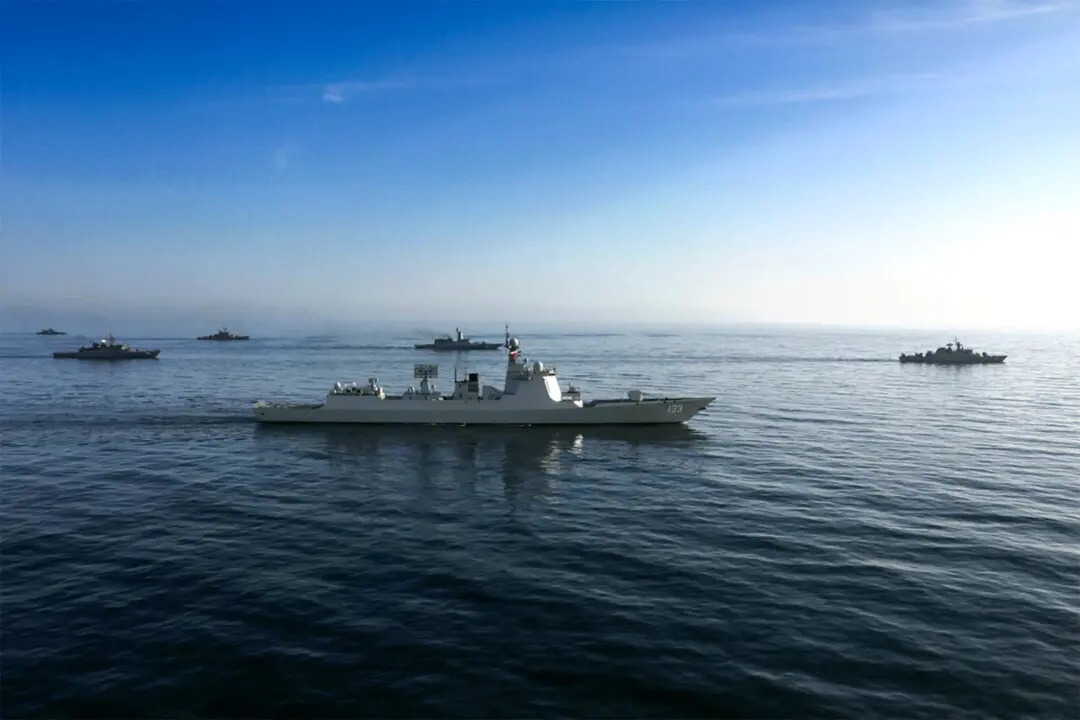
In recent years, the Chinese regime’s navy and coast guard have increasingly conducted high-speed chases of Philippine naval and civilian vessels in the South China Sea, treating such maneuvers as both propaganda stunts and a way for personnel to score career points. The Chinese officers and crew involved often do not possess sufficient naval expertise or awareness of the associated risks.This time, two Chinese warships, relying on their larger size, charged recklessly ahead. The Guilin destroyer displaces 7,500 tons, and the Nanyu coast guard vessel (CCG-3104) displaces 1,440 tons, compared to just 321 tons for the Philippine BRP Suluan.
However, the Chinese operators failed to consider an important fact: larger ships are more challenging to maneuver. Video footage reveals that neither the Guilin destroyer nor the Nanyu coast guard ship was able to prevent the collision in time, leaving several crew members on the bow of the coast guard ship scrambling for safety.
Low-Skilled Frontline Troops, Overhyped Equipment
The overall military caliber of Chinese naval officers and sailors is low. The Type 052D destroyer is an expensive vessel and is designed for regional air defense and blue-water operations. Under normal circumstances, the Guilin destroyer should never be tasked with ramming small boats. The fact that it was used in such a reckless maneuver shows that its captain lacked even basic naval judgment. If the ship had sustained severe damage, not only would repair costs be high, but it would also further strain the already limited number of destroyers available to China’s South China Sea Fleet.
At the same time, the CCP’s highly publicized “most advanced” Type 052D destroyer did not meet its claimed performance standards. Official propaganda claims that the destroyer can reach 30 knots (34.5 mph), yet it was unable to catch a medium-sized Philippine patrol vessel with a maximum speed of 25 knots (28.75 mph). This indicates that the Chinese warship’s speed claims have been exaggerated.
The Type 056 corvettes (the Nanyu being one of them) were all transferred to the China Coast Guard in 2021. They had their weapons removed before the transfer and saw their performance reduced even further. After the recent collision, the Nanyu was left unable to sail. Although the CCP later introduced the Type 056A variant, the very fact that the earlier batch was phased out quickly suggests that the original ships fell short of expectations. The newer 056A, although it tops out at 28 knots (32.2 mph), is only slightly faster than the Philippine patrol vessels, offering no significant speed advantage.
Rigid Command, Blame-Shifting
These high-risk pursuit operations were likely not the spontaneous decision of the captains but came from orders—or at least tacit approval—from higher-ups. Even if frontline troops on site recognized the danger, they dared not disobey. Regardless of the exact circumstances, the incident highlights the Chinese Navy’s lack of professional capability and the deep flaws in its command system.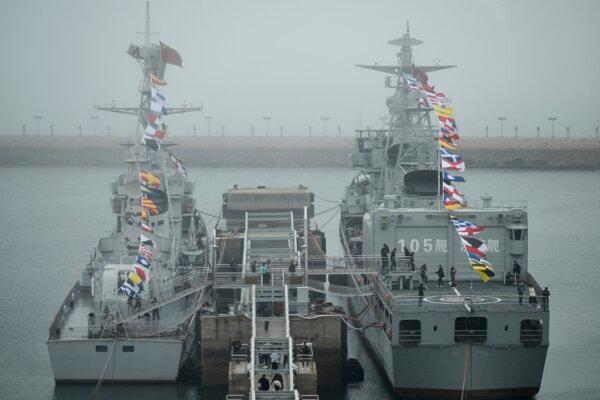
After the collision, the Chinese destroyer should have immediately halted operations, quickly assessed the damage, provided urgent medical care, and rescued any personnel who fell overboard. Instead, the Guilin continued pursuing the Philippine vessel, with the Philippine Coast Guard ultimately having to suggest a rescue operation.
Chinese Navy’s Logistical Strains in South China Sea
Scarborough Shoal lies about 120 nautical miles west of the Philippines’ main island, Luzon, but about 486 nautical miles from China’s Hainan Island. Ships from China’s South Sea Fleet cannot maintain a permanent presence there and must rely on temporary patrols by coast guard vessels. In recent years, joint patrols carried out by the United States, Japan, Australia, and the Philippines have caused the South Sea Fleet to deploy more destroyers, doubling logistical pressures.On paper, the South Sea Fleet appears to have numerical superiority, but its long supply lines are a significant vulnerability. U.S. aircraft can operate from Philippine bases close to the theater, and in any conflict, Chinese vessels without air cover would become easy targets. After most of the Chinese Navy’s aviation units were transferred to the air force in 2023, the South Sea Fleet’s air support capability weakened further.
Moreover, the CCP continues to treat the Taiwan Strait as its main front. In wartime, China’s East Sea Fleet would require reinforcement, leaving the South Sea Fleet potentially stretched thin. The North Sea Fleet recently participated in exercises in Russia and conducted joint Pacific patrols, further extending the fleet’s operational lines. At the same time, the Chinese fleet must contend with Japan and, in conflict, defend the East and Yellow seas, straining resources.
Conclusion
Behind the Chinese regime’s embarrassing ship collision lies not only a glaring gap in the professional skills of its personnel but also the shortcomings of its equipment, highlighting a full-spectrum disadvantage caused by chaotic strategic planning.The Chinese military functions as a highly politicized “CCP army,” with officers and troops held accountable not for combat effectiveness but for demonstrating political loyalty. Entrenched corruption and ignorance are unlikely to change. Without entirely removing the CCP’s control, building a modern, capable national defense system is impossible. The latest maritime collision is more than a mere accident—it is a microcosm of the deep-seated crisis within the Chinese navy.