On Oct. 1, 2014, the show “South Park” released an episode in which the nation is saved by turning the food pyramid upside down. Even when the show came out, it spoke to a widely known truth: The government had gotten its food recommendations, dating all the way from the 1970s, completely wrong, thus contributing to the United States’ crisis-level problem with chronic disease.
The Trump administration, through Robert F. Kennedy Jr.’s leadership of the Health and Human Services Department, has finally done what needed to be done. It has, in fact, turned the food pyramid upside down—or rather, it has made it right-side up.
Instead of putting carbohydrates as the foundation and meat on the opposite side, the reverse is now true. The new dietary recommendations further push real food, as close to nature as possible, and against refined and highly processed food and sugary everything.
As Peter St. Onge summarizes, meat is king, eggs are good, sugary fruits are demoted, and Lucky Charms no longer rank higher than steak.
If followed, this will be a dramatic change in the way America eats. It immediately affects dozens of government procurement programs, including school lunches, and will likely shift the center of gravity in the American diet.

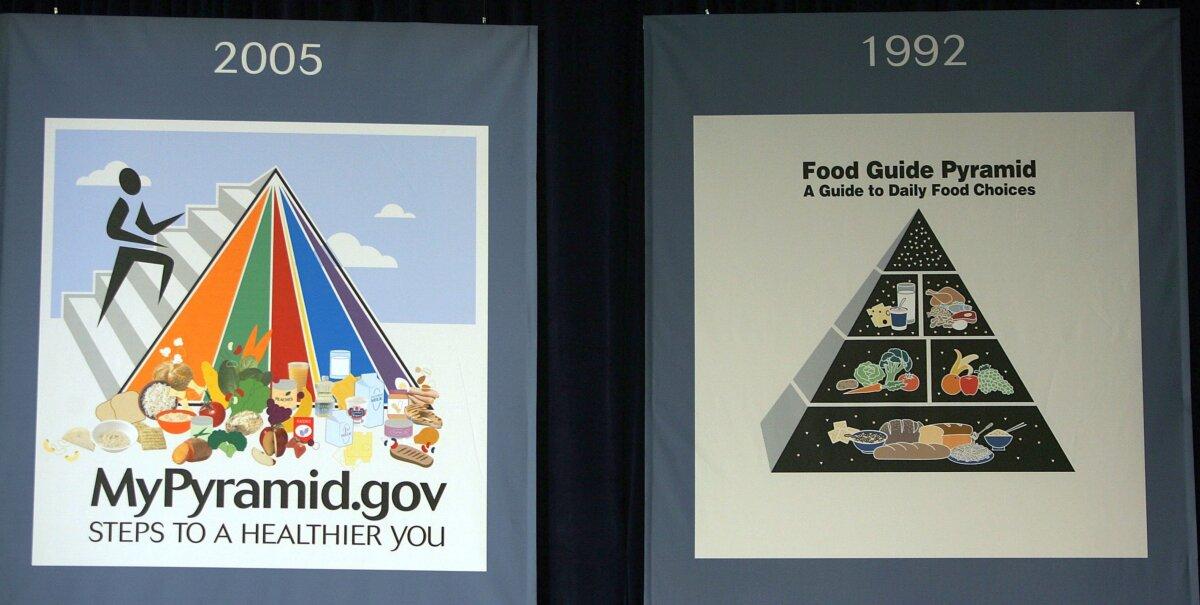
The old food pyramid came out only in 1992 and has since been removed and replaced by a dinner plate. But the old pyramid still lives in the public mind. Virtually everyone of a certain age knows about it. What they did not know is that the old pyramid reflected industry priorities and was never based on sound science.
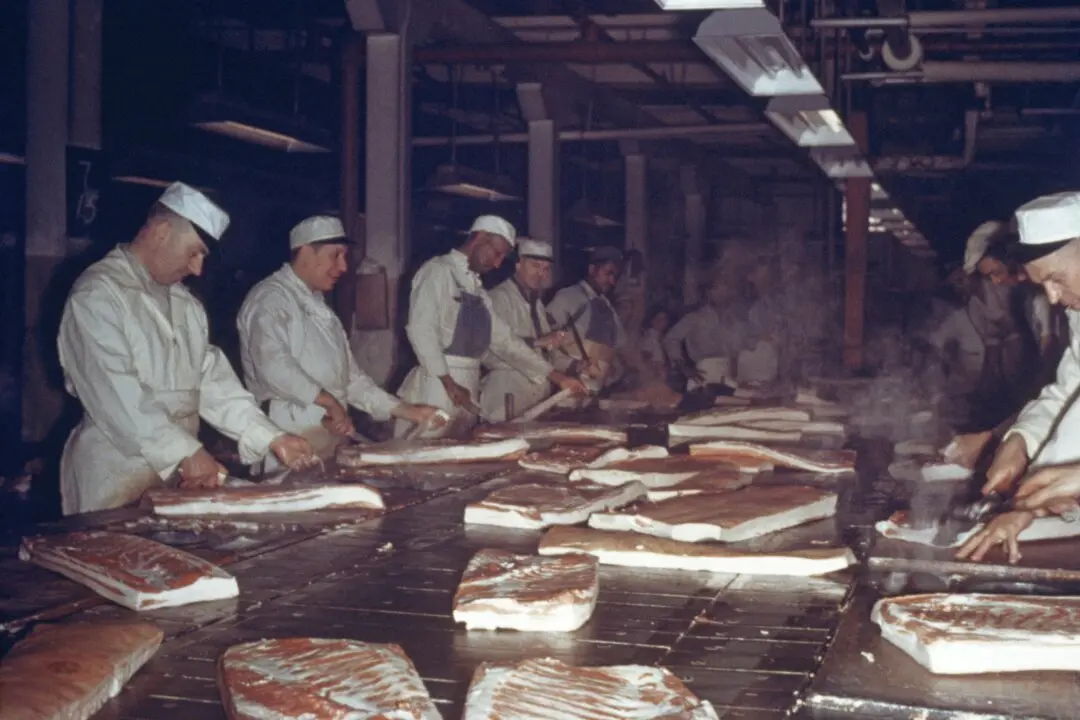
You have to go back in time to understand how things went so haywire. Dating all the way back to the New Deal of the 1930s, the government imposed stunning limitations on food production as a cockamamie method for keeping prices as high as possible. The thinking was that falling prices were keeping the economy in a depressed state, so any method to raise prices and wages would generate recovery.
This forced farmers to plow up crops and slaughter livestock. The whole thing represented egregious mismanagement of U.S. food policy. This experience plus wartime rationing of food supplies eventually produced a huge blowback in the other direction.
By the early 1970s, priorities flipped again toward maximum production of everything. It was a Republican initiative, seen as a more pro-business approach than what the Democrats had done.
In those days, the priority was on grains, soy, and corn, owing to the political influence of states where those crops were central to the economy. This meant a federal push toward corporatization of everything.
Farms got bigger and bigger, and surpluses of cheap grain started appearing and getting ever worse. There was so much corn coming out that new uses for the stuff had to be invented; it became the most common animal feed, a cheap source of sugar, and finally fuel to be added to gasoline. It was also true with soy and wheat: Every effort was made to find markets for the overabundance.
You can hardly find anything in a convenience store today that is not made of corn in some way, including the gasoline.
The old food priorities were set to accord with the same goal.
Remember that back in the 1970s, people still believed what the government said. I was raised in the very midst of a time of tremendous upheaval in food recommendations. My dear and loving mother wanted the best for her family and naturally assumed that the government was telling the truth. Everyone did.
We were buffeted from one food panic to another. Don’t eat fat. Drain it all off your meat. Eat far more noodles and bread. Never eat eggs, but rather eat egg substitutes. Don’t use butter; use margarine. Beans are better for you than chicken. Trust only food in packages that are processed. Never use cream. Use only Cool Whip for your desserts; it’s made not of cream but of corn.
The egg panic alone should have revealed the scam. How can anyone be against eggs? The culture at the time was primed for it with the belief that artificial everything was an improvement over natural anything. Just as polyester is better than cotton and electric bulbs are better than whale-oil lamps, so too liquid muck with eggish flavor was better than anything that came from a chicken.
I know, weird times.
So on it went. Daily. It was one thing after another. Even at school, our whole milk was replaced by skim milk. No one would drink it, so it was left to rot. Incredibly, they tried to get us to eat soy burgers rather than hamburgers, thus removing one of the few joys of the lunch hour. All the kids were grossed out and would not eat that dreck.
I still have nightmares about soy burgers, and I was astonished when they were revived as “impossible burgers.” Impossible indeed.
Instead, back in grade school, we raided the new candy machines that appeared in the hallways. Every single day. That was lunch for me for many years. I’m sure my parents had no idea. But someone knew, such as the candy company that enjoyed restocking the machines daily. It was the same with sodas—we bought them rather than drink that thin stuff.
It was a deeply sad time and resulted in an astonishing health crisis. Everything got worse: heart disease, diabetes, obesity, and all-around suffering. This had become very obvious by the late 1980s when a million fad diets were born.
No one believed the government anymore, but we didn’t know what to believe. Everyone had an idea, and at the same time, new allergies were born to just about everything. So a highly customized individual diet became both medically necessary and commonly adopted.
This is a major reason for the decline of dinner parties. It’s near-impossible to cook for a crowd these days. The failings of the food pyramid that trace to 1970s industrial priorities made Americans absolutely food paranoid. It generated population-wide obsessions with the reason for widespread sickness and also a great struggle over the solution.
Decades have gone by, and consensus developed among nutritionists. The consensus is that those people half a century ago got everything wrong and that their priorities resulted in the wrecking of the entire food supply. Instead of ultra-processed food and nutrient-deprived food, we need real food that is nutrient-rich. That might sound like common sense now, but decades ago, it was not common sense.
Even now, the mistakes of the past are in evidence in every grocery store, with low-fat this and low-fat that and mountains of inexpensive carbohydrates competing with higher-priced meats and eggs. It’s going to take a lot more than a website, some announcements, and a new pyramid to reverse the damage. But at least we have a good start here.
It’s taken half a century for this day to arrive. Yes, government moves exceptionally slowly. Still, there is a reason to celebrate. We might finally be getting our priorities straight and fixing up American health again as an added bonus. It’s been a long and tragic slog through amazing propaganda and insane experiments, but at long last, we are back to where we should have been all along: real food.