Let’s say you are tapped to be in charge of a local hardware store that is losing money. As a seasoned industry person, you accept the job.
When you arrive, you discover a number of underperforming employees. You start dealing with the problem, but then you are informed that you have no control over anyone who works there. It does not matter how lazy, bloated, or insubordinate the staff is; there is nothing you are permitted to do about it.
Are you genuinely in charge? Not really. How can you possibly turn this store around if you are denied discretion over fundamental matters of personnel? You cannot. You are still heretofore held responsible for the sales performance of the store. If it continues to lose money, it’s your fault. If employees don’t show up, that’s your fault too. If the accountants are stealing money, it’s under your watch.
Bottom line: If you are in charge and bear responsibility for outcomes, you absolutely must have final control over personnel. You need to be able to hire your managers, who then need to hire employees and so on, throughout an organization chart that ends at the top. It’s the only way it works.
I’ve personally seen occasions in both for-profit and nonprofit institutions when something like this happens. It’s proof that the institution is beyond reform. Anyone who seriously attempts a change is eventually driven out. The result is a zombie institution. They can persist for decades as long as the money is there, but they achieve little to nothing.

There is no such thing as a leader of any institution who cannot control personnel. The private sector as a whole cannot work this way. Nothing can work this way. The new pastor chooses a new staff. The new coach selects his players and starting lineup. The CEO selects the C-suite and hires and fires. It has to be this way or nothing works—ever.
Believe it or not, whether and to what extent the U.S. president can make personnel decisions over the civil service has long been a murky area of American political life. We never even had something like a career civil service until after 1883. Even then and for decades after, no one dared say that the president could have no control over it. That presumption emerged after World War II.
Since that time, there has been a strange ambiguity in the law and practice of government. The organizational chart speaks at once of “independent” agencies but then places clean lines of reporting from themselves through the executive branch straight to the U.S. president. That would imply that the president can hire to and fire from them.
But every manner of union contract and legal restriction has long discouraged or even forbidden presidents from doing this. If they come into office and start firing people, they will immediately bump into court challenges, as Trump discovered in his first term. He broke all precedent and fired the head of the FBI and elicited high dudgeon like we’ve never seen before.
Toward the end of his first term, Trump was determined to find a way to crack this nut. He happened upon a strategy of reclassification: Any government employee dealing with policy or regulatory interpretation had to be reclassified. He issued an executive order that expired, but it provided a template for the future.
Leaving office, Trump and his team had four years to think this through. They came to the conclusion that if they won again, they absolutely needed to take on the personnel problem. This time, it would have to be a mighty blow. It was not enough just to hire good heads of departments or employees for the executive office of the White House. Those employees also needed the authority to hire and fire, even to gut whole agencies. Without that power, a president can never really govern.
Yes, this system has long been described as the “spoils system.” This was the 19th-century smear term to describe the legitimate desire of the new president to have his own staff. What is the alternative? A permanent civil service that is immune from any control from within the government.
When I was first cutting my professional teeth, I lived in Alexandria, Virginia, in a housing complex with many employees of government agencies. Being young and naive, I thought they would be interested in politics. To my amazement, none of them cared in the slightest bit about the subject: not politics, not philosophy, not public policy, and not even much about the business of their own agencies.
It became apparent to me that they did not have to care. They all had permanent and very cushy and high-paid jobs that were more secure than any position in the private sector. They were lifers. They had huge pensions on the way. Their main job was to keep their heads down, pretend to work, and otherwise just exist until retirement.
This part of government I simply did not understand. Nothing in the civics text had ever explained this to me. So far as the average voter is concerned, when they send people to Washington, they expect them to be in charge of the system. The president surely is.
In reality, that is not how Washington has worked for a century. There is instead a huge layer called the administrative state that stands between the voters’ representatives and policy outcomes. The people who really ran the system were not responsible to anyone at all—and hence were vulnerable to being manipulated by the industries they regulate.
This is the greater game that has been played in the living memory of everyone. The difference in the second Trump administration is that he has decided to do something about this problem. He wants his second term to matter in the history books. He wants to be the president as described in the U.S. Constitution without the presumption that millions of people working in the bureaucracy can just go about their business as if nothing has changed.
From the very first day, he set out to challenge and change the system. He issued a flurry of executive orders that directly affected the civil service, orders that went far beyond anything issued in the first term. Those hit the courts and were reversed. Half a dozen or so were sent to the Supreme Court, which has said very clearly precisely what the Constitution says: The president is in charge of the executive branch. They have said it countless times, over and over. Washington just doesn’t want to hear the message.
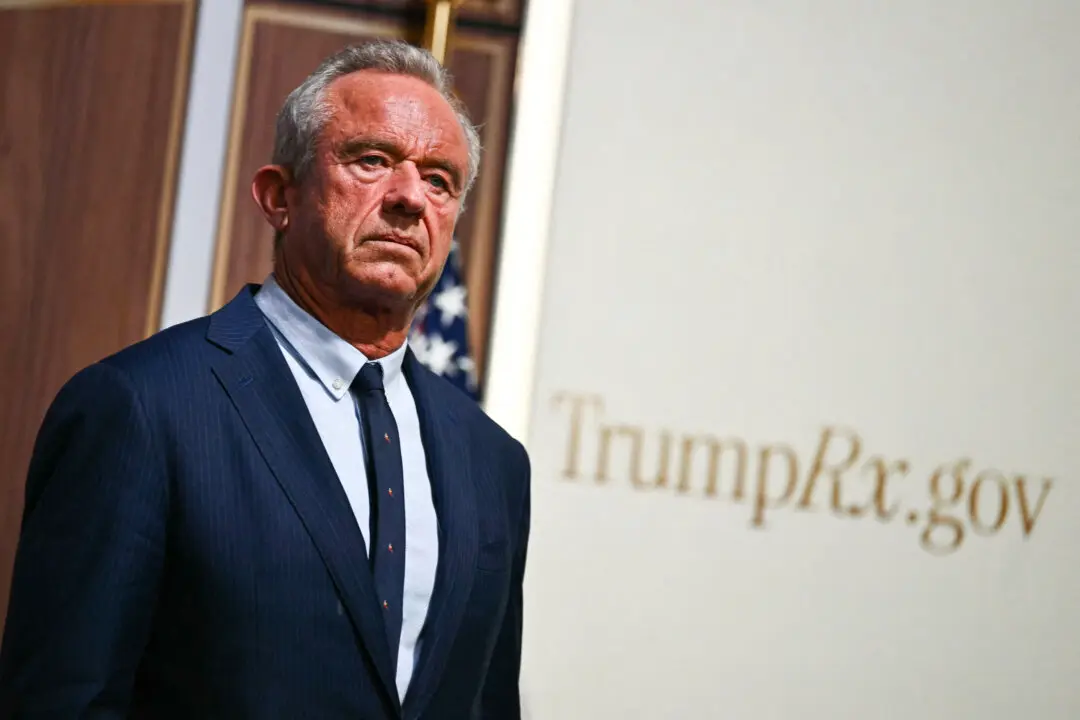
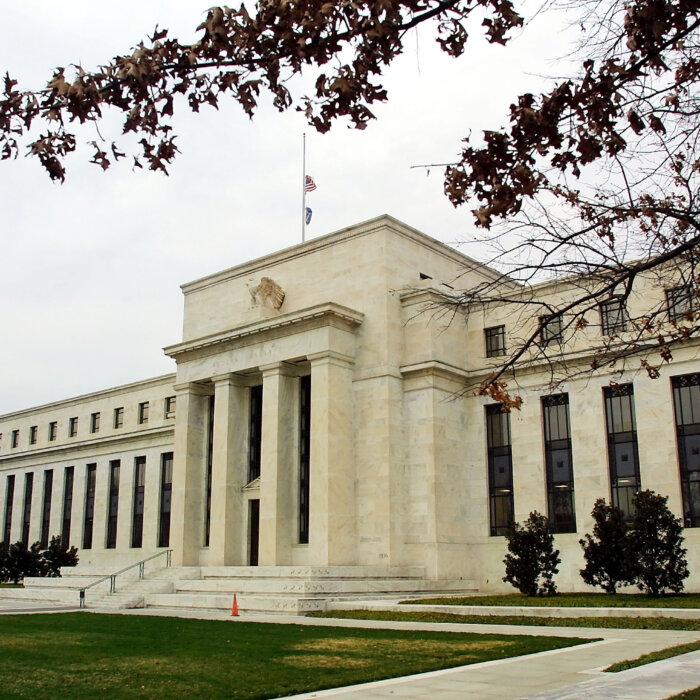
Now we find ourselves in the midst of the ultimate struggle. The president has fired a member of the board of governors of the Federal Reserve System, and his choice to head the Department of Health and Human Services has fired the head of the Centers for Disease Control and Prevention. Both have refused to leave, despite clear statements from the president that they have been fired. Both are now litigating to keep their jobs.
I’m pretty sure that I know how this ends up. The Supreme Court will side with the U.S. president. Those who have been fired will have to go. That decision will thereby set up a highly unusual situation. It will effectively abolish the civil service. The voters will be back in charge. That will be a new world unknown to any living person. That’s how high the stakes are for these current court battles.
I believe the whole future of freedom itself is on the line.
The great 19th-century liberal scholar Benjamin Constant and Lord Acton both described the difference between the ancient and the modern world as tracing to the capacity of the average person to have some say over the laws and legislation under which they live. In the ancient world, there were only a handful of free men, and everyone else lived in servitude: as merchants, serfs, slaves, foreigners, or whatever.
The modern world birthed a new system. It said that every person subject to the law as a citizen should have the right to have some influence over the shape, direction, and purpose of the regime under which they live. Everyone has a stake in the system, some influence over its direction.
The American idea—the most audacious attempt at people’s government in history—was that we would vote in representatives who would take our interests to the capital city and therein would rest our capacity to preserve freedom over the tendency toward despotism.
This is why this matter of personnel is so crucial. The president must have the ability to manage the staff of the executive branch. If he does not—and this includes his choices of Cabinet secretaries and also even the managers of the central bank—then he is not really in charge, and the voters have been disenfranchised.
I’m confident that the Supreme Court will decide correctly. One might suppose that the future of freedom would revolve around something more dramatic than the minute details of personnel management, but such is the strangeness of our times.