Let us discuss the following words from Elon Musk: “I’m sorry, but I just can’t stand it anymore. This massive, outrageous, pork-filled Congressional spending bill is a disgusting abomination. Shame on those who voted for it: you know you did wrong. You know it.”
Talk about overthrowing the apple cart! From that one post on social media platform X, the whole of Washington has been in a frenzy of messaging control.
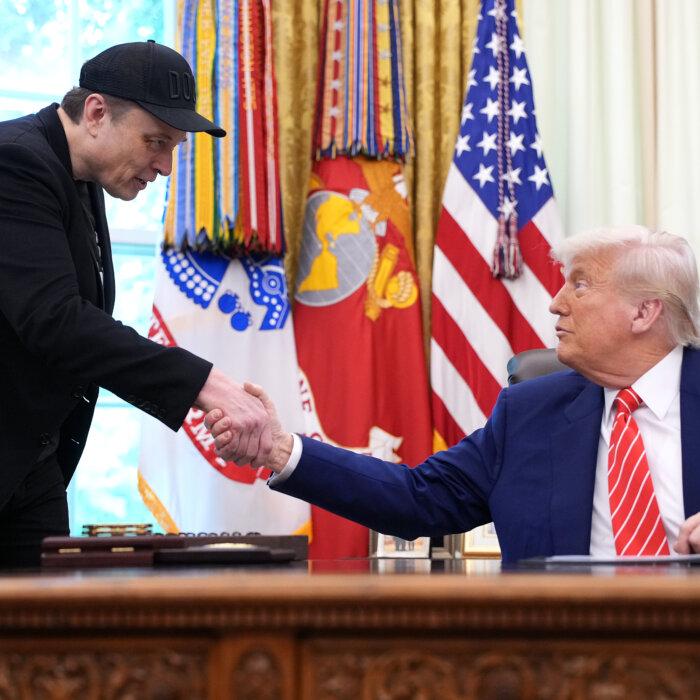
Musk came to Washington with joy. He would apply all his experience and prowess at running great companies to help reinvent government. He befriended the president and won his confidence.
President Donald Trump wanted Musk to do to the federal government what he did to Twitter, where he took over and famously fired four in five workers and made the platform profitable as X.
Musk dedicated himself to the task and had every reason to think that he could succeed. He hired a team and worked his usual 16-hour days for months, alongside young achievers. The Department of Government Efficiency (DOGE) had its own website and was posting discoveries daily, fueling outrage at the out-of-control spending that was taking place.
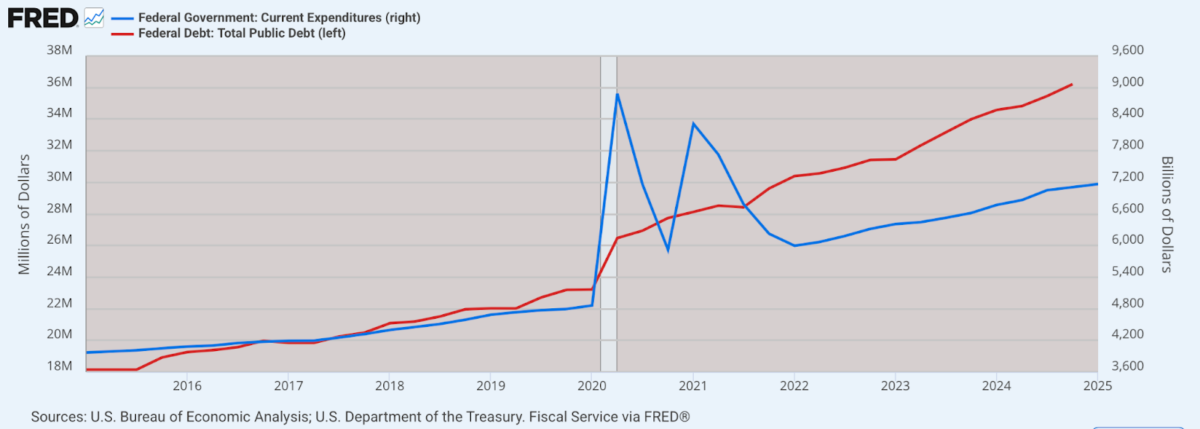
Then it came time for Congress to put together a budget. Musk had hoped for $2 trillion in real cuts to get the nation on track to restore fiscal sanity after the insanity of the past five years. Even with the normal trend line from 2019, the federal budget is now $2 trillion higher than it otherwise would be. The crisis is long over, but the spending has remained.
Faced with resistance, and the rule that DOGE could not touch entitlements, Musk dialed that back to $1 trillion. Blocked at every turn and hounded by the media and courts, DOGE finally documented and submitted $180 billion in no-brainer cuts.
Instead of many different bills to implement these cuts plus many of Trump’s own executive orders, the White House has long demanded “one big, beautiful bill” that includes everything. The House has largely ignored DOGE’s findings. The rescissions to existing spending sent by the White House are a drop in the bucket.
Instead of $2 trillion in cuts, we are getting an estimated $2.4 trillion in higher deficits and $5 trillion in new debt. Instead of cuts, we are being presented with the largest debt increase in history by far! Let’s face it: No one voted for this.
The Senate is likely to ratify some version of the House bill and then it goes into reconciliation, where more mischief is likely.
My friends, the dream of containing Leviathan and restoring good government seems to have hit the rocks.
Here’s the tragedy. We have a Republican White House, Senate, and House. Nearly everyone holding office in the majority party ran on a platform of fiscal sanity and deep spending cuts to reverse the terribleness of the past years and decades. They had one of the world’s greatest proven managers advising with a crack team.
And the result is massive spending increases across the board.
This just keeps happening. I can recall believing that change was coming to Washington some three to six times over decades of watching this. It’s been like Charlie Brown with the football held by Lucy: We keep believing that the same thing will not happen again.
And yet, when you look at the data underneath all the theater, it’s been the same over and over: Leviathan keeps growing.
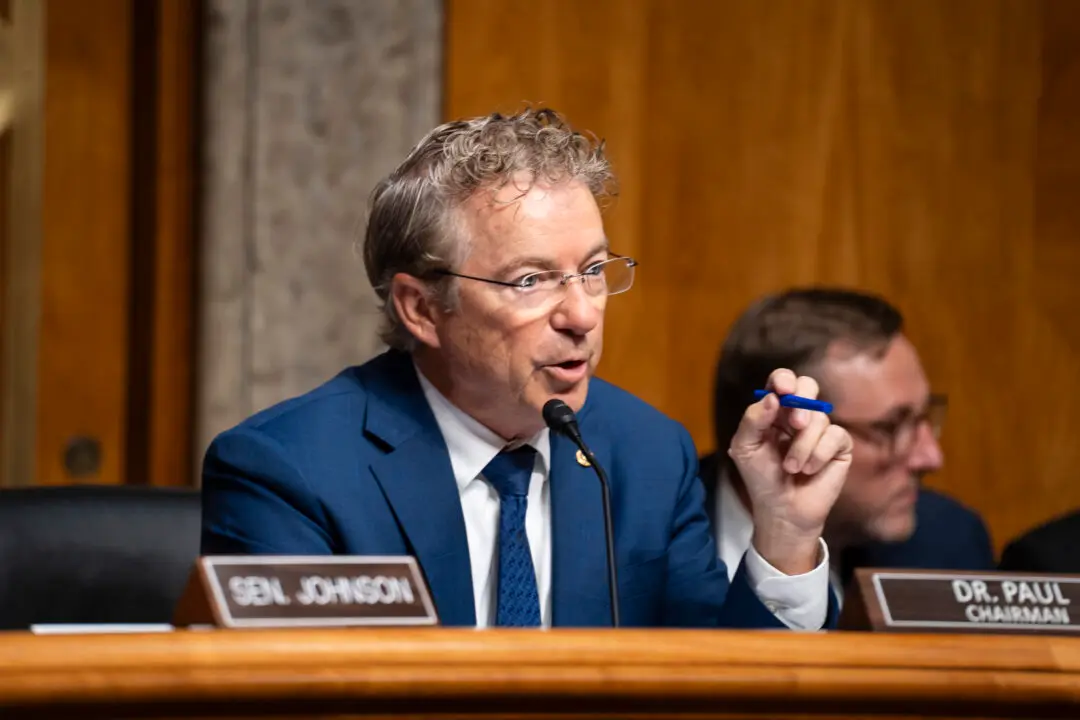
The tremendous problem is not only economic. It is also political because it discredits the whole of the Republican Party. The few dissidents who have spoken out, such as Rep. Thomas Massie (R-Ky.) and Sen. Rand Paul (R-Ky.), have been denounced personally by Trump himself as disloyal showboats. This tragic process and result now threatens to undermine the whole of the movement that brought these people to power.
In other words, if something approaching fiscal rationality cannot occur under the prevailing political conditions, there seem to be no conditions under which it will happen. That means only one thing: the fast track to fiscal ruin in the future. There is no amount of economic magic that can cover up for this mess.
It’s a genuine question: Do these people care? The answer is probably “Yes,” but their concern is abstract. It’s not something on which they are going to act. Certainly, if House members have a president who is urging them to support a massive spending increase in a single bill and they see what has happened to people who dissent, any member of Congress who worries about his or her political future is safer simply voting for the bill.
They cover it up with claims that this is just the beginning, that bigger cuts are coming in the future. It never happens.
Another factor is at work. The Republicans can count on a loyal opposition among the Democrats to denounce them for draconian spending cuts even if they do not exist. It happens every single time.
This gives Republicans cover. Every voter is free to think, “This is bad, but it would be far worse under the Democrats,” which might be true.
But think about the dynamic. It means that one party need only be slightly better than the worst-possible outcome in order to retain power. Meanwhile, the country falls to ruin.
“The massive Welfare State entitlements have run free on automatic pilot as the dependent population has grown from 60 million in 1980 to 150 million at present, even as the Warfare State has ballooned to 2X the levels actually required by homeland security. ... domestic farm, transportation, education and social pork barrels have remained well stocked, and interest expense has gone parabolic.
“The one and only reason we are not in a roaring financial crisis even now is that a rogue Federal Reserve subsequent to Greenspan’s arrival in 1987 proceeded to recklessly monetize big chunks of the billowing public debt.”
And that translates to inflation, which is a form of taxation. Inflation is finally under control for now, but this level of spending threatens a second wave, which would be a calamity.
I’m thrilled that Musk has finally spoken out. He distinguished himself for a year or longer with incisive commentary on federal finances, complete with a team of idealists trying to do the right thing. But the world as it is shreds ideals and turns them to dust.
This is where Musk’s comments come in. They have certainly upset the president he adores. But he put principle above politics and told the truth. He did it in public for all to see. His comments might even make a difference. They were blasted out above the fold in every newspaper. They might have even scared some senators into action. We shall see.
The message that Congress has yet to hear is that there is no more business as usual. The bond rating agencies are downgrading U.S. debt. There is no financial or economic analyst who can defend the budgetary outrages. The end result of the current trajectory has been established by all of history. The problem is that the officeholders are choosing expediency over principles.
We thought that perhaps it would be different this time. If it is to be different, it will require something more than politics as usual. Trump is the man of the hour who can make it happen. But even if he does not step up, the elected politicians who want to keep their seats and not face a different breed in the primaries need to act before it is too late.
What we are watching unfold here places Republican lawmakers in an awkward position. They have to choose between loyalty to a president they respect and admire enormously and the principles of fiscal responsibility plus the ideals of the movements that brought them to power.
Here again, we see the essential tension at work. Public opinion has turned solidly against big government in all its forms. Meanwhile, the people in power, including even the president, are going too slowly to appease the kind of change being demanded by the grassroots, even as the new heads of agencies are hounded by mainstream media.
It’s not a new problem in history, but how the Republicans deal with this could determine whether they will lead or get trampled as mere transitional figures.