However, my essay noted that the extended mail-in ballot procedures of many states seemed to violate federal law. I further explained that these procedures probably flipped at least one swing state—Pennsylvania—from Trump to Biden. The illegality of extended mail-in ballot schemes, I wrote, was the “elephant in the room” that everyone was ignoring. Even critics of the election were disregarding it, presumably to avoid seeming to oppose popular provisions for legitimate absentee voting.
Of course, the 2020 presidential election also had many defenders. Strikingly, though, to my knowledge, no one—no one—has attempted to rebut my conclusion that extended mail-in voting violated federal law.

What the Constitution Says
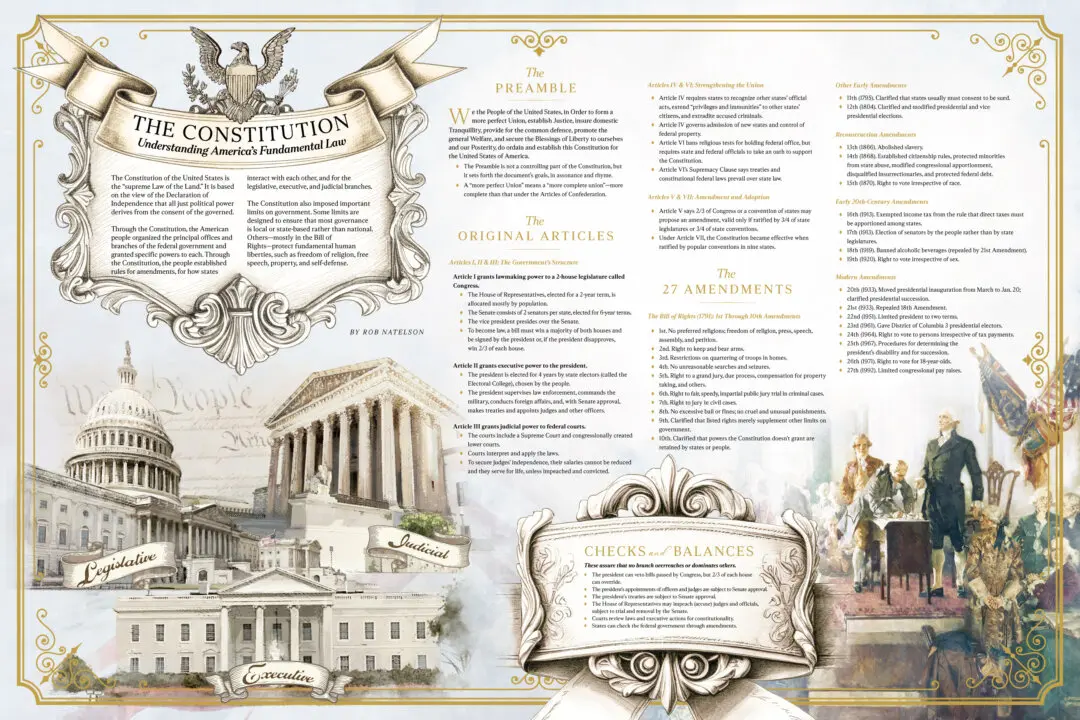
In general, the Constitution leaves regulation of presidential elections to the states. But the American Founders knew that an election held over an extended period of time was an invitation to what Alexander Hamilton called “cabal, intrigue, and corruption.”
So the Constitution grants Congress power to limit how long presidential elections may last. Article II, Section 1, Clause 4 reads as follows:
“The Congress may determine the Time of chusing the Electors, and the Day on which they shall give their Votes; which Day shall be the same throughout the United States.”
Thus, Congress may choose a single “Time” in which the people vote for presidential electors and a single “Day” in which presidential electors vote for president and vice-president.
What Congress Did
Congress also had created a few exceptions. One exception allowed absentee voting by U.S. military members, their families, and U.S. citizens living abroad. Another exception allowed state legislatures to choose electors on a later day if, for some reason, the popular vote was indecisive. Outside those exceptions, federal law contemplated that everyone would vote on the first Tuesday after the first Monday in November.
Watson v. Republican National Committee
Thus, while Justice Amy Coney Barrett’s opinion for the court recounted the anti-fraud reason for limiting the length of elections, all she actually decided was that the federal statute permitted Mississippi to count ballots mailed before Election Day, but received after Election Day.
Yet in reaching this conclusion, she emphasized that when a statute prescribes the time of election, it prescribes the time for choosing. This emphasis, and the authorities she relied on, strongly suggest that early voting is not permitted under a federal statute that prescribes a single “Election Day.” In other words, Election Day is the time for choosing and not a mere deadline.
Here are some examples of the court’s language:
“The defining element of an ‘election’ ... has always been the electorate’s choice of candidate ...
“By setting the day for the ‘election,’ these statutes set the day when the electorate must make its choice. ... The election-day statutes were enacted and amended across almost two centuries. At all relevant times, the word “election” was understood to mean ‘[t]he act of choosing a person to fill an office.’ ...
Significantly, Justice Samuel Alito’s dissent also agreed that the time of election was the time of “the expression of the electorate’s choice.”
Justice Barrett pointed out that this conclusion squares with how the Constitution treats the voting by presidential electors. Under Article II, Section 1, Clause 3, the electors “vote by Ballot” on a single day and then “transmit” that ballot to Congress for counting.
The Court’s only suggestion that Election Day might be a mere deadline came in a single phrase: “the electorate’s choice is made when voting is complete.”
Conclusion
It is now far too late to launch a court challenge to the 2020 presidential election. However, that election offers a valuable lesson in how people in power use self-proclaimed “emergencies” (in 2020 it was COVID-19) to circumvent protections provided by law.