Hatred against Muslims is a terrible thing. So is hatred against Jews, Christians, Hindus, Sikhs, atheists, agnostics, dark-skinned people, light-skinned people, gay people, straight people … and the list goes on. Hatred against the wealthy, which is usually based on the assumption that the rich must have acquired their money unfairly or dishonestly, is another example of what poisons society and culture. Hatred of political opponents, based on the ridiculous assumption that those who disagree with us must have bad intentions, has become commonplace.
Hatred is an emotion. Many people fail to recognize that hatred can be a very good thing when directed against racism, tyranny, oppression, and other forms of injustice.


Islamophobia is, by definition, an irrational fear of Islam. The term “Islamophobia” itself begs the question: is it irrational to fear Islam? Some Canadians argue that Islamism, which refers to political Islam, and those who promote it, wish to impose Islamic laws. Around the world, many Islamic countries have laws that ban criticism of Islam and prohibit speech against its founding prophet. Some Muslim countries enforce apostasy laws that prohibit conversion away from Islam to a different faith. Conversely, other Canadians argue that Islam’s theocrats, along with those who kill and terrorize in the name of Islam, are only small minorities who lack serious influence.
In Canada, public debate about the merits of Christianity typically takes place without accusations of “Christophobia.” It should be no different for Islam, or for other religions, or for various belief systems in general. Opponents of socialism are quite capable of criticizing this ideology without reference to “plutophobia,” the irrational fear of wealth and money. Accusing one’s opponents of being “phobic” is an ad hominem attack, suggesting that the opponent suffers from a mental illness. In other words, those deemed “homophobic” or “Islamophobic” or “transphobic” are mentally ill, and therefore not worth listening to.
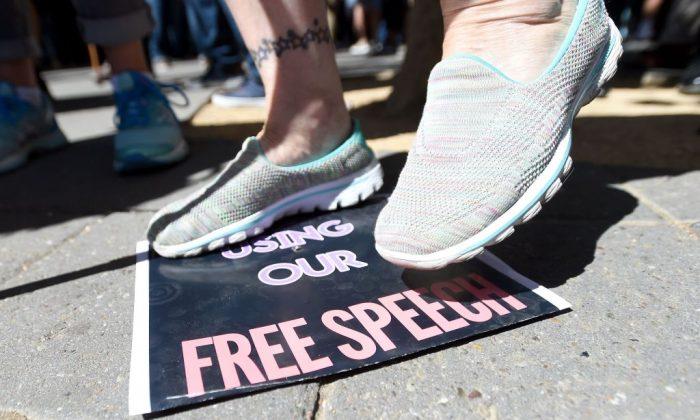
The free society is harmed when Canada’s federal, provincial, and municipal governments start using their coercive power to take sides in public debates. Canadians should be free to debate the merits (or lack of merit) of every religion and every belief system, without their police forces devoting limited resources to monitoring what citizens are saying on Facebook, Instagram, and X. Let’s not become more like the United Kingdom, where thousands of citizens have been warned by police, or criminally charged, over their social media comments.
Durham Regional Council would be overstepping the bounds when if it uses government power to take sides in public debates about religion, immigration, integration, and other topics. In a free society, elected and unelected government officials treat citizens as adults, capable of making up their own minds about what is true or false, right or wrong, beautiful or ugly. In a free society, governments do not direct police to pay special attention to what people are saying on the internet.
Rather than denouncing “Islamophobia” or otherwise taking sides in public debates, governments should instead enforce the law equally, without bias for or against any religion or political belief system. On this front, governments in Canada fail to uphold the rule of law.
Governments shouldn’t try to regulate hate or other emotions. Politicians should not try to criminalize the speech that they hate. Governments should not take positions against real or alleged phobias. Rather, governments should uphold the rule of law by enforcing equally the Criminal Code and all other laws, without selective enforcement or bias toward any religion, ideology, or group.