China’s political landscape may be undergoing a quiet transformation.
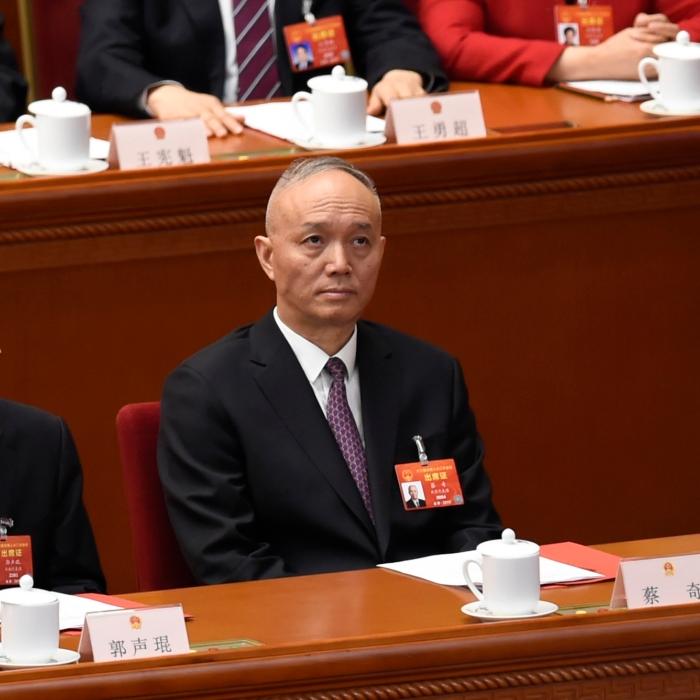
On June 15, the Chinese Communist Party (CCP) held its first-ever national meeting on Party-building work in Beijing. Cai Qi, a member of the Politburo Standing Committee and the newly appointed president of the Central Party School, attended and delivered a speech.
The meeting presented yet another “major political task” set by CCP leader Xi Jinping, calling on Party members to “study the original texts, understand the original ideas, and grasp both what is said and why it is said.” The campaign was clearly designed to further strengthen ideological conformity and deepen loyalty to Xi.
A North Korean Model for CCP Cadres?
In early June, Cai was appointed president of the Central Party School, giving him direct control over one of the CCP’s most important institutions for shaping and disciplining senior officials.Cai is widely regarded as China’s de facto No. 2 figure and one of Xi’s most trusted allies. His appointment suggests that Xi wants tighter ideological control over senior cadres.
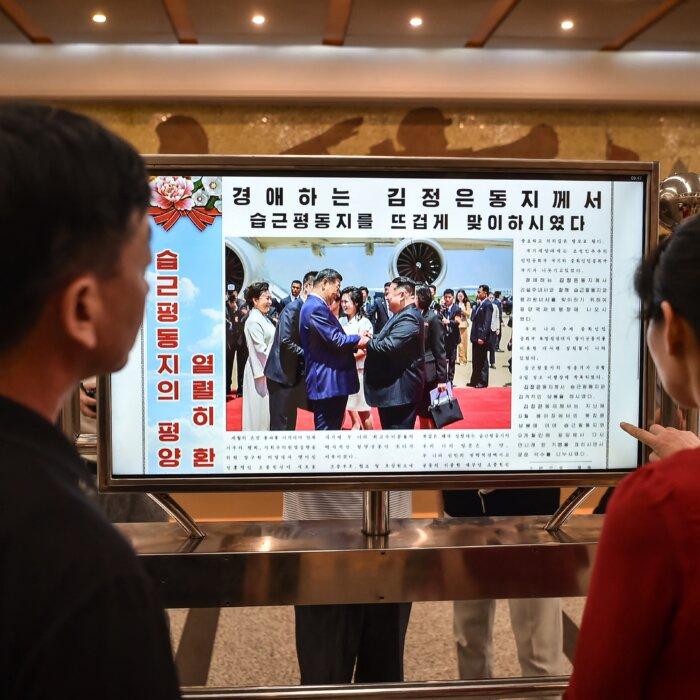
Cai accompanied Xi on his June 8–9 visit to North Korea. On the second day of the state visit, Xi’s delegation visited the Central Cadres Training School of the Workers’ Party of Korea—essentially North Korea’s equivalent of China’s Central Party School.
Students at the North Korean cadre school lined up to welcome Xi. Their clothing, facial expressions, and applause displayed an extraordinary degree of uniformity and obedience, creating an atmosphere of ideological fervor. This was precisely the kind of political environment Xi values.
Xi and Cai Seek Greater Loyalty
For decades, generations of cadres have attended Beijing’s Central Party School, where they are trained in how to preserve Party rule.Since Xi came to power, he has delivered annual speeches at the school, warning senior officials against becoming “two-faced people”—those who outwardly follow the Party line while secretly resisting it.
The CCP’s official journal Qiushi recently criticized problems within the Party, saying that many members had an “unclear understanding of upholding Party leadership” and were failing to properly implement it. The article also condemned wavering political beliefs, corruption, and the pursuit of personal comfort.
These criticisms suggest that Xi and Cai are dissatisfied with the performance and loyalty of Party officials.
Both Xi and Cai belong to the generation of Chinese leaders whose formative years were shaped by the Cultural Revolution. They witnessed firsthand the political fanaticism and fervent devotion to Mao Zedong during that period. This experience helped shape their preference for stronger ideological control, stricter political discipline, and a level of personal loyalty to the leader reminiscent of the Mao era.
This mindset is reflected in Xi’s recent letter to veteran Party members, urging them to preserve what he calls the “red gene,” and in Beijing’s arrangement for the British ambassador to China to visit revolutionary sites such as Yan’an and Liangjiahe.
Cai May Be Trying to ‘North Koreanize’ CCP Cadre Management
North Korea’s political system is, in many ways, closer to the Mao-era model than to that of today’s China.According to public reporting and accounts from defectors, one defining feature of North Korea’s bureaucracy is its absolute loyalty to the supreme leader, strict discipline, and intensive ideological indoctrination. Compared with CCP officials, North Korean cadres are expected to demonstrate more direct personal loyalty to the leader, leaving far less room for individual autonomy.
North Korea also practices forms of collective punishment, under which officials and their families can face severe consequences for political offenses. Reportedly punishable behavior includes criticizing the top leader, contacting foreigners without authorization, expressing nostalgia for earlier policies or political conditions before the Kim dynasty consolidated its rule, engaging in factional activity, failing to meet economic or military targets, or even showing minor displays of disrespect, such as dozing off in front of North Korean leader Kim Jong Un. Corruption can also result in punishment.
North Korea places greater emphasis than China traditionally has on the principle that the ruling party and its leader stand above the law. Officials are rarely subjected to transparent public trials; many cases are handled internally or through secret procedures.
Under Xi, China has moved closer in that direction, with the authorities increasingly relying on internal Party disciplinary mechanisms rather than open legal proceedings when dealing with senior officials.
At the national Party-building meeting, disciplinary officials, including Wang Xiaohong and Li Xi, were present. Cai appeared to signal that officials who fail to properly study CCP ideology could face investigation—potentially under corruption charges.
Officials May Accelerate Escape or Resistance
Xi’s governance style increasingly emphasizes reviving Mao-era methods of political mobilization, including the “Fengqiao experience.” Originally developed during the Mao era, this model encouraged local communities to monitor and politically transform perceived opponents. In many respects, it resembles North Korea’s system of governance.The difference is that Beijing is pursuing similar methods with the added power of modern technology.
Xi’s political logic places regime security above economic development: Tighten political control first, even at the cost of economic growth. The result is a self-reinforcing cycle: As political control intensifies, economic performance may weaken, fueling public dissatisfaction. In response to growing discontent, the regime expands security measures and political controls even further.
Under Xi, China has already been labeled by some online commentators as “West Korea” or “a giant North Korea.” If this trend continues, the comparison may become increasingly apt.
However, this approach may ultimately fail.
Xi does not possess Mao’s historical authority. In fact, many officials and ordinary citizens reportedly resent him in private and ridicule him behind closed doors.
China also lacks the decades-long isolation that has helped sustain North Korea’s political system. Chinese officials have benefited from decades of economic reform and opening up and may therefore resist attempts by Xi and Cai to revive a more ideological, personality-centered form of communist rule.
The result could be one of two outcomes: more officials attempting to leave the system—or even the country—or some turning against it.
Public resistance to the “North Koreanization” of China could also grow, potentially accelerating instability within the CCP.