Evolutionary biologist and podcaster Bret Weinstein is a fine interpreter of the national moment. In a speech for Brownstone Institute, he observed the strange moment in which we find ourselves. We are in the midst of an enormous discrediting of so many once revered institutions. They seem unable to respond to the needs of the moment and have failed to retain public trust.
This applies to the highest reaches of academia once inhabited by Weinstein. Woke politics had made far more headway in this world than anyone previously imagined. Research fraud is rampant, as is plagiarism. Faculty politics has disabled research programs. Diversity, equity, and inclusion policies have granted high positions of power to people who have not earned them. The college curriculum seems to have neglected the wisdom of the ages for so long that not even the top professors can speak or write competently.
This particularly affects the Ivy League, which is why the Trump administration’s push against Harvard and Columbia did not inspire much in the way of worry on the part of the public about academic freedom. Most people intuitively feel as if these institutions have it coming. They are too dependent on tax dollars, too biased toward fashionable political causes, and sloppy in regard to standards of excellence.
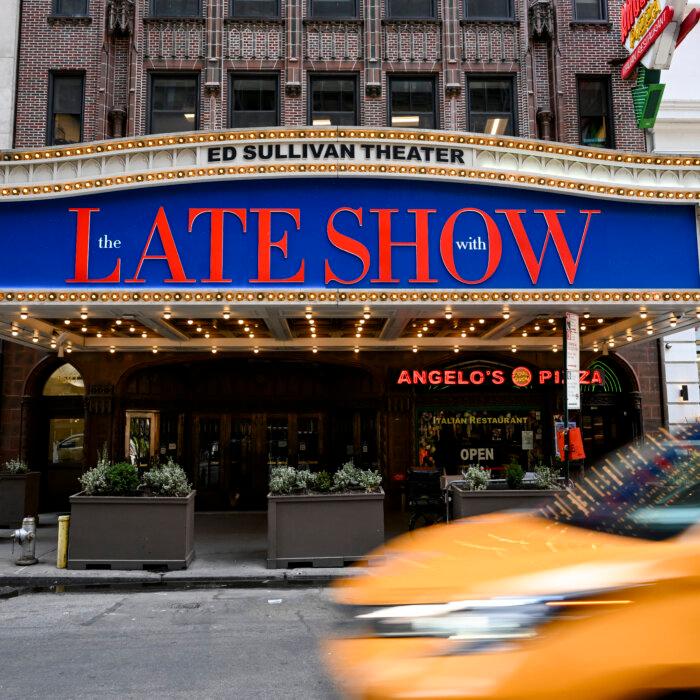
The same has affected media. What was once the mainstream media has lost market share to alternative media. But instead of course correcting, they have kept digging in further. We saw this with the cancellation of Stephen Colbert’s late show, which was bleeding money terribly. Instead of recognizing that this was the market speaking, all of his colleagues joined him in blaming President Donald Trump for the show’s cancellation while failing to cite a shred of evidence.
We can tick through them all: medical journals, physicians, pharma, big corporations, digital tech, and, above all, government at all levels. The daily revelations of corruption even at the FBI and Department of Justice no longer surprise us. A meme that I recently saw shows Snoopy dreaming of the happy days before he knew what was really going on. That sentiment is widely shared these days: We all assume that the rot goes much deeper than we can even imagine.

Back to Weinstein. He told the story of how the United States ended up doing forestry management so wrong. In telling the story, he was making an analogy to help us understand what is going on.
Back some 50 years ago, some people died in a forest fire and that kicked off a fire suppression campaign. They must be stopped no matter what. Smokey Bear was enlisted in a national ad campaign that urged everyone to do his part in wholly stamping out forest fires. It seemed like the right thing, but there was a problem. The trees kept falling and the foliage kept building up.
As brush began to pile higher and higher, fire became as inevitable as it is natural. But rather than having a controlled burn, as native tribes once did, or allowing the fire to cleanse the deadwood, every effort was taken to minimize any and all combustion.
The fire eventually came anyway. But because it was delayed so long, the one spark led to a blaze so hot that it caused destruction far more devastating than ever before, leaving arid lands completely sterilized and consuming vast housing developments.
This is, of course, the story of what happened in many parts of this country, particularly California, and also in many other countries. Australia pursued the same fire-suppression strategies with exactly the consequence of terrible destruction. Something at some point will come along to set the blaze, but because it burned faster and hotter than it would have in nature, the results were more horrible than ever before.
The entire program backfired. This is still happening today.
Weinstein recounted the story because there is a near-perfect fit with what has happened to many human-built institutions. The foliage and deadwood built up higher and higher with none of the normal correction that used to exist in well-functioning institutions. Academia kept hiring, promoting, rewarding, and growing. The same happened to media and corporate culture. Government has grown bigger, more intrusive, and more destructive of personal liberty and autonomy.
This has gone on for decades without the natural cleansing of merit and market competition. The deadwood piled higher and higher in many institutions. The incompetence became entrenched and talent stopped rising to the top. Cheap credit enabled financial sectors to balloon wildly out of size relative to anything that was rational. This affected every big institution, from pharma to government to media to corporations to the whole managerial sector of society.
If the analogy works, and I do think it does, what was the spark? There might have been many. There was Trump, of course, but what really reached into every life was the COVID-19 pandemic response that shut millions of businesses, forced people to languish at home, and closed churches and schools. The shot mandates made matters worse, and that was followed by the devastating realization that the magic solution was no solution at all but rather the creator of more problems than ever.
Trust evaporated during and after this period, as every institution that went along with this—and nearly every official institution did—lost status in the American mind. That was the spark that started the roaring fire that continues to feed the upheaval that is affecting everything and everyone these days. As Weinstein says, a fire delayed in a forest that should have experienced a controlled burn now burns hotter than ever.
The Journal of the American Medical Association has run a survey conducted in April 2024 concerning parents and vaccines. The question concerned which if any they planned to give their newborns. Fully 40 percent of those surveyed were unwilling to commit to giving their newborns the shots that are on the normal childhood schedule. This is a shocking statistic, especially when you consider that generations of medical students, and pretty much everyone else, believe that vaccines are the greatest achievement in public health and the essential product in keeping us healthy.
All it took was for one shot to be mandated to millions—an inoculation that did not work as promised—to break the public psychology in this area. And keep in mind that this was more than a year ago, before Trump took office and made Robert F. Kennedy Jr. his health secretary, and before the U.S. Senate started holding hearings on vaccine injury.
It’s doubtful that trust in this industry is likely to return for at least a generation. Meanwhile, many schools and whole states are continuing to require vaccination to participate in education and other matters, which could cause an exodus from some states with mandates to states without them. These new unvaccinated students will be entering into the system in five to seven years, meaning that the dramatic changes are far from over.
Such huge upheavals are affecting academia, media, government, and many sectors of industry with much more to come. An ideological scoliosis set in in all of these sectors, particularly with the censorship of the past five years that has backfired on all social media companies while the tired conformism of mainstream venues has backfired. The Epoch Times gains readers even as every other legacy news source is losing them.
You could call it a cleansing fire and enjoy watching, but keep Weinstein’s allegory in mind: If you wait too long, the fire burns far too hot and sterilizes the ground. This is where we might be headed in many sectors of life today. The overcorrection for the failure to reform is either coming or already here.
There are plenty of lessons for the future. We need to bring back merit, standards, genuine competition, and the normal rotation of personnel in order to prevent another round of this. The controlled narrative requiring censorship also must end. These changes are necessary else future disruptions will make the Trump administration seem like a mere prologue to something much more momentous. Washington as a culture is not awake to what is happening at the grassroots level, where patience for truly dramatic change is wearing thin.