A superpower race is underway to dominate the definition, development, and control of artificial intelligence (AI).
Nearly a decade ago, on Sept. 1, 2017, Russian President Vladimir Putin said of AI: “Whoever becomes the leader in this sphere will become the ruler of the world.”
Currently, the United States has a clear lead in AI due to many factors: control of the supply chain for the most advanced computer logic chips from companies like NVIDIA, AMD, and Intel and a private sector ecosystem that drives innovation with leading AI research labs at advanced companies like OpenAI, Anthropic, and Google DeepMind.
But China’s communist regime is aggressively seeking to undermine U.S. leadership by concentrating on the sale of cheaper subsidized “open” AI models—especially to the “global south” to build dependence on Chinese AI ecosystems—and to undermine U.S. leadership by pushing for “global governance” of AI within the United Nations.
Chinese Communist Party (CCP) leader Xi Jinping’s October 2023 “Global AI Governance Initiative” reads, “We support discussions within the United Nations framework to establish an international institution to govern AI.”

Of course, because China dominates the U.N., it also hopes to dominate any future U.N. standards governing artificial intelligence.
Furthermore, through its state media, the CCP has been waging a political warfare campaign to shame the United States into lowering its export control guard via “cooperation” with China.
If China held the lead in the AI race, it wouldn’t be calling for “cooperation” with the United States; it would be leveraging every military and economic advantage its AI edge could give it.
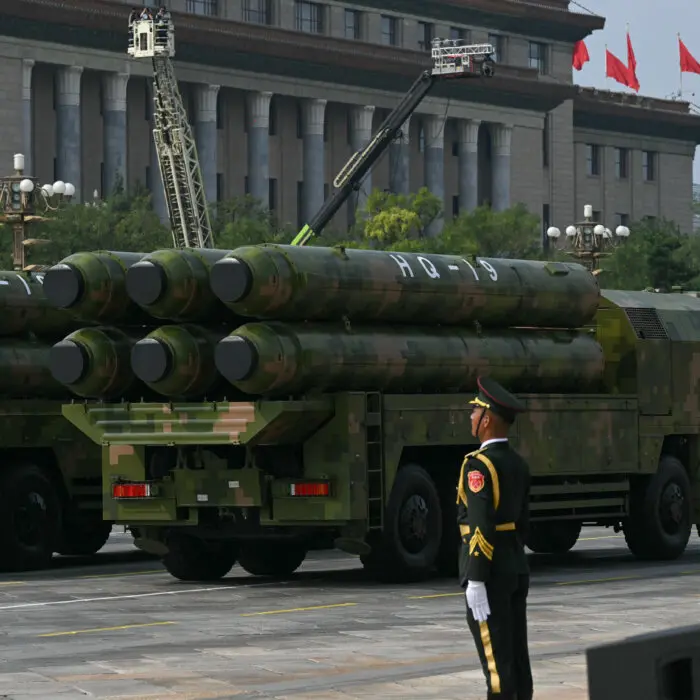
China is rapidly exploiting AI to empower future joint unmanned air, space, naval, and ground force operations and is close enough to this goal that it may feature heavily in the first stages of an invasion of democratic Taiwan.
But because China is not dominating, it is making great efforts to convince the U.S. government and corporate leaders to squander their AI leadership.
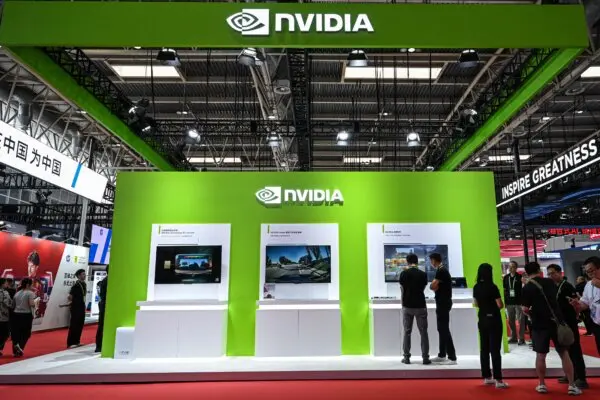
Leading Silicon Valley AI chipmaker Nvidia is a key target for China. After intense lobbying by Nvidia, in July 2025, the United States reversed strict export restrictions and allowed the sale of Nvidia’s H20 AI chip to China; in December 2025, it also allowed the sale of its more powerful H200 AI chip.
To advance this goal, Nvidia CEO Jensen Huang has asserted that the United States may not have a significant advantage over China, telling the BG2 podcast on Sept. 29, 2025, that China was “nanoseconds” behind the United States in AI chip technology, so U.S. policy should be to allow it to compete in China.
Altimeter Capital CEO and Nvidia investor Bradley Gerstner told the BG2 podcast on June 2, 2025, that “when we ban chips to China, it’s going to accelerate Huawei. ... It’s going to bring everybody into their developer ecosystem, and it’s going to reduce the amount of developers in the Nvidia ecosystem.”
Huawei, a long-time enemy of the United States that does the worldwide bidding of the CCP, is now a major “full stack” AI competitor, combining stacks of AI chips to approach the power of Nvidia chips, developing its own open AI models, and exploiting its huge global position in telecom and 5G communications technology.
While selling some approved AI chips to China may generate profits for companies like Nvidia and tax revenues for the U.S. government, it is clear that Beijing only wants “cooperation” to the extent that it enables its pursuit of AI dominance.
China’s National Development and Reform Commission, according to a June 9 Bloomberg report, has drafted the largest single-nation AI infrastructure development plan. It could cost $295 billion and require that 80 percent of the underlying technology—such as AI chips—be sourced domestically in China.
Such a plan makes it clear that China is not going to rely on imported AI technology to build the dominant AI ecosystem it will use to displace U.S. AI dominance, especially if it gains control of potential future U.N.-based bodies that set AI standards and rules.
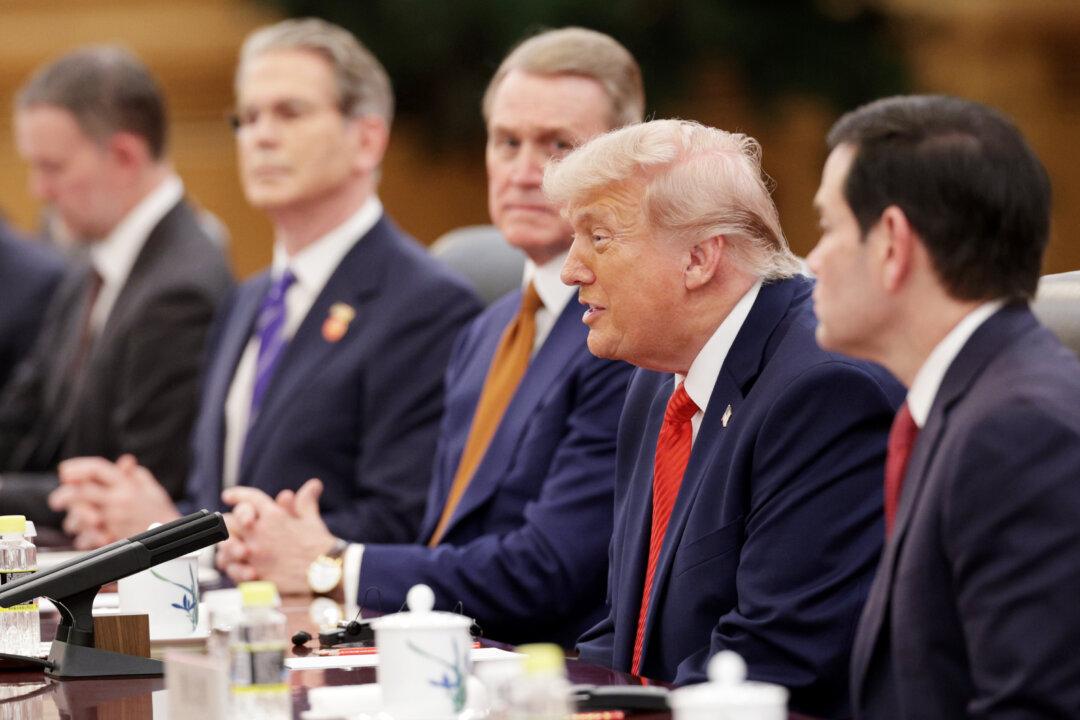
This does not mean that productive AI dialogue between the U.S. and Chinese governments is impossible. But as Treasury Secretary Scott Bessent pointed out, those negotiations can only bear fruit in the context of U.S. AI dominance.
“The reason we are able to have wholesome discussions with the Chinese on AI is because we are in the lead,” Bessent said after President Donald Trump met with Xi on May 14. “I do not think we would be having the same discussions if they were this far ahead of us.”
No matter what they publish in Global Times, Chinese policymakers know full well that AI is a zero-sum game. They just want to make sure they’re on the winning side of it.
It is also necessary to avoid well-meaning but naive advice, such as that offered by Pope Leo XIV in his May 15 encyclical, “‘Magnifica humanitas: On Safeguarding the Human Person in the Time of Artificial Intelligence,” which, in chapter five, calls for “a shared framework ... at the international level ... to curb the technological arms race.”
This would appear to favor China’s push for a U.N.-based body to “govern AI,” even though the encyclical does not mention China by name, nor note the fact that China is the most egregious abuser of AI technology to strengthen its oppressive surveillance-state dictatorship.
The United States has little choice but to admit that there is an AI race and commit to winning it, including by maintaining and tightening chip export controls.
This means restricting access by Chinese companies to U.S. computer “cloud” services. In August 2024, Reuters reported that Chinese “entities” used an intermediary to access the cloud provider Amazon Web Services to circumvent Washington’s AI chip export restrictions and “to secure advanced computing power and access generative AI models.”
It means weighing national security concerns when reviewing tech mergers—Hewlett Packard Enterprise’s acquisition of Juniper Networks in the summer of 2025 provides a perfect example.
The U.S. Intelligence Community advised the Justice Department that approving the deal would create a strong new U.S. competitor to Huawei, which tipped the Department of Justice’s decision in favor of the merger.
Creating a stronger U.S. competitor in the AI market can decrease China’s ability to monopolize and run roughshod over the global AI and 5G marketplace.
And it means stepping up our industrial policy to make sure we can make the chips we need, not just design them.
Winning the AI race for the United States is not just a patriotic cause; it is a humanitarian cause as well.
The communist dictatorship that created a one-child policy, depresses its workers’ living standards to maintain predatory export surpluses, and is building for war against Taiwan, Japan, the Philippines, and the United States cannot be trusted with global AI leadership or with the economic and military hegemony it would enable.
If they want to avoid this dystopian future, U.S. political and tech leaders should reject the Chinese Trojan Horse of AI “cooperation.”