China has been openly considering the challenges of defending Earth from asteroids since at least 2020 and may now be transitioning to constructing a planetary defense capability.
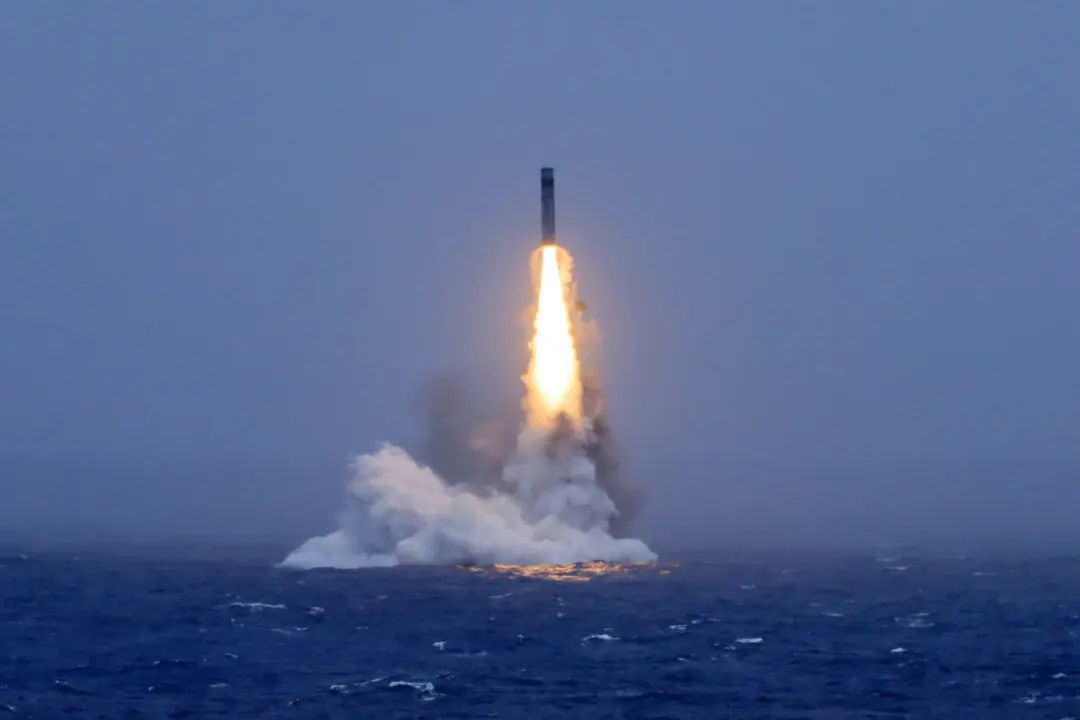
Such a move could be much more than a thinly-veiled “dual-use” response to President Donald Trump’s Golden Dome national missile defense, which is planning for low-Earth orbit capabilities to combat Chinese, Russian, and North Korean nuclear missiles, but also a more profound extension into interplanetary combat.
On June 30, Chinese state television CCTV featured Li Mingtao from the China National Space Administration (CNSA) saying, “The country will establish a ground and space coordinated monitoring system for near-Earth asteroids to provide early warning support for planetary defense against asteroid impacts.”
Li, described as a chief scientist at the CNSA asteroid monitoring and early-warning research center, offered more details.
“On the ground, we will select optimal observation sites and deploy multiple large-aperture optical telescopes to form a ground-based monitoring and warning network,” he said.
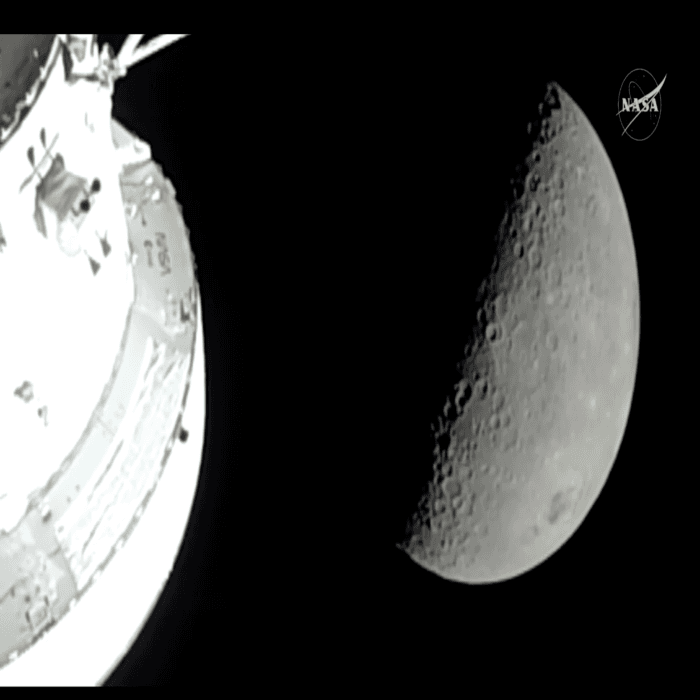
“In space, we will launch telescopes beyond the atmosphere, coordinating with ground assets to achieve continuous round-the-clock observation.”
In addition, the graphics used in the CCTV report indicate that ground-based radar will also feature heavily in this coordinated ground-space monitoring system.
But of greater concern, Li also told CCTV, “China is currently evaluating a planetary defense system.”
Also on June 30, Chinese state media Global Times stated, “China has made initial breakthroughs in early-warning models and algorithms for asteroid impact risks, and is developing an operational near-Earth asteroid risk warning system.”
This suggests that China has incorporated artificial intelligence (AI) decision support systems (DSS) to assess and prioritize threatening asteroid targets, and potentially a much larger number of non-threatening targets, using ground- and space-based sensors.
But how would China actually defend against a threatening asteroid?
CCTV stated: “Experts note there are currently two main types of technology, kinetic impact and continuous pushing. The former uses high-speed impacts to instantly change an asteroid’s orbit, while the latter uses methods like gravity tractors or laser ablation to deflect it over the long term.”
Global Times cited its oft-quoted expert Song Zhongping as saying, “One of the most straightforward approaches is kinetic impact, in which a spacecraft or missile collides with the asteroid to alter its trajectory or break it into smaller fragments, thereby reducing the overall threat.”
Song also suggested using “gravity tractors, laser ablation and continuous-thrust techniques, with the ultimate goal of nudging the asteroid away from Earth’s orbital path well in advance, preventing a potential impact.”
So just how serious is the threat of asteroids striking the Earth to justify a new Chinese “planetary defense system” that would use kinetic and “gravity tractor, laser ablation” weapons?
According to CCTV, as of June, at least 40,000 mirror asteroids have been discovered and cataloged globally. Currently, no known asteroid is on a definitive collision course with Earth, but a vast number of smaller celestial bodies remain undiscovered.
To emphasize this point, in a June 30, 2025 report on the possibility of a large asteroid impacting the Earth for the Canadian Broadcasting System, Paul Weigert, a professor at Western University’s department of physics and astronomy in Ontario, stated: “So none of the asteroids that we know about today have a significant chance of striking Earth in the next 100 years or so. So that’s a pretty healthy time horizon.”
This begs the question: In the absence of a clear asteroid threat, why would China place what appears to be a high priority on building a new planetary defense system right now?
The answer may be found in the civil-military dual-use culture of China’s space program, in which the Chinese Communist Party’s (CCP) People’s Liberation Army (PLA) controls all space activities, leading to requirements that all civilian space activities also produce military benefits for the PLA.
China could configure its planetary defense system to track U.S. or Russian long-range missiles or to even intercept them, much like the intention of Golden Dome, while claiming theirs was “a civilian program to save the world.”
In addition, any PLA-controlled planetary defense system using kinetic, laser, and gravity tractor weapons could also be directed to deflect, damage, or destroy American and allied spacecraft that would be supporting the building of settlements on the moon, Mars, and beyond—beginning the era of interplanetary space combat.
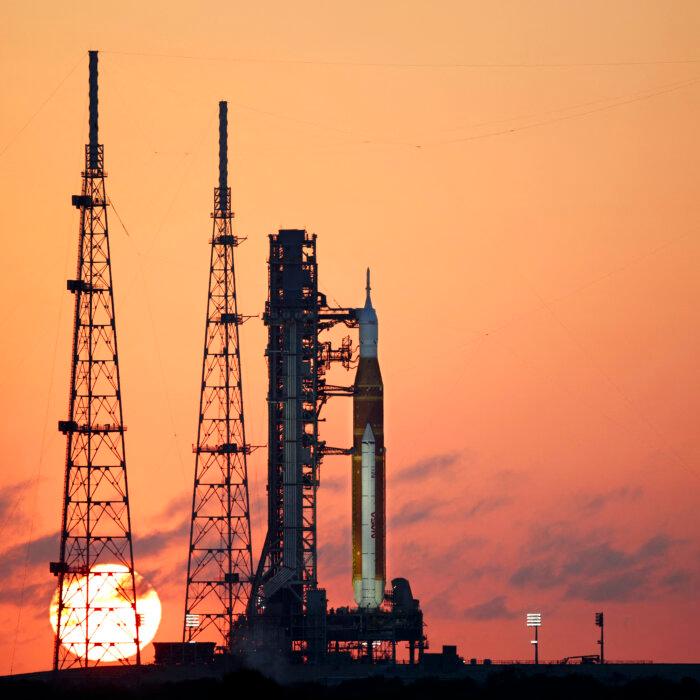
It is curious that as the Trump administration in 2026 is accelerating U.S. plans to build continuous settlements on the moon by the early 2030s, with a network of moon-circling satellites to support its moon bases, China may now be building the capabilities needed to deny the United States and its now 70 Artemis Accords partner nations access to the moon and Mars.
A deeper motivation for the CCP is that, to sustain its ambition to achieve primacy or hegemony on Earth, it must also secure dominance in the Earth-moon-Mars system, if only to deny access to space resources to any future U.S.-led resistance to CCP domination.
This may help explain why the CCP is so interested in planetary defense right now.