In the same vein as Theodore Roosevelt, President Donald Trump has established a new corollary in U.S. foreign policy.
In his press conference, held only hours after the U.S. military attacked the capital of Venezuela and subsequently captured socialist leader Nicolás Maduro and his wife, Cilia Flores, Trump made direct reference to what has long been the core tenet of U.S. foreign policy—the Monroe Doctrine.
“Venezuela was increasingly hosting foreign adversaries in our region and acquiring menacing offensive weapons that could threaten U.S. interests and lives ... potentially in league with the cartels operating along our border,” Trump said. “All of these actions were in gross violation of the core principles of American foreign policy dating back more than two centuries.”
This doctrine was first established—or at least first publicly articulated—by then-President James Monroe during his annual address to Congress on Dec. 2, 1823. Great Britain, France, and Spain had been ousted almost entirely from the Western Hemisphere through revolutionary actions, but this did not keep European powers from contending for political influence and the resources of the new and weak Latin American countries. The Monroe administration made clear its apprehension of these imperial powers.
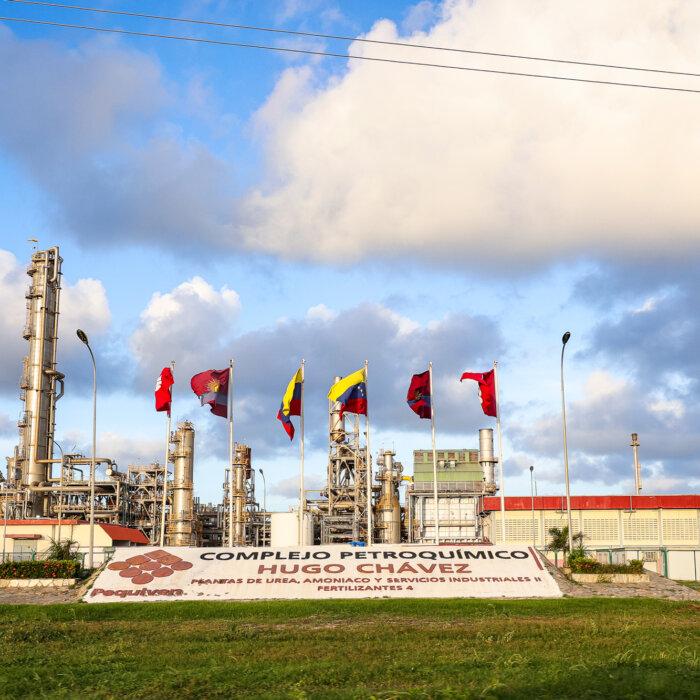

The Venezuelan Problem
Only weeks before Theodore Roosevelt was sworn in as president after the assassination of then-President William McKinley, he stood before a crowd at the Minnesota State Fair and proclaimed that the United States should follow the old African proverb, “Speak softly and carry a big stick.” This phrase has long been associated with his foreign policy, but such a phrase is hardly indicative of it. Indeed, it was hardly indicative of McKinley’s policy, who had overseen the dismantling of the Spanish Empire in the Western Hemisphere and, in large part, in the Pacific during the Spanish–American War. Roosevelt’s foreign policy position better reflects the actions of the Spanish–American War than the African proverb.As with every president who has taken office, he was the inheritor of unresolved issues, the Latin American and European conflicts among them.
The Cuban Problem
In addition to the Venezuela problem was Cuba. The Cubans had been liberated after the Spanish–American War but were practically a U.S. protectorate. At the start of the war, then-Sen. Henry Teller (R-Colo.) proposed an amendment to the declaration of war that stated that the United States “disclaims any disposition of intention to exercise sovereignty, jurisdiction, or control over said island except for pacification thereof, and asserts its determination, when that is accomplished, to leave the government and control of the island to its people.”To anyone who watched Trump’s press conference, his statement that the United States was “going to run“ Venezuela until such time as it can carry out ”a safe, proper, and judicious transition” sounds very similar to the “pacification” clause of the Teller Amendment.
‘The Right to Intervene’
Roosevelt, during his 1904 congressional address, championed this “right to intervene” in Cuba but expanded it across the region.The Trump Corollary
Through the increases and decreases of interventionist policies, it is the Monroe Doctrine that remains at the heart of U.S. foreign policy. In a sense, the 200-year-old foreign policy staple allows for presidents and Congress to assess threats in the region and act upon them, whether by deferring to international tribunals, such as the Venezuela Crisis of 1902–1903, or direct U.S. military action, such as post-Spanish–American War Cuba or this year’s Venezuela.Certainly, foreign policy hawks and hacks alike will assess Trump’s recent eyebrow-raising decision. To suggest that Venezuela had not long been a threat to the United States and the region would be equivalent to suggesting that the European imperial powers during the late 19th and early 20th centuries were merely innocent bystanders.
“[Maduro’s Venezuela] waged a ceaseless campaign of violence, terror, and subversion against the United States of America, threatening not only our people, but the stability of the entire region,” Trump said.
He noted that Maduro was arrested for conducting “deadly narco-terrorism in the United States.” Over the previous months, the fight against that narco-terrorism has been very public. According to Trump, the actions taken against Maduro are in keeping with the Monroe Doctrine. But he admitted that his administration “superseded it by a lot.”
Destroying Monsters
Undoubtedly and rightfully, foreign policy commentators will quote arguably America’s greatest diplomatic mind and primary author of the Monroe Doctrine, President John Quincy Adams.The Trump Corollary has officially expanded the Monroe Doctrine as well as the Roosevelt Corollary. It is a double corollary with, as with any foreign policy decision, unknowable consequences.
Perhaps it isn’t Adams’s “monsters” statement that Americans should be worried about but rather what followed, when he said that “[the United States] well knows that by once enlisting under other banners than her own, were they even the banners of foreign independence, she would involve herself beyond the power of extrication, in all the wars of interest and intrigue, of individual avarice, envy, and ambition, which assume the colors and usurp the standard of freedom. The fundamental maxims of her policy would insensibly change from liberty to force.”
Extrication, however, doesn’t appear to be an immediate concern for the Trump administration. There are plans to stay in Venezuela, plans to reinvest in the country’s oil production, plans to end the violence and corruption in the country, and plans for a power reassertion.
“Under our new national security strategy, American dominance in the Western Hemisphere will never be questioned again,” Trump said.
The hope is that this “new national security strategy”—the Trump Corollary—will maintain the spirit of the Monroe Doctrine, combating what is “dangerous to our peace and safety” and not “[usurping] the standard of freedom” and thus “insensibly [changing] from liberty to force.”