For 150 years, the British American colonists had been the beneficiaries of salutary neglect, which enabled them to self-govern yet remain loyal to the British crown. The colonists had tamed the colonial wilderness, raised families, established commercial lines, and built towns and cities along the eastern seaboard. They learned through their experience with and understanding of British law how to govern properly. By 1763—the end of the French and Indian War—the colonies were the most free and arguably the most prosperous place on Earth. After a century and a half, the British benefit was coming to an end.
Thirteen and a half years after the Treaty of Paris was signed between France and Great Britain, ending the Seven Years’ War—known in America as the French and Indian War, which ceded French lands to Britain, and thus her colonists—those very colonists who benefited from the British victory would not only declare themselves “absolved from all allegiance to the British crown,” but also join forces with their recent enemy, the French, to ensure that absolution.
The course of events, when placed in the brief aforementioned context, seems insensible. But placed in its proper context—a dozen years of protesting unconstitutional laws, followed by more than a year of bloody conflict—the Declaration of Independence was not merely a most sensible argument in its contemporary context, but remains the most sensible argument for all present and future liberty-minded individuals.
As we approach the 250th anniversary of that glorious and daring moment when the delegates of the Second Continental Congress declared that “these United Colonies are, and of Right ought to be Free and Independent States,” it would behoove us to not only celebrate the occasion as the most important moment of our independent past, but also realize that it is the most important moment of the world’s collective future.
‘Human Events’ Required
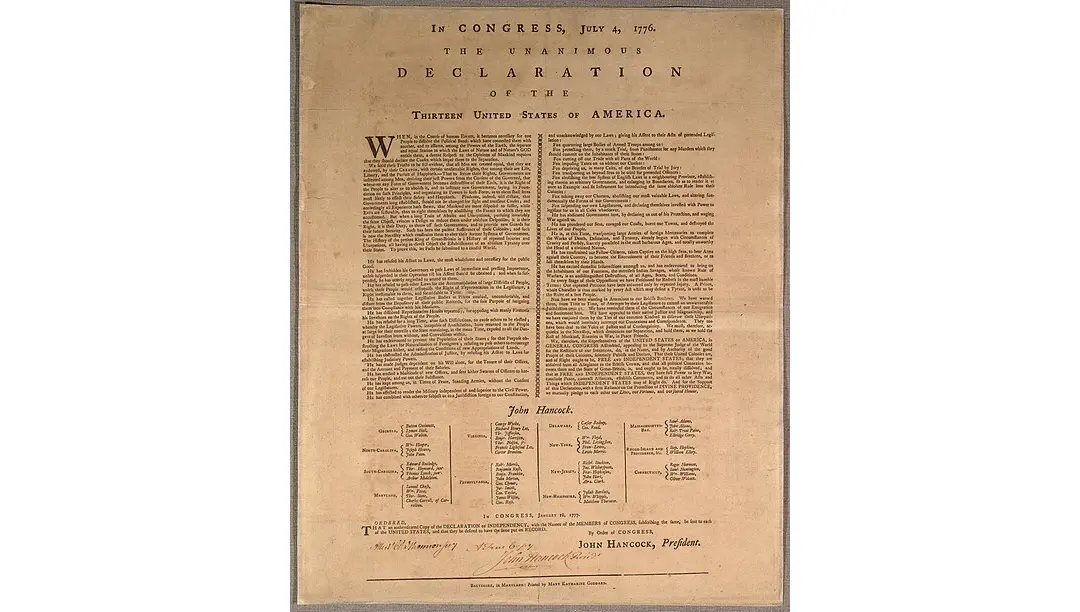
When recalling the Declaration of Independence from memory, many Americans may begin with “We hold these truths to be self-evident.“ But that is the second, although certainly the most popular, sentence. The Declaration of Independence begins prudently with the words “When in the course of human events.” These words are often skimmed over, as if the sentence is a mere formality.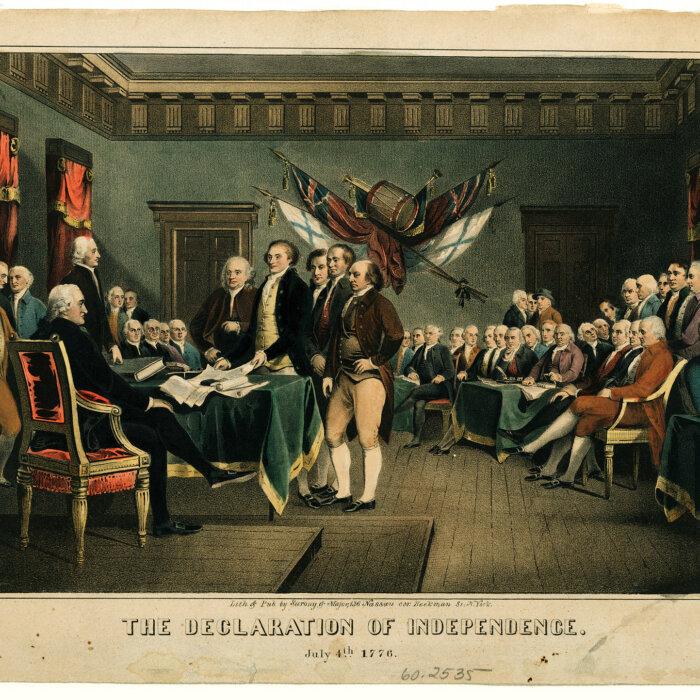
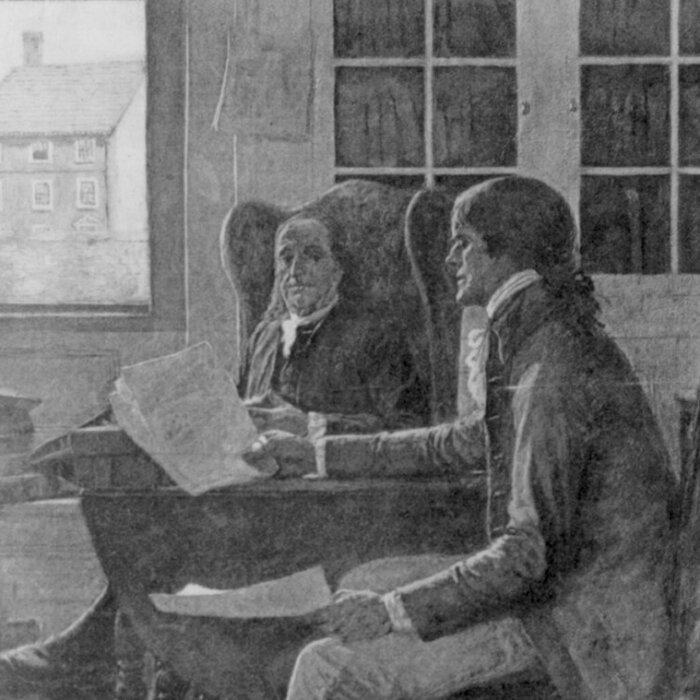
From a sociopolitical perspective, this long opening sentence is one of the most important ever written. It indicates that any political movement—not strictly independence movements—should be based on the consequences “of human events.” The modern political perspective often relies on abstract reasons for political watershed moments. The oft-used statement “it’s time” has no standing in the science of politics, and to make massive political shifts for the sake of “change” is no less than a fool’s errand.
For Just Cause
The members of the Continental Congress were concerned, as indicated in the opening line, about the “opinions of mankind,” and they believed that their demand for independence was only as credible as their argument for it. This line established a standard for future peoples seeking independence. Congress needed to prove “just cause” and not rely on the flimsy modern perspective of “just because.” The delegates knew the chaos that resulted from independence movements, and they firmly believed “that governments long established should not be changed for light and transient causes.” A clear warning to future generations.The declaration was not an anti-government document. It was a pro-government document. The delegates believed that governments were formed to “secure these rights” but that the power to secure those rights came from “the consent of the governed.” British constitutional law had established those principles, and now the heads of Britain chose to undermine those very principles for what the colonists certainly viewed as “light and transient causes” (i.e., debt).
When the British Americans cheered those dumping tea in the harbors (there were numerous tea parties), their cheers were not about tea or taxes, but rather the courage to stand up for principle. The colonist leaders were prescient, noting that after “patient suffrance” (more than a decade of political wrangling), it was evident that the British monarchy was bent upon “the establishment of an absolute tyranny over these states.” Having made such claims, the delegates knew that they had yet to make their case, and thus they invited “the candid world” to take a look at “the facts.”
An Appeal to Heaven
Along with the physical connection, the delegates prudently included the spiritual. Both were made in the opening sentence. The physical argument was that “human events” had led to this dissolution, and that therefore it was only natural to become independent and join “the powers of the earth.” The delegates argued that their course toward independence was not simply a matter of history or human reasoning, but that “the Laws of Nature and of Nature’s God [entitled] them” to it.The opening sentence is an immediate, although brief, explanation for declaring independence, and what substantiates the explanation is its appeal to both the natural and the supernatural—“Nature’s God” is the first of four references to God in the document, along with “Creator,” “Supreme Judge of the world,” and “divine Providence.”
In arguably the greatest sentence in political history, the delegates claimed that the physical and spiritual met together in the individual. Further appealing to the natural man, the second sentence begins, “We hold these truths to be self-evident.”
The first word, “we,” is a personal pronoun, which proves quite suggestive when matched with the seventh term, “self-evident.” The delegates were claiming that they saw what everyone should see. To emphasize this claim, they followed by proclaiming the spiritual side. Rather than stating that “all men are equal,“ which is not true, the delegates reintroduced the God of Nature, claiming that ”all men are created equal” and that furthermore “they are endowed by their Creator with certain unalienable rights, that among these are Life, Liberty, and the pursuit of Happiness.”
The Necessary and Proper Effect
They then explained the effect that must follow the cause. Government was created by man for the sole purpose of protecting man’s divinely derived natural rights. When a government fails to perform that necessary function, “it is the Right of the People to alter or to abolish it, and to institute new Government.” As stated in the declaration, this “Right of the People” should only be used for just cause—i.e., the abuse or elimination of rights—in order not simply to reestablish a new government, but to reestablish the natural order, “laying its foundation on such principles and organizing its powers in such form.”America was born out of political turmoil, and it should be no surprise that in our past, our present, and our future, we have experienced, are experiencing, and will continue to experience political turmoil—some moments certainly worse than others. American political turmoil is part and parcel of the natural order asserted from our beginning. Thus it requires a citizenry that is constantly self-reflective and self-correcting, not self-aggrandizing or self-destructive.
The Founders of America understood factionalism—i.e., Democrats, Republicans, libertarians, etc.—as a necessary evil in “the course of human events.” Our history has witnessed numerous times when our society has frayed its threads, even to the point at which the center did not hold—i.e., the Civil War. But the Declaration of Independence provides very clear direction into the natural order and how we must always appeal not strictly to the natural, but also to the spiritual, in hopes of maintaining that order.