The Early Deal: Missiles for Cash, Then Something More
The first phase was straightforward. During and after the Iran–Iraq War, Iran sought missile capabilities quickly. North Korea—isolated, militarized, and hungry for hard currency—sold Scud variants and associated support. Arms-control reporting notes Iranian officials acknowledging Scud purchases “from foreign countries like North Korea” in the 1980s, and U.S. intelligence assessments later describing continued “ballistic missile-related cooperation” from North Korean entities into the 2000s.Over time, the relationship matured from shipments into infrastructure: maintenance, training, and iterative improvements. By the 1990s, North Korea was providing Nodong missiles and related assistance, and Iran’s Shahab-3 emerged as the most visible product of that lineage.
What Reciprocity Looks Like Under Sanctions
Reciprocity is often misunderstood as symmetry: one side gives X, the other gives Y, and the ledger balances. The more consequential reality is feedback. North Korea has offered engineering heritage and a willingness to export. Iran has offered money, procurement pathways, and—crucially—an environment in which missiles, drones, and strike concepts are used, refined, and proliferated.Nuclear Cooperation: Separate Question, Same Strategic Effect
A disciplined read has to separate missile cooperation—which is well supported in open reporting—from claims of direct nuclear trade between Tehran and Pyongyang, for which public evidence is thinner. A Congressional Research Service report on Iran–North Korea–Syria cooperation makes the point bluntly: missile technology cooperation between Iran and North Korea is “significant and meaningful,” while “no public evidence exists” of nuclear-related trade or cooperation between the two (as of that report’s publication).
Why This Accelerates Both Threats at Once
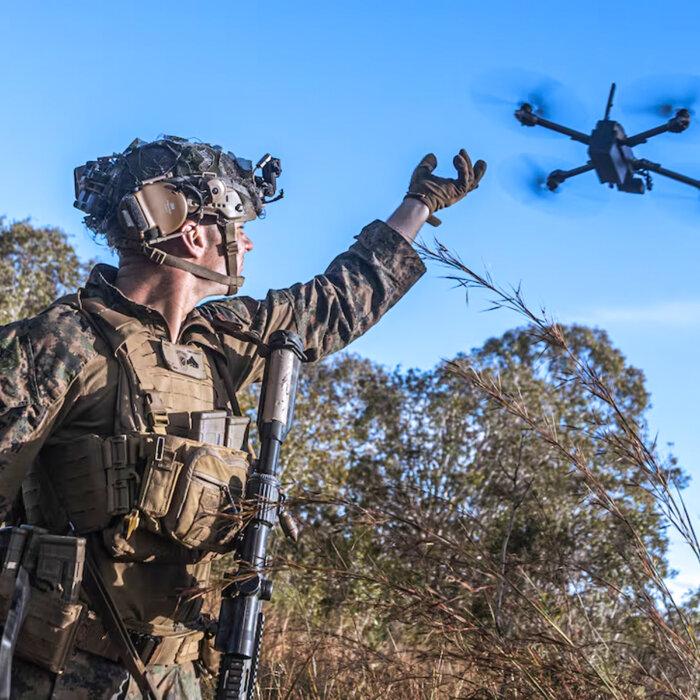
Analysts sometimes talk about “two proliferation problems”—Iran over here, North Korea over there. The Tehran–Pyongyang channel turns that into one problem with two nodes.First, it compresses time. Each side can leapfrog. If North Korea pushes a design forward, Iran inherits that maturity. If Iran demonstrates new operational methods—mass launches, mixed drone/missile strike packages, dispersed basing—that becomes a template others can study.
Second, it blunts sanctions. Sanctions work best when they isolate a program’s supply chains and slow iteration. A durable partner can offer alternate routes: components, machine tools, testing know-how, documentation, and the kind of “tacit knowledge” that is hard to interdict because it moves in people and training. The CRS’s broader discussion of cooperation and proliferation underscores the policy concern: networks create persistence even under pressure.
Linking the Network to the Decision to Strike Iran
This is where the current military decision point enters. On Feb. 28, 2026, U.S. Central Command announced the launch of Operation Epic Fury, describing a campaign ordered by the president and aimed at dismantling key elements of Iran’s military capacity—explicitly including missile and drone launch sites, air defenses, command-and-control nodes, and military airfields.Whether one agrees with the choice to strike, the strategic logic is legible: if Iran is treated as a central engine in a larger capability ecosystem—one that shares, adapts, and learns with partners such as North Korea—then degrading Iran’s strike complex is framed as a way to slow an adversarial learning cycle, not merely punish a single state.
But the same logic also sets a hard boundary on what airstrikes can achieve. Facilities can be cratered. Stocks can be destroyed. The most durable commodity in reciprocal sharing is expertise—engineering judgment, production tricks, procurement relationships, and operational adaptation. If that connective tissue survives, acceleration can resume, sometimes faster than expected.
The Iran–North Korea relationship has endured because it is practical: a long-running exchange that converts isolation into collaboration. The strategic question after Epic Fury is whether the coalition that chose to strike can also sustain the less cinematic work—interdiction, financial pressure, export control enforcement, and intelligence cooperation—needed to keep “version three” from arriving as “version four,” in two regions at once.