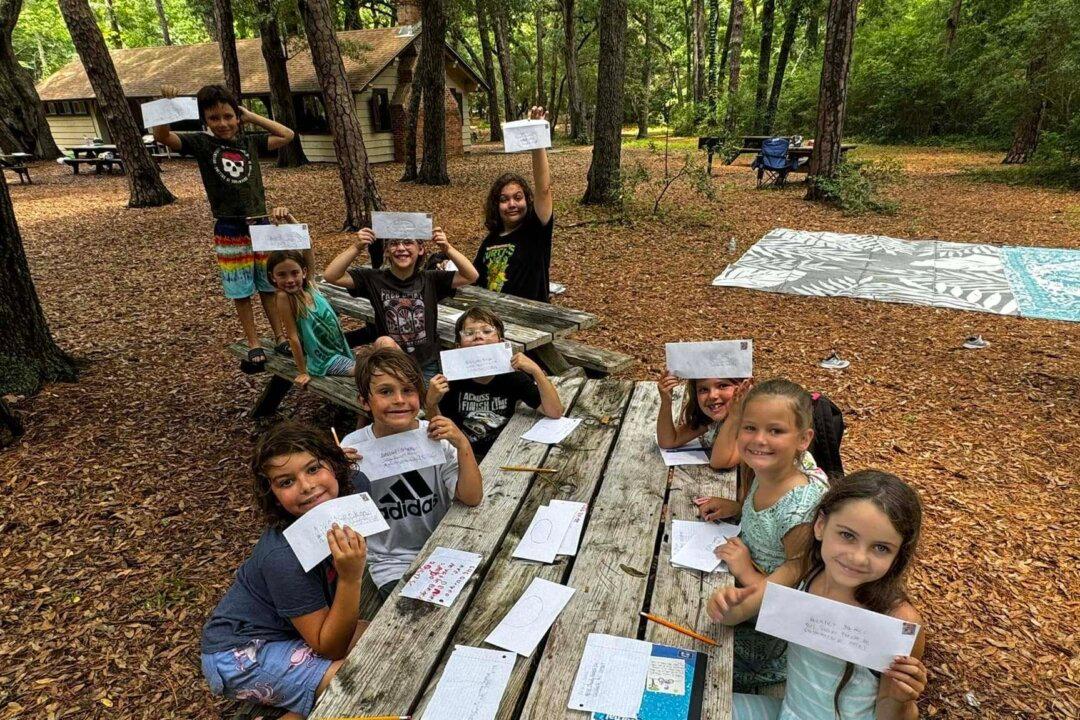
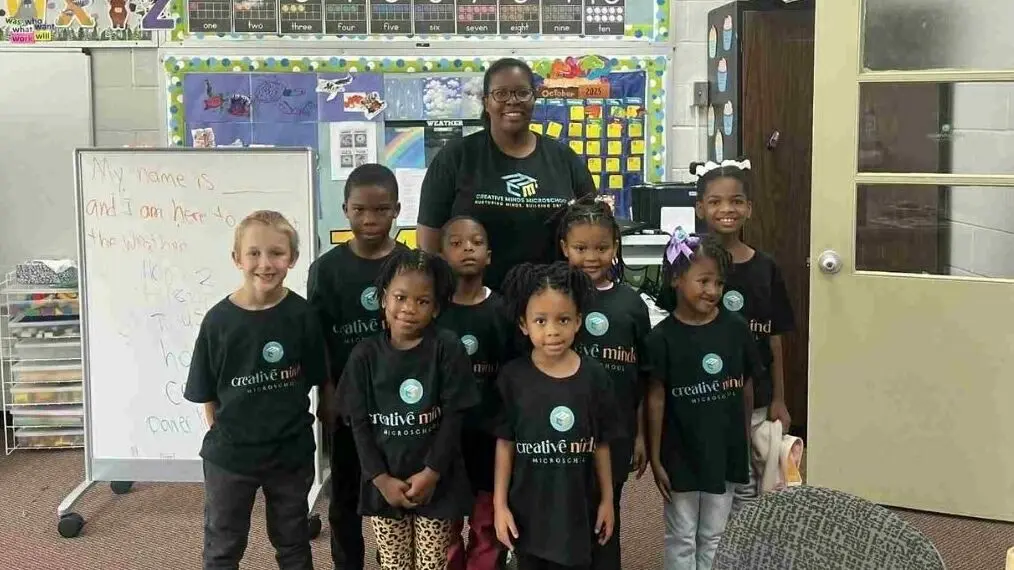
“My mind was blown,” said Fagerburg. “I had no idea education could be this good.”
“Parents want this. They love it,” Fagerburg said, noting that some families drive up to 45 minutes each way for their children to attend her program.
She says she sees enormous demand for the Acton Academy model and hopes to open more locations in Tennessee, but access is a key concern.


“I grew up poor,” Fagerburg said. “I never would have been able to attend a school like this.”
With the current expansion of school choice programs, such as Tennessee’s new universal education savings accounts (ESA), many more families are able to access innovative schools and learning models.
“It’s a complete game changer,” Fagerburg said, explaining how the ESA program enables Tennessee families who previously had limited education choices to now use a portion of state-allocated education funding to select the school or learning space that is best for their child.
“We created this flexible protocol around how a school actually works,” said Christian Talbot, president and CEO of MSA. “That gives mostly microschools, but really any innovative school, the opportunity to tell their story with the production of evidence that makes the most sense to them.”
Talbot offered the example of a hypothetical urban “place-based” learning environment, with no designated school building and students taking classes at various museums, public parks, and historic sites throughout a city.
“That school is going to have the opportunity to describe the learning environment in ways that existing accreditation protocols really don’t allow because you have to have a certificate of occupancy, or a lease, or some other thing that is tied to this mental model we have that school has to be in a building,” said Talbot.
He emphasized that these innovative schools are “meeting all of the exact same standards of accreditation” as conventional schools, but they are able to demonstrate these standards in ways that reflect the ingenuity of their models.
MSA is the world’s second-oldest accrediting agency. It launched more than a century ago, as interest grew from schools and colleges for independent, third-party verifiers of quality. For higher education, accreditation eventually became a requirement for U.S. colleges and universities to participate in federal student financial aid programs, but at the K–12 level, mandatory accreditation is less common.
Most states don’t require schools—public or private—to be accredited, but some schools choose to become accredited to earn an external “seal of approval,” which may help them to attract and retain students and educators. With the expansion of school-choice programs nationwide in recent years, certain states, such as Tennessee and Texas, require accreditation in order for a school to participate in these programs.
For Herrera, accreditation was appealing as a signal of quality, but she felt that most existing accrediting organizations took a traditional view of education that didn’t reflect her personalized, flexible approach.
“Our school is so different. We are not trying to fit into a one-size-fits-all box when it comes to schooling,” said Herrera, whose students are technically considered homeschoolers.
They can attend her school full-time at an annual tuition of $10,250, or customize their enrollment based on their own learning needs. Tuition for Herrera’s two-day-a-week option is about $4,000 annually.
“Whoever we get accredited through has to believe in our vision and has to be on board with what makes our school special, because we don’t want our school to lose that special part that makes us different from a traditional school,” she said.
When Herrera learned about the MSA’s pilot accreditation program for microschools, she eagerly applied. Next Generation Accreditation would offer Herrera that third-party validation that she has been seeking while retaining her program’s originality. It would also enable her to participate in Texas’s new school choice program, should she choose.
MSA hopes to run the Next Generation Accreditation pilot with 10 to 15 innovative schools over the next several months to learn more about these schools’ distinct needs and structures, and then iterate and adapt protocols to provide a valuable accreditation pathway for today’s creative schooling models.
But she also warns of potential drawbacks: “There are all these special schools, and if everybody has to follow the same standards to be accredited, then I think they’ll be more alike than different. That’s the only thing I could see being a downfall.”