There’s a false dichotomy in how people view our relationship with the land. Some urge us to retreat—abandon working lands, concentrate in dense urban footprints, leave nature untouched. Others push the opposite: domination, extraction, suppression of natural systems.
But the better path lies between those extremes. We are not separate from creation; we belong to it. We are meant to act as stewards, not conquerors.
Selah, Bamberger Ranch Preserve in the Texas Hill Country offers a living model of that middle way. In 1969, J. David Bamberger purchased a parcel of land in Blanco County that lacked functioning springs, had no creeks or ponds holding water, and was overrun with dense “cedar” (Ashe juniper). Through years of restoration—thinning canopy, reseeding native grasses, rebuilding soils, managing hydrology—he revived that land and reconnected it to life.
In Central Texas, juniper is often cast as the villain.
“They drink all the water,” people say. “Wells run dry because of them.”
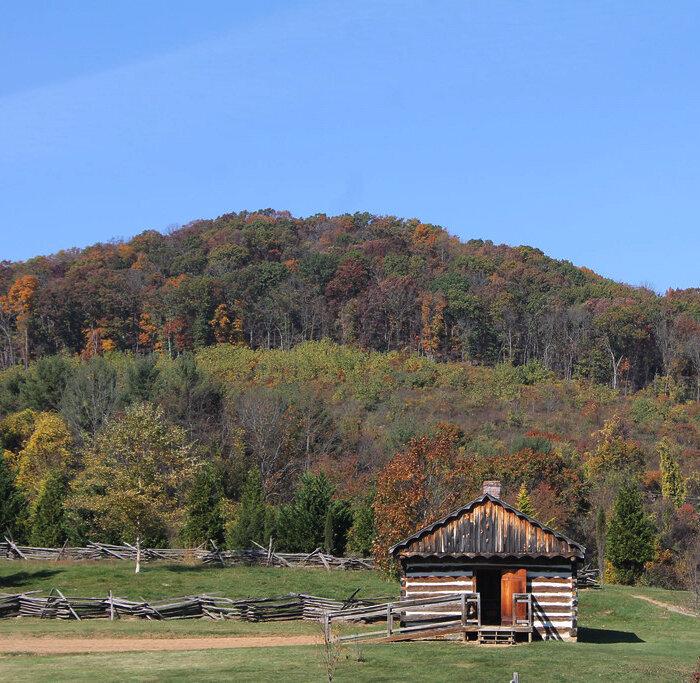
Bamberger rejected that oversimplified narrative. He acted with a guiding rule: If you can’t wrap your hands around it, it stays; if you can, it goes. He preserved large, deeply rooted junipers while thinning younger, dense stands—opening light, allowing rainfall to reach soil, and permitting springs and creeks to return.
But juniper is not an invasive species; it belongs here. I believe early European settlers called it “cedar” simply because it reminded them of cedars back home. In fact, juniper is a pioneer species—one of God’s designs. Its acidic needles fall onto alkaline limestone, creating a thin layer of humus in which other seeds can germinate. Its role is to lay the groundwork, to prepare the soil for life to follow. Over time, under fire suppression and removal of native grazing, juniper expanded beyond its ecological niche—but its original function endures.
On my land, I try to honor that balance. I preserve mature junipers—especially those whose roots have carved into rock fractures—and selectively thin around them. Over the years, those structural trees develop microchannels in rock that help guide rainwater deeper, helping recharge aquifers instead of allowing water to rush off. I haven’t yet been able to open all of our juniper forest because of financial constraints, but I look forward to doing so. Both by hand and with hogs, that work is underway.
I’ve also challenged local taboos: the stern warnings that “you can’t use cedar for anything.” I’ve used it for cooking fuel, compost, mulching, and even piling plain cedar chips on dead zones. In patches where nothing else would grow, I applied plain cedar chips (no manure, no mixing). To my surprise, soil life reawakened—microbial and fungal activity revived, structure reformed, and plants returned. More recently, I have observed early signs of reversing oak wilt—trees that had lost all foliage are beginning to show new leaf growth again in some cases, stabilizing what once seemed a hopeless decline.
Kerr County was struck by devastating flooding on July 4, revealing how fragile our soils have become. Rivers washed away branches, leaves, brush—from cedar, cypress, and other shrubs. Farmers begged for that organic material to be returned to the land. Instead, much of it was chipped and shipped to compost facilities in San Antonio—removed from our own ecosystem. That biomass is not waste—it is life. If distributed across degraded fields, it could rebuild soil, restore hayfields, help reverse oak wilt, and help rain soak in rather than run off.
Bamberger Ranch now spans about 5,500 acres. It serves as both a working landscape and a demonstration hub. It hosts workshops, tours, research programs, and educational outreach. Bird diversity has grown to more than 220 species from roughly 50. Springs that once lay dry now flow again, supporting the preserve and feeding Miller Creek downstream. The preserve also maintains a man-made bat cave (the “Chiroptorium”) that hosts a large colony of Mexican free-tailed bats.
Our landscape was fundamentally reshaped by barbed-wire fences and the removal of roaming bison. Fences fragmented migration, altered grazing patterns, and locked ecosystems in place. Without roaming herds stirring soil, suppressing brush, and opening corridors, juniper expanded unchecked. We reshaped the land. Now it is up to us to reshape it back—not by dominating but by rejoining, healing, and stewarding.
The blueprint is here. What Central Texas lacks now is scale, coordination, and resolve. Counties such as Kerr, Gillespie, Kendall, Blanco, and Burnet must see restoration as regional work—not isolated or fringe.
The path forward is this:
• Reclaim and retain carbon locally. Branches, leaves, and wood chips generated by floods or clearing should stay in the system—applied to fields, not exported.
• Open the canopy intentionally, chip the trees, and return that carbon to the soil. Thin younger juniper while preserving mature structural trees whose roots help feed recharge.
• Feed the soil. Compost, inoculate microbes, mulch, apply carbon—give soil biology what it needs to rebuild fungal and microbial networks.
• Measure and share. Monitor infiltration, soil health, moisture, and aquifer levels—document successes and failures.
• Educate and replicate. Use Bamberger Ranch as a hub—invite landowners, host field days, show what is possible.
If Central Texas had sufficient soil carbon and healthy structure, future floods might become opportunities instead of disasters. Rain could sink, recharge, heal. Instead of water lost to runoff, we would see land and aquifers recover. Bamberger Ranch achieved that. The lessons are clear. Now we must rise to carry the blueprint forward.
This article may seem focused on Central Texas—because that is where my work is rooted. But the truth is this: Wherever we live, we have altered our landscapes in ways that no longer serve us, nature, or God’s design. We are not meant to be passive observers. It’s time to act—to restore land, rebuild soil, open canopies, reconnect water, renew life. This is not just about saving land around you; it’s about embodying stewardship, honoring creation, and participating in God’s abundance wherever we live.
Ultimately, Bamberger Ranch reminds us that we were never exiled from creation—we belong here. In partnership with the land, we don’t dominate; we tend. And in that sacred bond, we become more powerful—not over nature, but with it—able to heal wounds once deemed too deep, reawaken springs, reclaim life. If we reclaim that role, we will see our land, our wells, our forests—and ourselves—transformed.