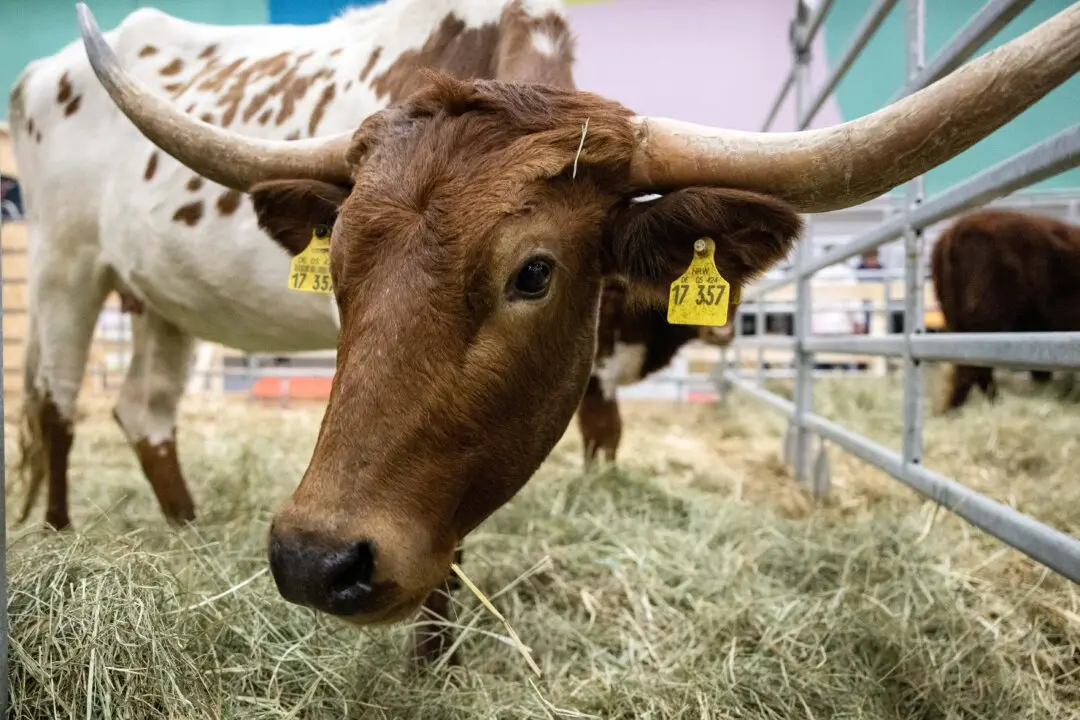
For 20 years, I helped build and run organic, plant-based restaurants in California called Café Gratitude and Gracias Madre. Their foundational mission is shaped by a simple idea: Food is medicine. Everything was organic. No synthetic herbicides. No pesticides. I believed then—and still believe now—that any amount of chemical residue is too much for human health, especially for children whose bodies are still laying the foundations for life.
Life has a way of humbling absolutes.
In the early Café Gratitude years, I was a committed vegan. I saw no ecological justification for raising animals for food. Then I started visiting ranches practicing regenerative agriculture. I watched degraded land come back to life as ranchers moved cattle intentionally over the landscape. I watched my father discover that he needed cows in order to grow better vegetables. I learned that the six to 10 feet of topsoil that once covered the Great Plains was built “only” by vast herds of grazing animals moving in relationship with grasses and microbes.
Nature is not linear; it is relational: microbes, insects, herbivores, predators—all in dynamic balance.
A Regenerative Farmer’s Uncomfortable Insight
Disappointed by the recent executive order to prioritize domestic production of agricultural inputs, including elemental phosphorus and glyphosate, I called Russell Hendrick. He’s a large-scale regenerative producer and one of my advisers at American Regeneration. He still uses herbicides such as glyphosate, but in reduced, deliberate applications.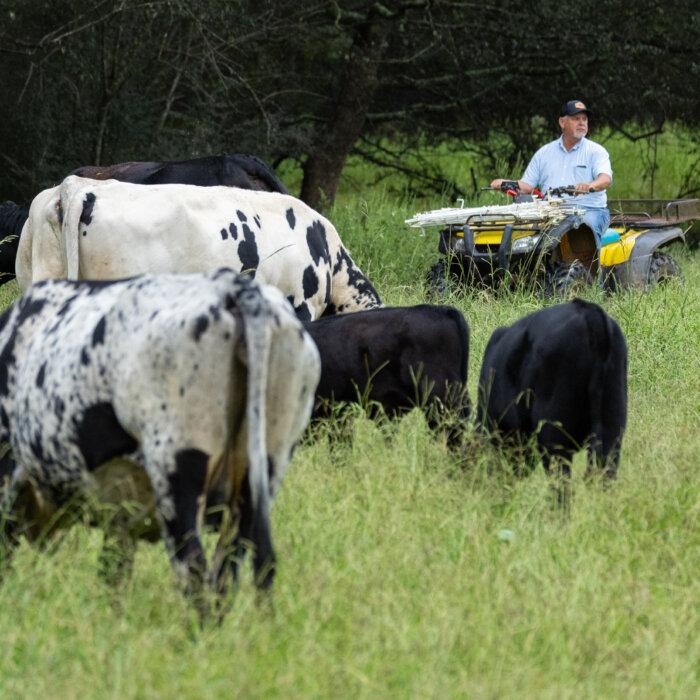
His response surprised me.
He said the executive order could, in fact, be strategically wise. He explained that much of today’s glyphosate supply chain runs through China, using inputs that, he said, are contaminated with industrial waste that can be more harmful than the active ingredient itself. Strengthening domestic production could reduce those impurities, stabilize supply, and lessen our dependence on an adversarial nation.
That does not make glyphosate benign. It does suggest that, for a system currently dependent on it, a cleaner and more accountable source may be a step in the right direction while we build a genuine exit ramp.
Monoculture and Chemical Dependence
Each year, farmers in the United States plant roughly 90 million to 95 million acres of corn and 83 million to 87 million acres of soybeans. Together, that’s about 180 million acres devoted largely to just two crops—nearly half of all U.S. cropland.Much of that land was once diverse prairie. Nature, left to herself, does not plant a single crop on thousands of acres. When we impose monoculture at that scale, nature pushes back. Seeds that have lain dormant in the soil germinate. Other plants move in. We label them “weeds,” but in many ways, they are biodiversity trying to return.
Nature does not favor monoculture.
I was reminded of this in my own garden recently. Preparing a small bed for spring—no more than 300 square feet—I pulled roughly 700 thistles and other weeds. That is one small bed. Now imagine the weed pressure on an acre. Then multiply that by 1,000 or 10,000. The scale of the challenge becomes clear.
To hold monoculture in place at that scale, we paired genetically engineered crops with matching herbicides.
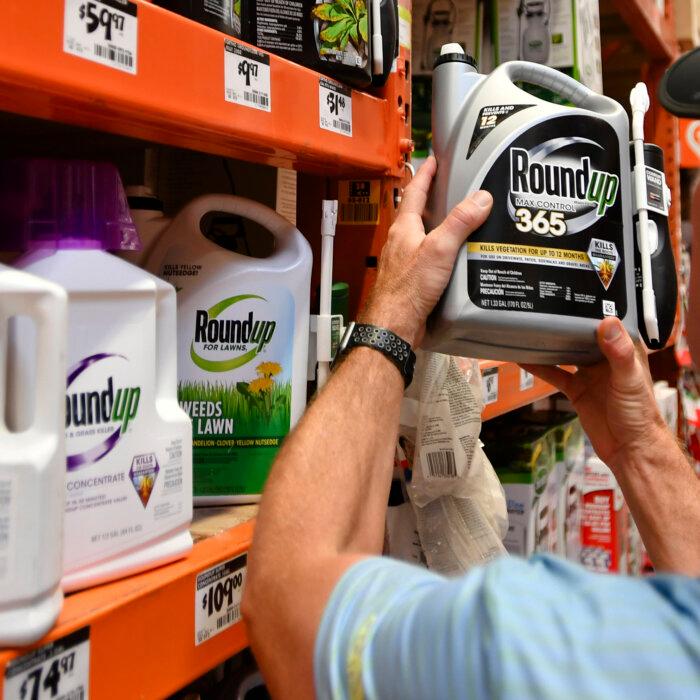
Glyphosate, the active ingredient in Roundup, entered the market in the 1970s. Its use exploded after glyphosate-tolerant genetically engineered crops were introduced in the mid-1990s. Farmers could spray entire fields; almost everything died except the engineered corn or soy. Glyphosate use in the United States increased nearly tenfold between the mid-1990s and 2014, and today hundreds of millions of pounds are applied each year.
Health Risks and Systemic Addiction
Pesticides are poisons designed to kill living things. Applying them across millions of acres ensures human exposure. These compounds are toxic by design; that is their purpose.Chemical manufacturers have paid tens of billions of dollars to settle cancer claims linked to their products. Rural and agricultural communities report elevated rates of cancer and chronic disease. This is not an abstract concern for them. It is personal and often devastating.
At the same time, the Environmental Protection Agency maintains that glyphosate is safe when used as directed, while other scientific bodies classify it as a probable carcinogen. The United States has roughly 4 percent of the world’s population, but we account for an estimated 20 percent to 25 percent of global pesticide use. Those figures should give us pause.
Still, if glyphosate disappeared overnight, the consequences would be severe. Yields would likely drop. Food prices would spike. More family farms would be pushed over the edge.
This is what addiction looks like in a system. At first, a substance is helpful. Over time, it becomes necessary just to maintain “normal.” Tolerance increases. Doses rise. Remove it abruptly, and the system destabilizes.
Sri Lanka’s Warning
We have seen what happens when a country tries to remove synthetic inputs without a realistic transition.In 2021, Sri Lanka attempted a rapid nationwide ban on synthetic fertilizers and agrochemicals. The intent—moving toward more organic and sustainable agriculture—was noble. The implementation was disastrous: Rice production fell sharply, key export crops declined, and food shortages deepened an already serious economic crisis. The government eventually reversed course and had to import basic staples.
Regenerative Agriculture as an Offramp
Regenerative agriculture offers a different path. It is not a nostalgic return to the past; it is a redesign aligned with ecological reality: diverse crop rotations instead of endless monoculture, cover crops instead of bare soil, reduced tillage, integration of livestock, and a focus on building soil biology rather than simply applying inputs.In well-managed regenerative systems, weed pressure often declines. Disease pressure eases. The need for synthetic chemicals falls as soil function and biodiversity improve.
One of American Regeneration’s advisers, North Dakota rancher and farmer Gabe Brown, has been a national leader in this work. Over the past eight years, Gabe and his partners at Understanding Ag have worked with farmers managing more than 35 million acres. Most of those farmers have reduced synthetic inputs by at least 25 percent and many by more than 75 percent, and some have eliminated them entirely.
Even if we conservatively estimate an average 33 percent reduction across those acres, the total amount of chemicals removed from the system is several times greater than what the entire organic sector has achieved, simply because regenerative practices are now touching millions of conventional acres rather than a small niche. As these farmers continue to reduce their synthetic inputs, they continue to eliminate them from the food supply chain.
This is what a genuine offramp looks like.
If we care about children’s health, we must care about soil health. If we care about soil health, we must care about farmer viability. And if we care about farmers, we must confront the economic structures that lock them into chemical-dependent monocultures. Reducing dependency while increasing resilience requires transition support, market redesign, and time.