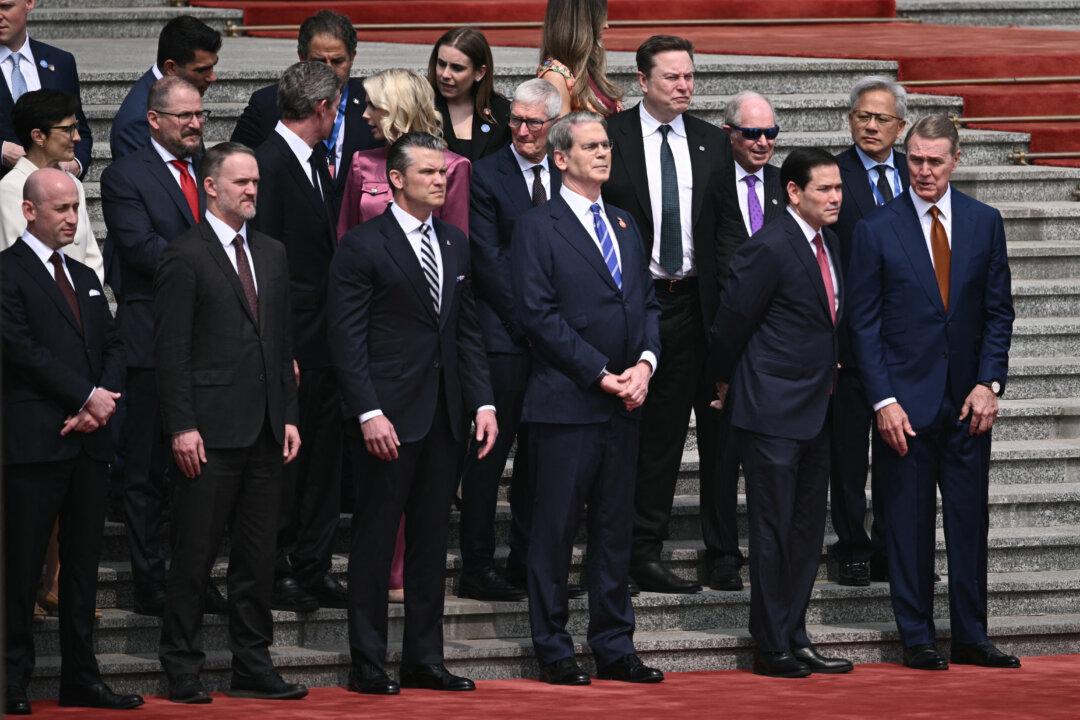
As U.S. President Donald Trump meets with Chinese leader Xi Jinping over the next few days in South Korea, will their conversations extend beyond tariffs and trade restrictions? Perhaps they will include the inherent risks of nuclear saber-rattling.
Case in point: In last month’s grand celebration marking the 80th anniversary of the end of World War II, Victor Gao, vice president of the Beijing-based Center for China and Globalization, issued a warning that should not be ignored. When translated, the former official stated that, “any attack, conventional or nuclear, will have devastating consequences.” Gao then referenced China’s nuclear arsenal that had been in the aforementioned parade, which can supposedly strike any target globally in under 20 minutes.
Why Such an Aggressive Statement?
The nuclear retaliation threat reflects the Chinese communist regime’s growing aggressiveness in the region and in other parts of the world, and at a celebration of the end of World War II. In the past several months, trade policies, geopolitics, and official rhetoric have become more adversarial than just competitive between Washington and Beijing, and everyone knows it.Is US Shifting Away From the ‘One China’ Policy?
By making the defense of Taiwan a top priority, the administration appears to be moving toward a policy of “strategic clarity,” where Trump is arguably tilting toward Taiwan and against China geopolitically and economically. That is a provocative move, and in the administration’s view, a necessary one, to deter the regional and global ambitions of the Chinese Communist Party (CCP).Beijing’s Response: Limit Access to Critical Elements
No doubt Beijing can see the writing on the wall, so to speak, and may partially explain China’s decision to limit U.S. access to strategic rare earth elements, of which China controls about 60 percent of global supply and 92 percent of global processing. The impact of Beijing’s new restrictions has been felt in the European Union, China’s largest trading partner, as well as in Japan. Both have been collaborating to find ways to persuade China to reduce, if not eliminate, the rare-earth restrictions.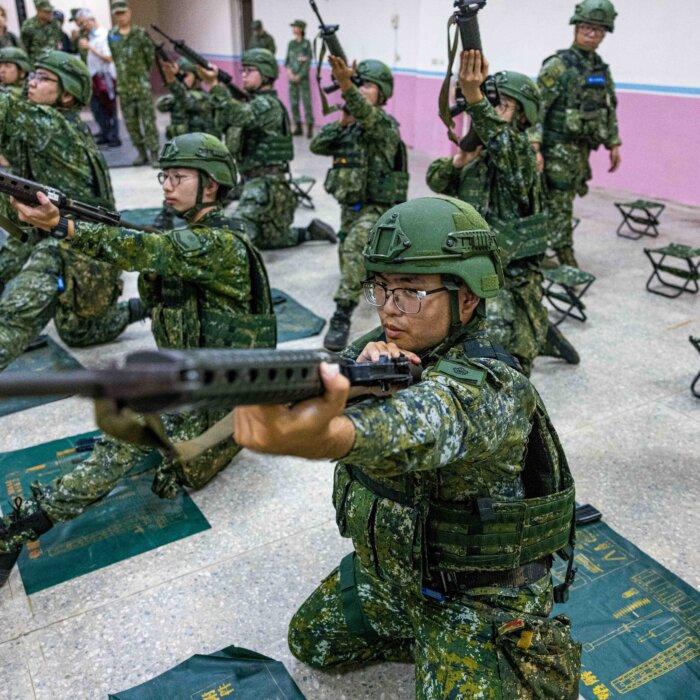
Is Escalation Inevitable?
But as their meetings unfold, will Trump and Xi find a way to de-escalate the rhetoric and reverse their highly consequential trade policies?That’s difficult to know.
On the one hand, the United States has no desire, need, or intention of a military strike against mainland China. Yet it continues to arm Taiwan while levying high tariffs on China.
Is that the “conventional” attack that Victor Gao was referring to that would be the potentially triggering event for a nuclear response from Beijing against the United States and/or Japan?
Is Xi Looking at a Taiwan Invasion to Stay in Power?
Further complicating the equation is Xi Jinping’s flagging political support at home, particularly with the People’s Liberation Army (PLA). Just last week, nine of Xi’s top generals were removed from their posts. Purges are common in China and other dictatorial regimes, but in this case, all the generals had been appointed by Xi himself.A more probable cause is disloyalty to Xi Jinping or to his policies, which are, of course, the same thing. Could one of Xi’s policies that the generals disagreed with be a planned attack on Taiwan?