I’m trying to reconstruct what I used to think about flowers. Pretty, granted. Necessary, absolutely not. They are even frivolous, not a concern of a serious person with other matters about which to think.
You hear about someone who is good at flower arranging and think that this is probably a wasted life. Stick some flowers in a vase and you are done. Why all the fuss?
I’ve come to think otherwise. Once you observe how fresh flowers in a home changes the entire environment, you cannot help but see the point. Yes, they die in a few days or a week. In a strange way, this very reality—from ashes they came and to ashes they will return—is an allegorical reminder of our very lives, from seeds to beauty to withering and final death.
In that way, having flowers around the home is a philosophical statement concerning the greatest mysteries of human life, and a living reminder to live well, be wonderful, delight others, and make the most of the time you have, because it will not last. Our very lives are as mystically beautiful and as ultimately vulnerable as a vase of flowers. We dare not think otherwise.
So, yes, we want them around. But what is the best way of doing so?
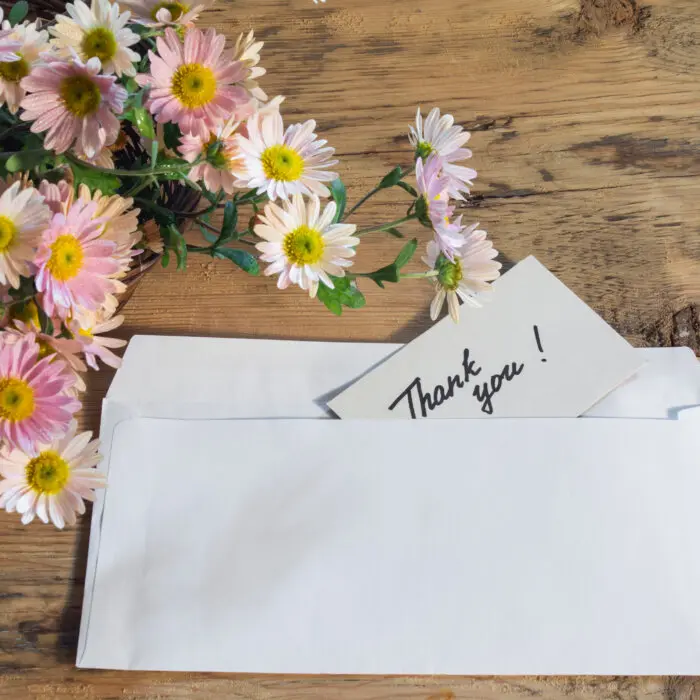
Of course there are the flowers at the grocery store. There was a time when I just looked past them as stuff other people buy, only useful for presenting to loved ones as a means of doing penance. It always works, so why not? In this case, their value is purely instrumental, even manipulative.
This is not a good way to think. What if having fresh flowers around the house became a norm, something to keep up year-round as part of the liturgy of life? There was a time when people thought this way. Think of the wife who always sent her husband off to work with an orchid for his lapel or the bouquet of flowers tossed in a wedding as a superstitious foretelling of the next union.
There is this scene in the show “The Waltons”—which I’ve come to believe is the single most consistently awesome creation in the history of American television—in which the youngest child presents a handful of wildflowers to her new substitute teacher. The lady is crabby and uninterested so the little girl drops them in the trash. It’s heartbreaking.
Think about the gift itself. She walked to school and was attentive to flowers around her as she walked. She stopped and picked a few, an action of love and affection. Very thoughtful and sweet. She did not spend money but rather spent some time and attention, which is the most real form of showing appreciation for someone.
I began to think about the meaning of all this. It was not fancy, just a fistful of wildflowers. What if we all did the same? What if on a walk we found some flowers and snipped some and brought them home? With just a bit of attention, you can create in your own home a living scene that compares favorably to a Renaissance-era still life, something even more wonderful because it is the real thing.
But real men don’t fuss over flowers right? Nonsense. Men have historically been deeply involved in horticulture and floral design—from Japanese ikebana, where samurai practiced it for discipline and mindfulness, to European court gardeners and 18th–19th century botanists who risked their lives collecting specimens.
The modern cultural split where flowers became coded “feminine” is recent and artificial. Treating it as engineering a temporary sculpture—balance, proportion, negative space, color theory—flips the script. It’s composition. You’re solving for visual harmony with organic materials that fight back. That appeals to the same part of the brain that enjoys woodworking, mechanics, or tactical planning.
The most obvious beginning is the grocery store. We are actually enormously fortunate to have this floral industry all around us. There was a time when such would have been inconceivable. It’s made possible by elaborate industrial systems of flower production in Latin America and fed by constant flights there and around the country plus complex distribution systems. When you consider how much is involved, it is rather amazing that you can pay $20 and bring home a lovely arrangement.
It was only recently that I discovered just how much skill it takes to move them from the shopping cart to the vase at home. They need to be removed from the packaging and laid out on a cutting board stem by stem. A shortcut I used to try is chopping all the stems at once with a big knife. This is dumb. What you need is a pair of scissors and cut each stem, an inch or two off the bottom one by one.
How much extra time does this take? Maybe a minute or two. It’s ridiculous to complain about this but in our rushed times when we implicitly aspire to do nothing physical ever, it becomes too easy to bypass this step. If you do, it will come at the expense of the arrangement. The right way is to pick the vase, eyeball its height and depth and cut the flowers to match.
The cutting should not be perfect even because you want tall flowers at the center and the shorter ones to the side to make a good arrangement. And when you put them in the vase, the stem needs to be slanted, not straight up and down. I add the water to the vase first with a bit of sugar for food.
The initial impulse might be to fill up the entire vase with water. But your flowers are not fish. They don’t need this. They only need water to cover the area where the flowers are cut plus some extra to account for evaporation. Too much water creates muck in a day or two. In any case, the water should be changed every two or three days to keep them fresh.
The point here—and probably only guys need to hear this because few of us have ever been trained in this area because we are biologically uninterested—is that it is not as simple as buying the flowers and sticking them in a vase. There is more to it, actual time, technique, and some design sense.
Once you understand this, the entire enterprise becomes more attractive to the male penchant for problem solving with physical things.
Now to the real deal, the flowers growing in the wild or in a curated garden. To be sure, there is a kind of cultural taboo against picking flowers that are not on your property but there are workarounds. There are fields out there about which no one cares. They can be foraged. The flowers might even be somewhere in your own neighborhood and be available for the picking. You could even check with your apartment owners to see if a periodic culling is permitted provided you don’t mess up the look.
I had no knowledge of how to do this until recently when a friend explained to me how it is done. Not just any flower will do for any vase. Depending on the size you need, you should look for ones with longer and straighter stems and cut them with the goal of gathering similar lengths.
The timing here is also crucial. You want freshly bloomed flowers, not ones on the verge of death. Because a large bush of flowers—whether roses or hydrangeas—has a huge range of flowers in various stages of life, you need to choose carefully.
When you find your stem, you cut and then immediately start snipping off the leaves and thorns and other extraneous parts that will only get moldy in water and mess up the look. Once one stem is done, you set that on the ground—would it not be nice to have a woven basket in which to gather them, like in old books?—and set to work again. Once you have a dozen or so of these, you are done.
Make sure at this stage to check for weird bugs or bees because you don’t want to bring those into the house.
When you bring them inside you place them on the counter and begin to sort, placing them in the vase starting with the shorter ones on the outside and the longer ones in the center. It will require some rearranging once they are all set up, until you get a beautiful picture. Find the spot in the house where they belong and stand back and marvel at your work.
I promise that nothing can prepare you for the sense of achievement and satisfaction you will feel. It brings absolute delight to the room. It takes no money and only 20 to 30 minutes of time. Actually, as you get better at this, you can reduce the amount of time commitment.
And just think about this. By taking this on, you can add this to the list of skills you have. As they say in the gaming world, new skill unlocked. Congratulations! But unlike the fake world of gaming, this is the real thing.
As it turns out, none of this is as easy as it might appear at first. It takes real practice. I’m just a beginner but I’ve now done enough of this to appreciate the magisterial achievements in New York hotels, for example, the artistry of which compares to paintings at the great museums of art.
Is it worth it? Absolutely. No civilization from the ancient world to the present has been without arranged flowers in domestic spaces. They remind us that mixing our labors to create beauty and live among the results is an essence of life.
Yes, they will be dead in days. You do it again. This is part of the joy. The seeming superficiality of the project is actually the point. Beauty is as expendable as it is indispensable. We can always do without but we never should do without, especially in season and especially when flowers are more available now than ever before in history.