The topic of intellectual property is a difficult one, a point that requires serious thought to understand in its fullness. It’s become the subject of debate with the rise of artificial intelligence (AI). The products of large language models are not subject to copyright control, and this is by design: Open sourcing is a precondition for wide distribution and acceptance. Indeed, most of the top entrepreneurs working on AI have spoken out against intellectual property and even called for its abolition.
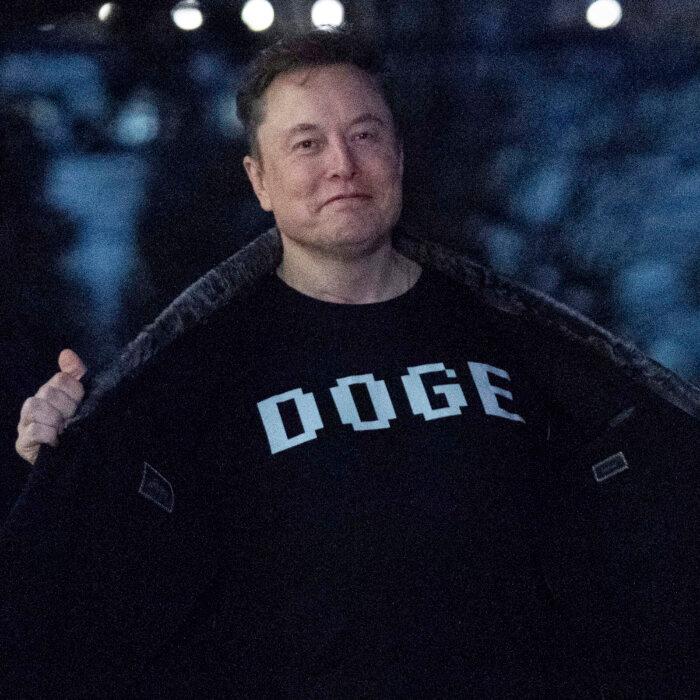
As for Tesla CEO Elon Musk, he has practiced what he has preached. He long ago eschewed patents for his Tesla technology, inviting anyone and everyone to help in design and support. This has become a trend for most innovators in technology. More than anyone else, they have to grapple with the labyrinthine regulatory thicket of intellectual property enforcement, as well as navigate the litigious realm of patent and copyright trolling.
Many of today’s most innovative creators use intellectual property only defensively: They grab control before someone else can do so and sue them for infringement. Most of these people would gladly scrap the whole machinery of intellectual property if the option were available.
An example of this that might be more familiar to the rest of us concerns the use of images on blogs and publishing sites. Anyone involved in this industry for a few years will have experienced something of the following. You get a fairly official-sounding letter from a law firm that claims to represent a copyright holder. You are accused of using an image illicitly. You take it down but that’s not enough. The correspondent insists that you owe a fine for its past use.
I’ve seen this enough to know that it is a scam. To be sure, there can be real cases of infringement, but most of the time it is just a troll using tactics of intimidation. Every few months I get a panicked call from a friend asking what to do because some hacker is demanding $1,000 or so immediately to compensate for some supposed violation.
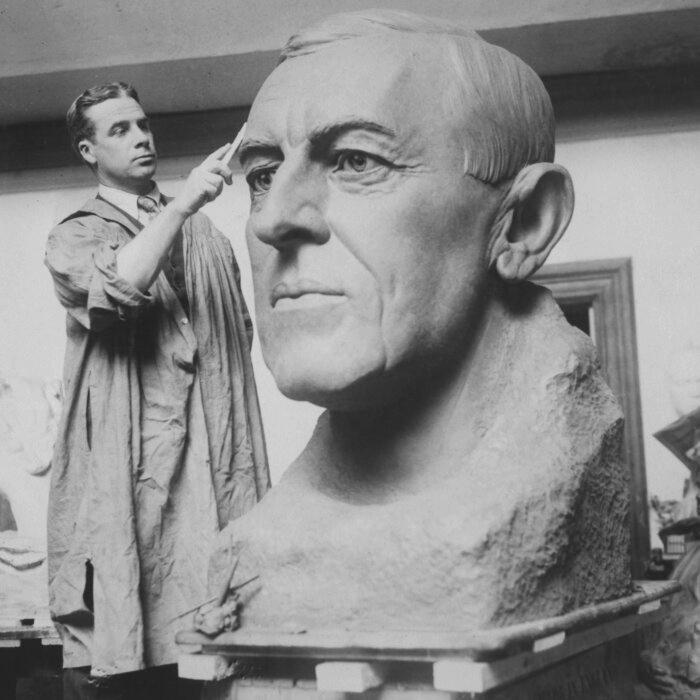
As a result of this problem, AI-generated graphics have become enormously popular. There are no legal difficulties in using them. You can be assured that they are common property and carry no liability risk. This is why they have such an industrial advantage.
A common objection to the idea of abolishing intellectual property is that doing so would disincentivize creativity. Why come up with a new idea if someone could just steal it or plagiarize it? Why would companies invest in research and development if they could not take possession of the results as property as it came to market?
The quick answer is an easy one. Intellectual property as we know it is a rather modern institution. Rudimentary forms of national copyright do trace back hundreds of years, mostly in the form of industrial grants of monopoly privilege for the purposes of censorship. It began as what it remains today: not security for creators but legal privileges for industrial producers. Authors, for example, discover this quickly when using major publishers. They surrender their own rights for their lifetimes plus 70 years. The publisher, meanwhile, owns copyrights and distribution rights.
Even after national copyright laws started to take hold outside Britain, there was still the freedom to print across borders. Internationally enforced copyright agreements only trace to the late 19th century. Indeed, schools in 19th-century America used books of British authorship precisely because they did not have to pay royalties and could thus afford them.
As for patents, they were born in the industrial age, but not without controversy. True advocates of free enterprise observed that ideas are not property in the same way that physical objects are. Ideas can be shared widely and even infinitely without diminishing the integrity of the initial idea. The reason we assign property rights to physical things (and other scarcities such as radio waves) is to solve the problem of rivalrous claims. If something is reproducible, such as ideas, the problem that titles are designed to solve simply goes away.
Patents end up delaying industrial progress by attaching to a single producer exclusive rights to manufacture, thus forestalling the normal process of iterative improvement one would usually see in an entrepreneurial economy. The system today is messy, expensive, and a thicket of danger for any innovator in any sector.
Such arguments against intellectual property might seem like abstractions until you consider all the ways in which business is common and thriving in a host of sectors to which intellectual property does not apply. The less that intellectual property applies in publishing and manufacturing, the greater the enterprising zeal and creativity.
Consider perfumes. It is not possible to copyright a scent. Not even the formula of the scent can be copyrighted. Anyone can make the perfume you wear and sell it. How in the world do these companies make money? They do, after all. We are talking about an $80 billion industry for perfume and colognes, all without the use of intellectual property.
Note that there is no absence of innovation in this realm. A quick visit to any department store will reveal this, thus demonstrating how false is the claim that getting rid of intellectual property turns the human mind into an inert blob. Some scents sell for hundreds of dollars per bottle. Observe the variety of brandings and bottle shapes and the elaborate attempts to market a spirit of life, using famous personalities and images of a better life. The marketing of perfume is wildly creative and evocative precisely because none of the scents is copyrighted.
It’s the same with fashion. You cannot copyright or patent a fabric or suit or dress design or shoe style or anything else. You can trademark a brand, of course, but even that is a messy matter, with fakes far outselling the real thing in many brands. As for the designs themselves, they are “stolen” by manufacturers routinely, with cheap knockoffs widely available a season or two later.
Thus the origin of the fashion show and the tremendous secrecy guarding the season’s new designs. They are put on the runway at the same moment in which the designers and manufacturers are ready to ship to stores and customers. It’s a race to stay ahead of the pirates. And this race creates one of the world’s most vibrant, fast-changing, and innovative commercial sectors. That’s business without intellectual property.
Another example is recipes. You cannot copyright them. If you come up with a new cocktail or spice combination or technique, you have no hope of retaining a monopoly on it. This might amaze you. I was just at a Barnes & Noble store, and the single largest section was cookbooks. They are enormously popular, but the core of them, the recipes, is not subject to any copyright at all. You can pull a book off the shelf, copy the ingredients and instructions, and make your own book. You can do this now.
Far from having diminished creativity, this sector is more vibrant than almost any sector of publishing that is subject to copyright.
What about music? At the Olympics this year, there were constant struggles over the copyrights to music being used in routines. Some athletes had to change out the music at the last moment to deal with litigation threats. This is why AI music compositions are increasingly valued in many sectors; by using AI-generated music, you can avoid the danger of being accused of infringement.
Can musical composition and performance thrive in the absence of intellectual property? The short answer is that it always did before the 20th century. There are many composers who did their work without securing ownership of their compositions simply because copyright as we know it did not exist: Giovanni Pierluigi da Palestrina, Josquin des Prez, Claudio Monteverdi, J.S. Bach, Antonio Vivaldi, Joseph Haydn, Wolfgang Mozart, Ludwig van Beethoven, Franz Schubert, Johannes Brahms, and everyone in between, to say nothing of the infinite number of folk melodies that thrived for hundreds of years.
These composers were certainly paid. They had special arrangements with publishers to be the first to release the work to performers. They were often paid handsomely for this. One country that did in fact enforce musical copyrights was England, from the time of Elizabeth I. What we find here is a strange dearth of great works other than those of Henry Purcell and George Frideric Handel; indeed, it is hard to conjure up much in the way of English musical achievement between Handel and Edward Elgar. England stands in contrast to the continent, which did not deploy copyright.
There is so much more to say on the topic, but I will end by pleading for an open mind on this issue. Oftentimes, we think that we know things for certain, only to discover later that we were completely wrong on a core topic. Intellectual property is one of those issues.