Centuries of development went into what we consider to be a well-appointed table setting for meals. The plate goes here, the forks here, the knife here, the water glass there, and so on. There are flowers, candles, and a pressed cloth napkin. It looks inviting and warm.
Why the fuss? Because the table is the central place for human connection. Nothing else compares—not the cocktail party, not the bar stool, not the Zoom call. The protocols concerning table setting date way back in history precisely for this reason.
A family or community or event with a well-appointed table is one determined to extract the maximum value from getting together with others. This is the whole point of a dining room, not just a place for guests or looks but something to be used often as routine, an essential part of the liturgy of life.
Now everyone can afford to set a table. But, typically, at this exact moment in history, fewer and fewer people even bother. This is very sad, even ominous.
I was at an event two weeks ago and entered the ballroom for dinner. I was astounded to see tables that looked more like a bingo parlor than a dining room. The hosting event somehow did not think it mattered. It was a buffet, which is fine, but why not at least set the table with silverware rather than rolling them up and sticking them in a tub by the food?
In most contexts, such as your home, the table is something that you can control. That’s precious in the world today, when everything seems strangely out of our control, including public life generally. Most of us feel powerless to do anything about it. The table is another matter—you can set it daily to maximum elegance. Doing so amounts to a major upgrade in life quality.
There is magic to eating with family and friends around your beautiful table.
What follows is a number of personal biases on this matter, which you can take or leave.
For example, I’m not a fan of what is called the placemat. There are surely contexts in which it is practical, and that’s great. Having something you can just throw in the wash or wipe down after the meal is convenient. I get it.
That said, can we work on bringing back the tablecloth? I’m partial to it. There are so many beautiful ones available, one that is perfect for the size of your dining table. Better if it is cotton. Even better, linen. There is nothing as wonderful as a perfectly presented linen tablecloth as the foundation of a beautiful table.
A major practical advantage is that a cloth will cover up imperfections in the table itself, including scratches and chips in the wood. A difficult downside is that it needs washing. Even the slightest drop of juice or gravy or wine will ruin the look. You have to get busy with techniques for removing stains, of which there are many.
That said, this is rather fun, a real challenge, one that I’ve come to enjoy. Once recently, half a bottle of red wine spilled on a white linen tablecloth. Guests were shocked and mortified. I, on the other hand, said not to worry. All is fine. After they were gone, I got busy with hydrogen peroxide, soap, and water. Soak. Hot bath. Scrub on washboard. Hang in sun. It was perfect.
There is personal pride generated from this process. As for washing, I avoid all use of machines for tablecloths. The bathtub is fine. The sun finishes it off with natural bleaching power.
As for napkins, I’m begging you: Use cloth. Please. It enhances the dining experience a thousandfold. Yes, it is a pain, but whatever; life is all about tasks and work. You wash after every use if guests are around. With family, you can reuse, of course. The laundering process is similar to the above but also requires the iron. You might dread this while it is going on (I love it), but you will feel enormous pride when you put out your fantastic and freshly starched napkins for the next meal.
Before we get to the place setting, let’s discuss candles. It’s enormously fashionable these days for all good restaurants to light real candles. They are back in a big way, and for obvious reasons. Everyone is fed up with fake lighting. It’s terrible, mentally draining, and deeply unpleasant. The best light is the flame.
Two candlesticks on a table do the trick. They can be porcelain or silver or anything. And by the way, you can get silver-plated candlesticks in a classic style on used marketplaces for a song.
Another point about the table: flowers. They can be dried. They can be fresh. It can be a pitcher with herbs fresh or dried. It can be paper. Please, just something.
Now to the plates. I don’t see much reason not to use porcelain plates these days. You can get them used at any thrift store. You can buy an entire set for almost nothing. They are beautiful and make the food taste better.
That said, there is nothing wrong with stoneware or pottery. They have a certain style about them too.
Regardless, can we please rule out paper and styrofoam plates? Nothing wonderful ever happens if those are on the table.
As for cutlery, I’m partial to sterling silver for the weight and its ability to conduct temperature quickly, which only adds to the delight. They are expensive, but you buy them only once in your life and then hand them on to the next generation. Plated silver can look pretty, but it is a problem over time, sorry to say.
Stainless will do in a pinch.
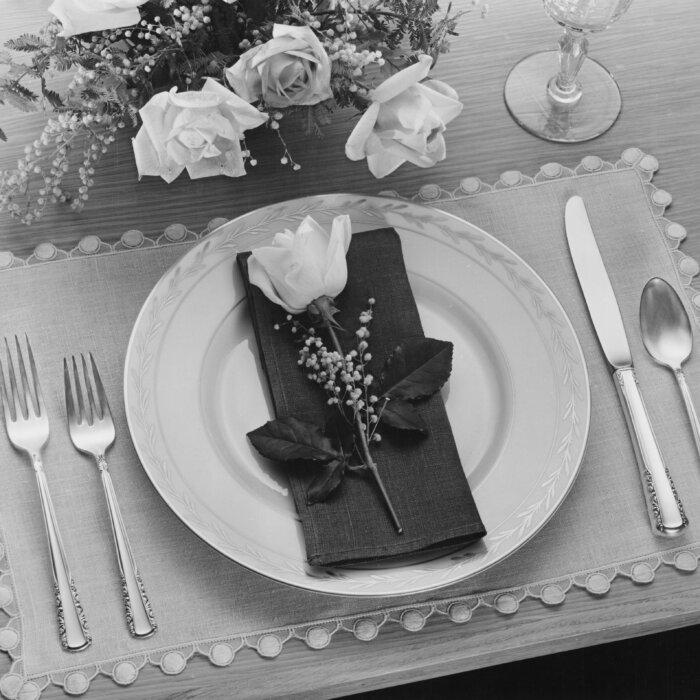
For years, I could never remember on which side of the plate to place the utensils. I had to look it up. Then I came up with my own life reminder. “Fork” starts with “f,” and that goes with “left.” Boom. It’s a simple trick, but that was all I needed. The rest follows. Salad fork on outside and dinner fork on inside. Knife on right, bladeside in, and the spoon to the right of the knife.
Simple right?
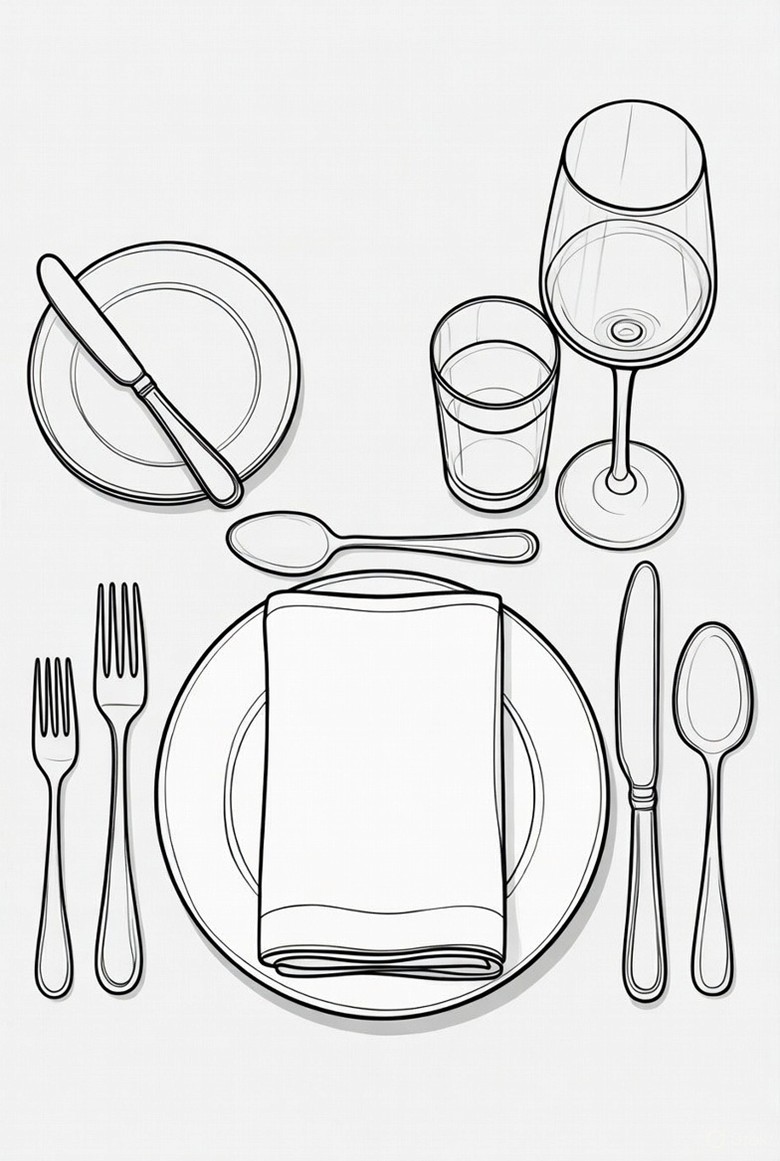
As for the napkin, that can go on the plate or under the forks. Under no circumstances can it go under the knife and spoon.
My own preference is to fold the napkin like a standing fan and put it in the center of the plate. I can do this well because I once worked for a catering company, and I had to do it 800 times. Talk about a way to build in a motor skill! But I’m glad I know this. It always amazes guests.
Do you worry that old traditions that built civilization are dying and civilized life along with it? I do. In this case, and in a seemingly small but significant way, you can do something about it. Set a beautiful table every night.