You may not be much interested in politics, but politics—to borrow from Trotsky’s famous dictum on war—is certainly interested in you. With indigenous land acknowledgements to sit through, rainbow-coloured sidewalks to tiptoe over, and approved slogans to recite on cue, political preoccupation has colonized nearly all thinking. Entertainment, education, sport, business, and even private conscience now arrive freighted with ideological significance. Everything must justify itself politically before it can simply exist.
Yet no civilization has ever depended upon politics alone. All have always relied on men and women whose lives far exceeded politics: people rooted in and building upon culture, memory, religion, learning, local attachment, and what Johan Huizinga called the “play-concept” at the heart of civilization itself. This is what I have come to denote as the “apolitical man.” He or she is not someone who is indifferent to politics, but someone who understands that politics is only one component of a flourishing life, society, and civilization.
One mountain man was a chess prodigy whom the government would occasionally pick up by helicopter to fly him to tournaments on the mainland. Another followed the debate over the then-theoretical Higgs particle and explained to me the concept of mass as a form of inertia, “like the resistance of a sheep refusing to be pushed.” Another carried the traditional tsampouna fashioned from goatskin and reeds and played folk melodies during breaks in the day’s labour. Still another traced the Greek phrase “It is what it is” back to the philosopher Parmenides’ “Whatever is, is.”
These men were certainly political in that they cared for the good order and prosperity of their country. But they were also much more than that. Their worldview was culture-centred rather than ideology-centred. They understood instinctively the distinction between legality and morality, between administrative systems and civilization itself.

This older understanding of life runs deep through Western history. The Roman poet Virgil, in his Eclogues and Georgics, extolled “Arcadia,” a festal paradise of shepherds, wanderers, and pipe players. He envisioned this not as a literal political program but a reminder that human beings require spaces beyond power and administration. Inspired by the Greek poet Theocritus, Virgil expressed what has proved an unquenchable eternal yearning for leisure, imagination, fellowship, and moral innocence amid the turbulence of political life.
The classical writers were not anti-civilizational or delusional romantics. They understood that politics could never be abolished. But they also recognized that civilization withers and eventually fails when politics is made total, when the state absorbs every human impulse into its machinery and leaves no room for the independent life of culture.
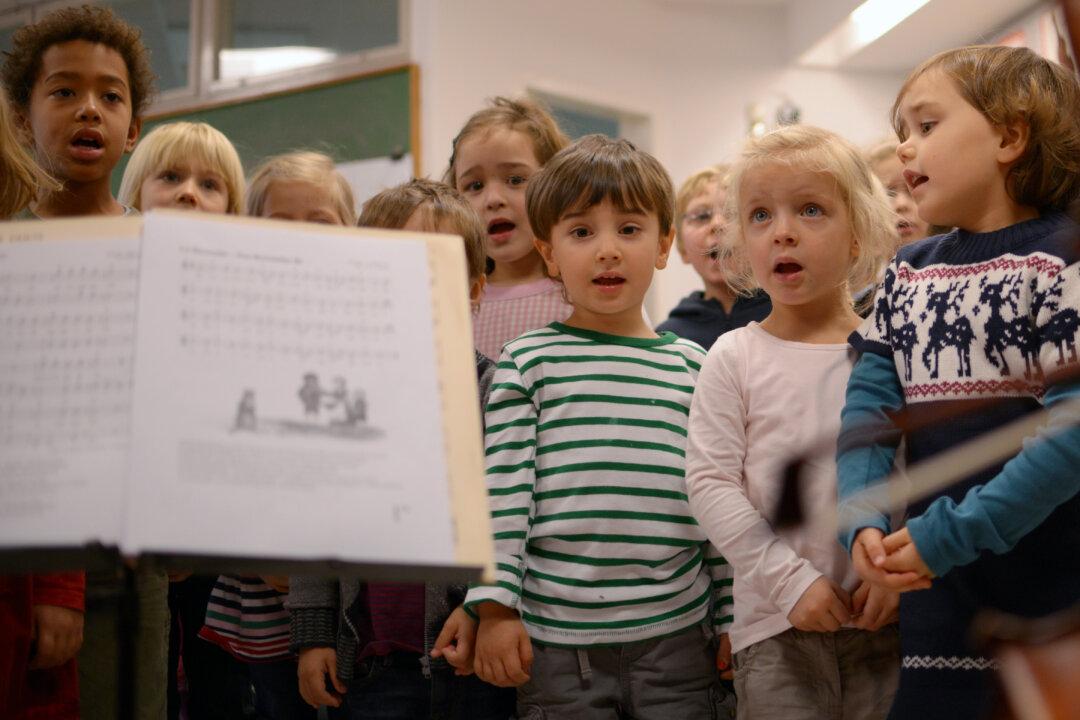
This is why “Homo Ludens” by the aforementioned Huizinga remains such an important book. Huizinga argued that the non-political—which he encapsulated in the deceptively simple word “play”—is not peripheral to civilization but essential to it. Art, music, poetry, sport, science, architecture, and even politics itself emerge from what he called the imaginative and purposive play of individuals and self-formed groups within society. A flourishing civilization depends upon activities freely undertaken for their own sake, enlarging both self-mastery and the full prism of the developed human personality.
Today, however, politics progressively sucks the joy out of everything. Comedy becomes ideological instruction. Art becomes activism. Even humour feels pinched, supervised, and reactionary. The instincts for spontaneity and imaginative freedom are steadily replaced by a drab ethos of administrative conformity.
The late English political philosopher Sir Roger Scruton understood this clearly. Perhaps the greatest conservative thinker of our time, Scruton recognized that the basis of our civilization lies in the expansion of both mind and imagination. Politics matters, certainly, but civilization depends equally upon literature, worship, music, philosophy, architecture, science, history, and playfulness—the entire spectrum of human possibility for the good.
The apolitical man, then, is better understood as the plus-political man. He has not eliminated politics from his perspective but supplemented and enlarged it with the floral and vintage aspects of the greatest civilization the world has ever known. A civilization survives not merely through laws, elections, and bureaucracies, but through the preservation of culture, memory, imagination, and play.
The apolitical man remains the West’s last best hope.