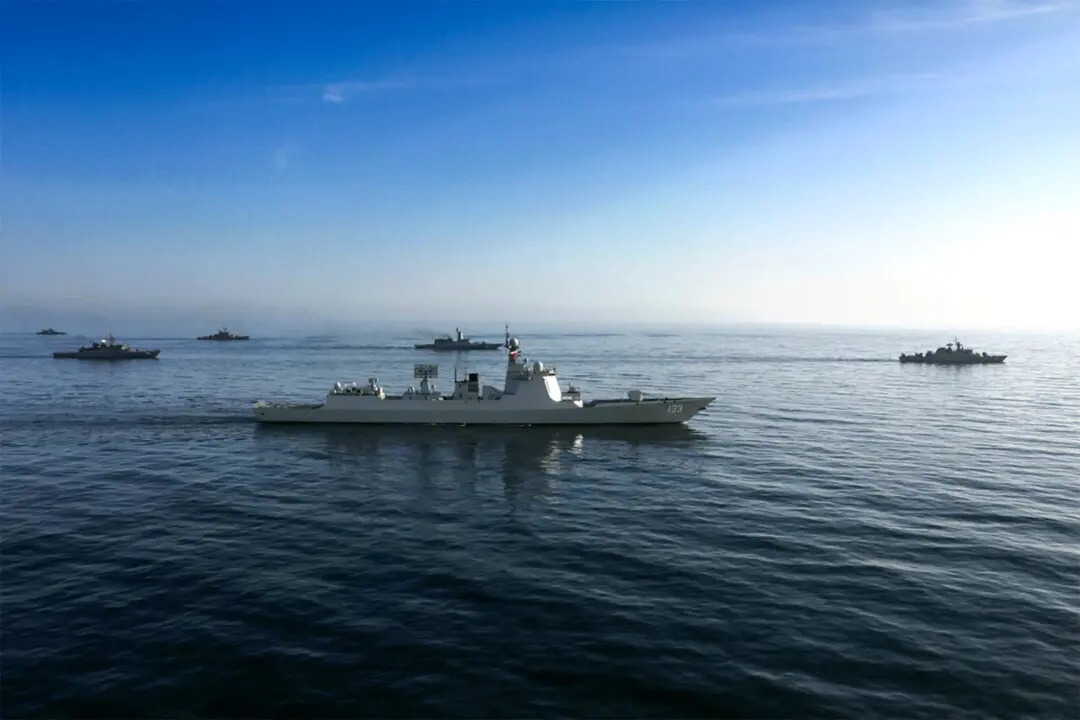
In celebration of the PLA Army Day, Chinese state media honored naval test pilot Yang Yong, who recently received a rare First-Class National Defense Science and Technology Merit Award. However, by revealing unusual details about Yang’s flight testing, the media unintentionally exposed the experimental nature of much of China’s carrier aviation program.
On July 31, one day before the PLA Army Day, Xinhua briefly announced that Yang, a test pilot with PLA Unit 91548, had received the prestigious award, but did not explain why.
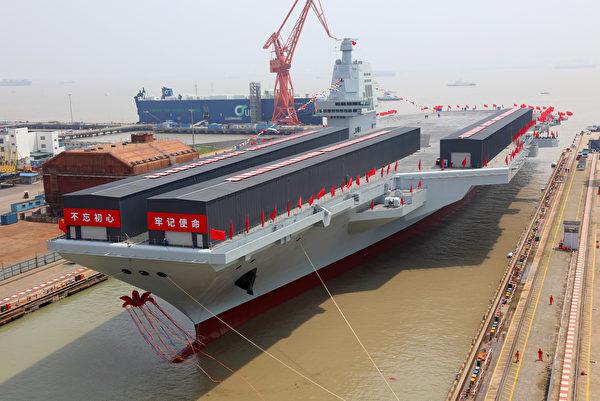
However, in a different TV episode, CCTV revealed that Yang participated in flight testing aboard the aircraft carrier Fujian, including electromagnetic catapult launches of the KJ-600 carrier-based airborne early warning aircraft. CCTV soon released another feature explaining the dangerous missions that earned Yang the award.
According to Yang, there was essentially no established flight-testing experience to draw upon for the KJ-600’s carrier electromagnetic-catapult testing, making every test flight exceptionally dangerous.
What CCTV Actually Revealed
The CCTV feature was intended to explain why Yang had received such a rare military honor. Yet the most revealing part of the program was the picture it painted of a carrier aviation program still operating in an unusually risky testing phase.
According to the program, Yang once suffered a serious cockpit depressurization during a high-altitude test flight. Because a civilian air corridor lay below, he reportedly could not descend immediately and instead maintained altitude for thirteen minutes while completing the mission and recovering the aircraft with its test data intact.
State media presented the episode as an example of courage and dedication.
If accurate, the account suggests two broader conclusions.
First, the KJ-600 remains an experimental program in which test pilots are not merely flying operational missions but validating aircraft performance and collecting engineering data.
Second, official media openly acknowledged that these flights still involve life-threatening hazards—a level of candor rarely seen in Chinese military reporting.
Another admission was even more striking. CCTV quoted Yang as saying that for carrier test pilots, “moving forward often means entering completely unknown territory,” meaning there was almost no established experience to draw upon for the test flight.
The report revealed that, in the span of just over 20 days, Yang witnessed the serious injury and death of fellow pilots.
These remarks suggest that carrier operations involving the KJ-600 have not yet become routine but are still focused on validating designs, refining procedures, and gaining experience.
This portrayal contrasts with years of official narrative that emphasized the Fujian’s steady progress through sea trials, catapult launches, and successful aircraft operations. The latest disclosures instead suggest that many key technologies and operating procedures are still being established through high-risk flight testing.
The CCTV report also leaves an intriguing question unanswered.
According to the report, Yang could not immediately descend because a civilian air corridor lay beneath his aircraft.
Even readers with little knowledge of military aviation may ask the obvious question: If testing the KJ-600 involved such extraordinary risks, why was the aircraft operating near a civilian air corridor in the first place?
What the J-15 Incident Suggests
The second half of CCTV’s program described another close call, this time involving a J-15 carrier fighter. According to the broadcast, the J-15 encountered a sudden engine-related emergency during ski-jump takeoff.In Yang’s account, the aircraft was ultimately stopped less than five meters (16.4 feet) from the deck edge. Yang recalled gradually pushing toward the aircraft’s limits until discovering where the true margin between safety and loss of control lay.
Based on publicly available information, the incident likely occurred aboard the Liaoning or the Shandong, both of which use ski-jump launch systems. Under certain circumstances, these carriers allow pilots to abort takeoff before leaving the deck.
However, the Fujian uses electromagnetic catapults. Once a catapult launch sequence has begun, there is little opportunity to stop safely. A similar mechanical failure under these conditions could have far more serious consequences.
The episode also illustrates the fundamental difference between routine flight training and developmental flight testing.
Test pilots are expected not simply to operate an aircraft but to explore its performance envelope, identify technical problems, and verify how the aircraft, engines, avionics, and carrier systems function together. Every abnormal event may reveal a previously unknown engineering issue, while every successful recovery expands the program’s knowledge base.
From that perspective, Yang’s award is not surprising.
What the KJ-600 Really Reveals
Beyond the flight-testing stories themselves, the official reports also shed light on the KJ-600’s broader role within China’s carrier force.In practical terms, this means China’s first two carriers lacked one of the defining capabilities of a modern carrier strike group.
For any carrier navy, an airborne early warning (AEW) aircraft does far more than just detect incoming threats. It extends the fleet’s radar horizon, coordinates air operations, distributes targets, and serves as a critical node in the carrier’s wider command-and-control network.
The U.S. Navy’s E-2 Hawkeye has long played a pivotal role because the AEW aircraft determines how far the entire fleet can “see” and how quickly it can react.
Viewed in that context, the KJ-600 is significant not only because it is a new aircraft, but also because it represents China’s efforts to develop a comprehensive carrier combat system, rather than merely operating aircraft from a flight deck.
CCTV’s description of the aircraft’s extensive testing suggests that this capability is still in development rather than being operational.
Publicly available photographs reveal that the KJ-600 closely resembles the E-2 Hawkeye in terms of its overall configuration. This includes the KJ-600’s twin turboprop engines and dorsal radar rotodome.
However, several visible differences remain. For example, the KJ-600 currently appears to use six-bladed propellers, while the latest E-2D uses eight-bladed composite propellers. Additionally, the U.S. Navy has publicly demonstrated the E-2D’s aerial refueling capability, which the KJ-600 has yet to display.
These differences alone do not determine overall effectiveness.
The true performance of an AEW aircraft depends on factors such as radar technology, mission systems, software integration, data links, crew training, and the operational network surrounding the aircraft—areas that cannot be reliably assessed from public photographs alone.
When Official Messaging Reveals More Than Intended
The coverage of Yang’s award was clearly intended to serve as a familiar piece of official messaging.Like many such reports, it highlighted advanced equipment, military modernization, and the heroism of individual service members to demonstrate China’s growing military strength.
This time, however, the publicity achieved something quite different.
Taken together, the accounts of risky KJ-600 test flights, the near loss of a J-15 during takeoff, and official descriptions of operating in “completely unknown territory” all point to a program that remains under development rather than one that has matured.