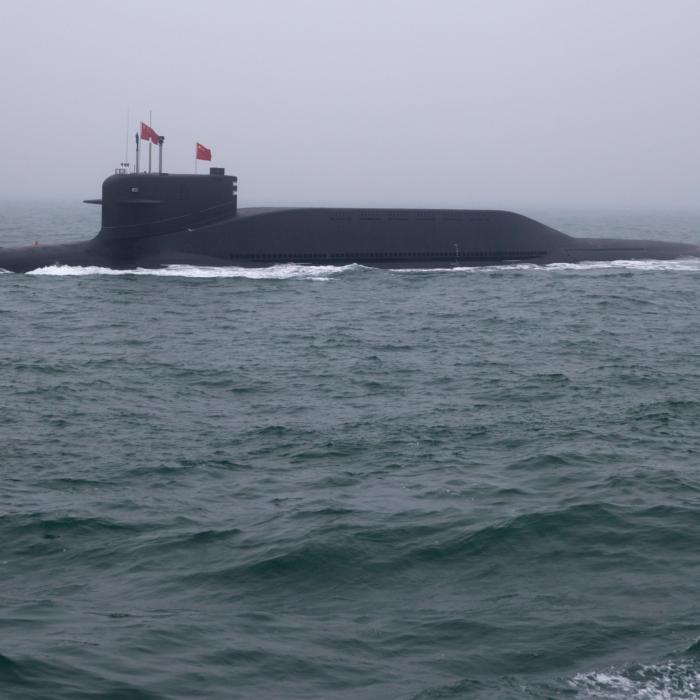
China just tested a missile from a nuclear submarine in the Pacific Ocean. The missile was nuclear-capable and landed in a South Pacific nuclear-free zone near the Solomon Islands.
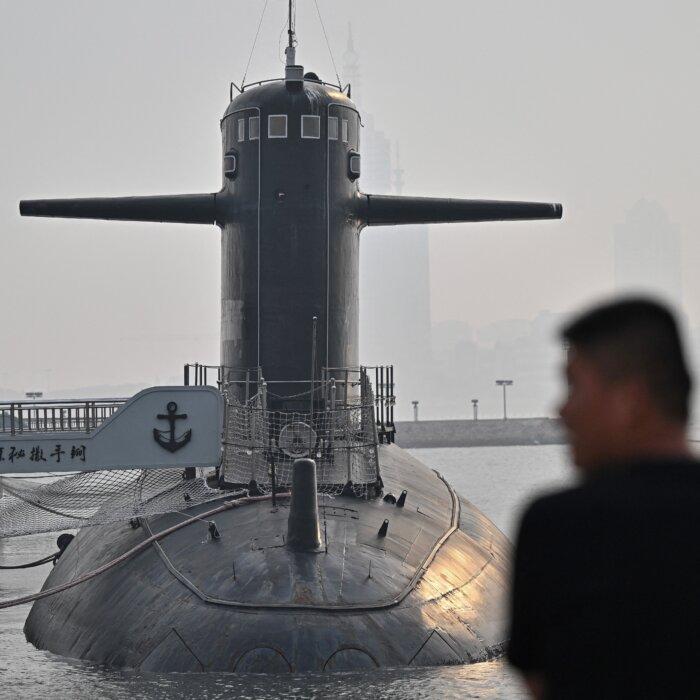
The missile was likely a JL-2 submarine-launched ballistic missile launched from a Type 094 nuclear submarine. The July 6 launch, on the first day of an annual China–Russia naval exercise, may have doubled as a strategic signal against the same day’s bilateral defense alliance signed by Australia and Fiji, or NATO’s July 7–8 summit, or both.
The launch by the People’s Liberation Army (PLA) is the latest evidence of an increasingly assertive Beijing, including in the underwater domain. Past ballistic missile tests tended to stay within China’s own territory. The PLA has only twice previously launched nuclear-capable missiles over the Pacific—in 1980 and 2024.
According to U.S. naval intelligence, the PLA Navy’s (PLAN’s) undersea forces will reach 80 submarines by 2035 and “may credibly challenge U.S. regional maritime dominance” by 2040. That could give the PLAN the ability to control shipping from Eastern Russia to Australia and India in just 14 years. Given that China now builds submarines faster than the United States, a PLAN undersea advantage could quickly become global.
Advances in the PLAN’s “sensors, seabed systems, and unmanned vehicles will create layered defenses that raise the cost—and in some scenarios the feasibility—of U.S. operations in the western Pacific,” said Rear Admiral Mike Brookes in March.
The PLAN is fast producing underwater drones that can operate as autonomous torpedoes or submarines. Considering that China’s autonomous weapons can be matched with artificial intelligence and produced at a faster rate than in the United States, Europe, and Japan, they pose a formidable emerging threat to U.S. forces and allies globally.
And China’s first Type 096 submarine will, before 2030, be able to launch ballistic missiles at large portions of the Continental United States from the protection of its nearby waters rather than having to first leave its bastions to push closer to the first island chain of Japan, Taiwan, and the Philippines. The PLAN’s latest submarines are rapidly improving, with quieter, faster nuclear propulsion, more advanced sensors and weapons, and the capability to submerge for longer periods.
This will give PLAN submarines the ability to routinely patrol the Atlantic Ocean, Indian Ocean, and the Arctic by 2040. If the PLAN has the ability to project submarine dominance internationally, it will arguably use it to control global maritime chokepoints, including the Strait of Malacca off Singapore, the Strait of Hormuz off Iran, the Suez Canal in Egypt, the Cape of Good Hope off South Africa, the Strait of Gibraltar off Spain, the Panama Canal, and the Arctic passage.
Given the world’s dependence on international trade, this would give Beijing significant geopolitical leverage and new revenues. It could use its submarine force more efficiently than Iran’s land forces near the Strait of Hormuz to charge tolls from international shipping. In 2025, global trade surpassed $35 trillion, approximately 90 percent of which is transported by sea and therefore vulnerable to submarine and surface-combatant interdiction.
A 10 percent Chinese tax on total international trade could yield a bump to its defense budget of about three times the current U.S. defense budget. At that point China’s military expenditures would rapidly exceed those of the United States, Russia, and our allies combined. This would bring it closer to its goal of an authoritarian and arguably totalitarian global hegemony. That the Chinese Communist Party (CCP) would likely impose a bigoted version of global hegemony should be particularly concerning to even the Party’s authoritarian allies in places like Moscow, Tehran, and Pyongyang.
The United States, Japan, Australia, New Zealand, Taiwan, and other countries in the region condemned Beijing for its most recent missile launch. Several smaller countries appeared to draw closer to the U.S. alliance system. The Solomon Islands, which until recently was cleaving to Beijing, criticized the launch as unfriendly. The Philippines said the launch “serves no peaceful purpose” and is “a reckless display of military power that shows little regard for smaller countries.”
Even such criticism will not deter a CCP already accustomed to being condemned. The regime no longer cares much given its increasing reliance on hard power. The United States and our allies need to redouble not only our commitment to 5 percent defense spending, but to our defense industrial bases and, more controversially, to the control of global maritime chokepoints. If we do not control them first, the CCP will, and dislodging PLAN chokeholds after they are established could start a nuclear war.