The Chinese Communist Party (CCP) is intensifying efforts to assert control over the Senkaku Islands, the Taiwan Strait, and the South and East China seas, with the supposed soon-to-be-commissioned Fujian aircraft carrier marking a major expansion of the communist regime’s naval power and heightening the risk of confrontation with the United States and its allies.
On the morning of Sept. 14, two Chinese vessels equipped with cannons entered Japan’s territorial waters near Minamikojima in the disputed Senkaku Islands, in the East China Sea. The Japan Coast Guard reported the ships around 7 a.m. and continued to monitor them while issuing warnings to leave immediately. The Senkaku Islands are controlled by Japan but claimed by China. Tokyo maintains that they are an inherent part of Japanese territory based on history and international law, rejecting any contrary sovereignty claims.
Although the United States takes no position on the sovereignty dispute, it recognizes Japan’s current administrative control over the islands. U.S. officials have repeatedly affirmed that Article 5 covers the Senkaku Islands, meaning the United States would be treaty-bound to assist Japan if the Chinese regime used force against them.
Just a few days earlier, China’s newest aircraft carrier, the Fujian, sailed through the Taiwan Strait for the first time while still undergoing sea trials ahead of expected commissioning later this year. Japan’s military also reported spotting the Fujian near the disputed Senkaku Islands on Sept. 11, sailing with two destroyers.
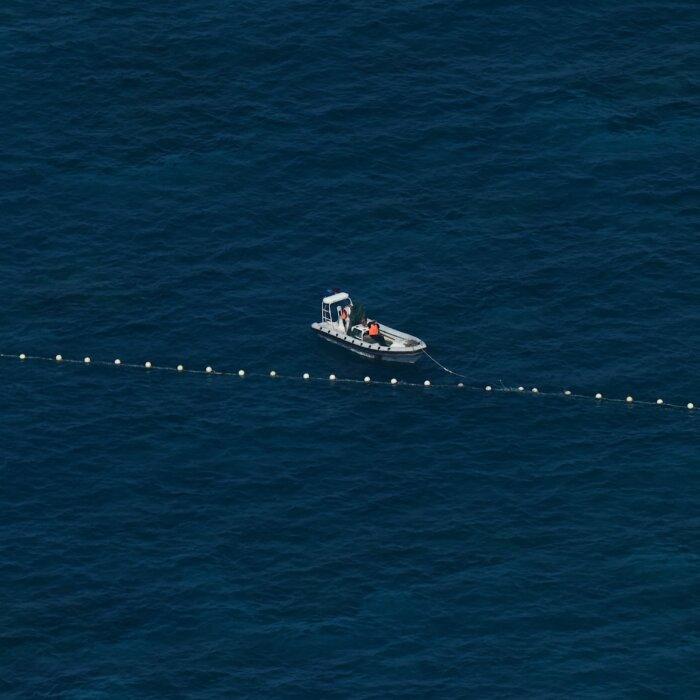

Beijing claimed the carrier was en route to the South China Sea for training and scientific tests, insisting the transit was routine and not aimed at anyone. However, the move carried symbolic weight as the CCP asserts claims over both the Taiwan Strait and Taiwan.
Around the same time, the U.S. destroyer USS Higgins and the British frigate HMS Richmond transited the Taiwan Strait, prompting sharp warnings from Beijing, which condemned the move as undermining regional stability and deployed naval and air forces to monitor them.
Washington and London countered that the operation was lawful and routine under international law, stressing that the strait lies beyond the territorial waters of any state and that freedom of navigation must be upheld.
Earlier this month, Canadian and Australian warships had also passed through the strait, part of regular transits conducted about once a month by the United States and other allies such as Britain and France.
While China has limited jurisdiction in its contiguous zone and exclusive economic zone, it does not hold sovereignty over them. Even within a territorial sea, UNCLOS allows “innocent passage” for foreign ships, so long as activities do not threaten the peace, order, or security of the coastal state.
The European Union and U.S. Secretary of State Marco Rubio have denounced China’s expanding territorial claims in the Taiwan Strait and South China Sea, including its bid to designate Scarborough Reef as a so-called nature preserve.
It seems that the CCP is intensifying its efforts to assert control over the Senkaku Islands, the Taiwan Strait, the East and South China seas, and ultimately Taiwan. The recent passage of the Fujian marked its ninth sea trial since May 2024, fueling speculation that it will soon be commissioned, much like the Shandong, which entered service shortly after its own strait transit in 2019.
As China’s third carrier, the Fujian joins the Liaoning and Shandong. With three carriers, China could rotate one for maintenance, one for training in the South China Sea, and one patrolling the western Pacific, enabling it to project power east of Taiwan and directly threaten the island nation’s defenses. This could complicate Taiwan’s ability to intercept Chinese carrier groups, expose its forces to long-range strikes, and allow Beijing to enforce a blockade or conduct denial operations across the Pacific between Guam and Taiwan.