A Ponzi scheme is when a fraudster promises investors that a fictitious enterprise will yield lucrative returns, and must constantly find new investors to pay the promised returns to the old investors. It inevitably collapses.
This concept does not just apply to B.C.’s economy—it aptly describes the immigration policy of Canada as a whole.
In his post, West argues that B.C.’s economy “has been re-geared to run on relentless mass immigration,” where the main driver of growth has become “building and selling homes to the next wave of newcomers” rather than “value-added manufacturing, technology, innovation, or unshackling our resources.”
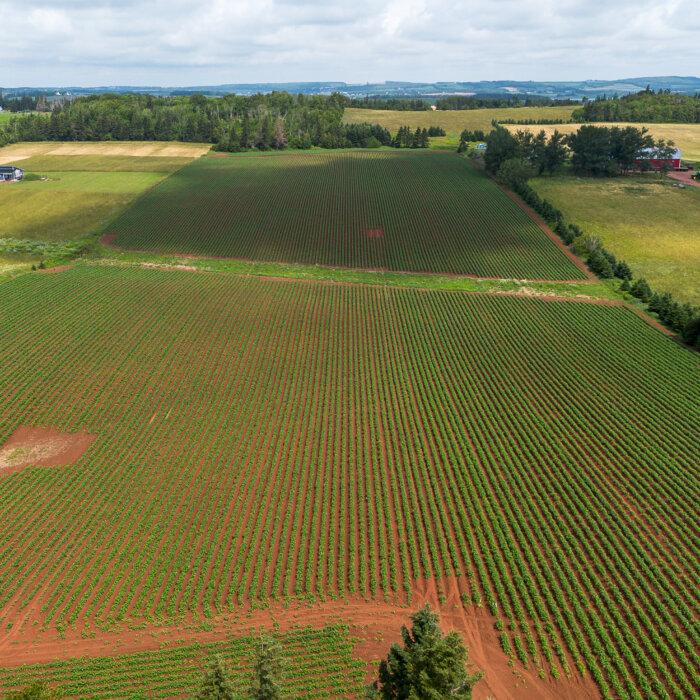

The same data paints a dismal picture of the rest of B.C.’s economy, with manufacturing valued at just $17.3 billion, and agriculture, forestry, fishing, and hunting accounting for a paltry $5.7 billion.
The industries that laid the foundations of Canada’s westernmost province in the 19th century are now out of vogue. They have been totally eclipsed by real estate and housing construction—what Mayor West bluntly calls “building and selling homes to the next wave of newcomers.”
While the extent to which B.C. has become hooked on an immigration-fuelled real estate sector is particularly extreme, the same general pattern is being replicated in much of Canada.
Just as in B.C., this has created a distorted economy in which real estate takes centre stage.
A healthy national response to an overreliance on primary industries would be to supplement our natural resource and agriculture sectors by boosting secondary industries such as value-added manufacturing.
Instead, we have allowed ourselves to become hooked on immigration-fuelled real estate, a sector that is highly lucrative for the small number of people who profit from development or speculation, but also highly unstable.
Primary and secondary industries have a degree of stability because they fulfill basic human needs that are unlikely to change over time.
The forestry sector experiences ups and downs, but consumer demand for wood products is unlikely to disappear. Auto manufacturers must change their products based on shifts in style and technology, but it is difficult to imagine a future without automobiles of any kind.
Immigration-fuelled real estate does not have this built-in stability, because it depends on the permanent continuation of a federal immigration strategy of high population growth—a policy which the Canadian public is now soundly rejecting.
If the Canadian public continues to successfully push for further immigration cuts and foreign buyer restrictions, a general collapse in the property market writ large may follow.
In preparation for such an eventuality, we should start building a more solid foundation for the Canadian economy than immigration-fuelled real estate.